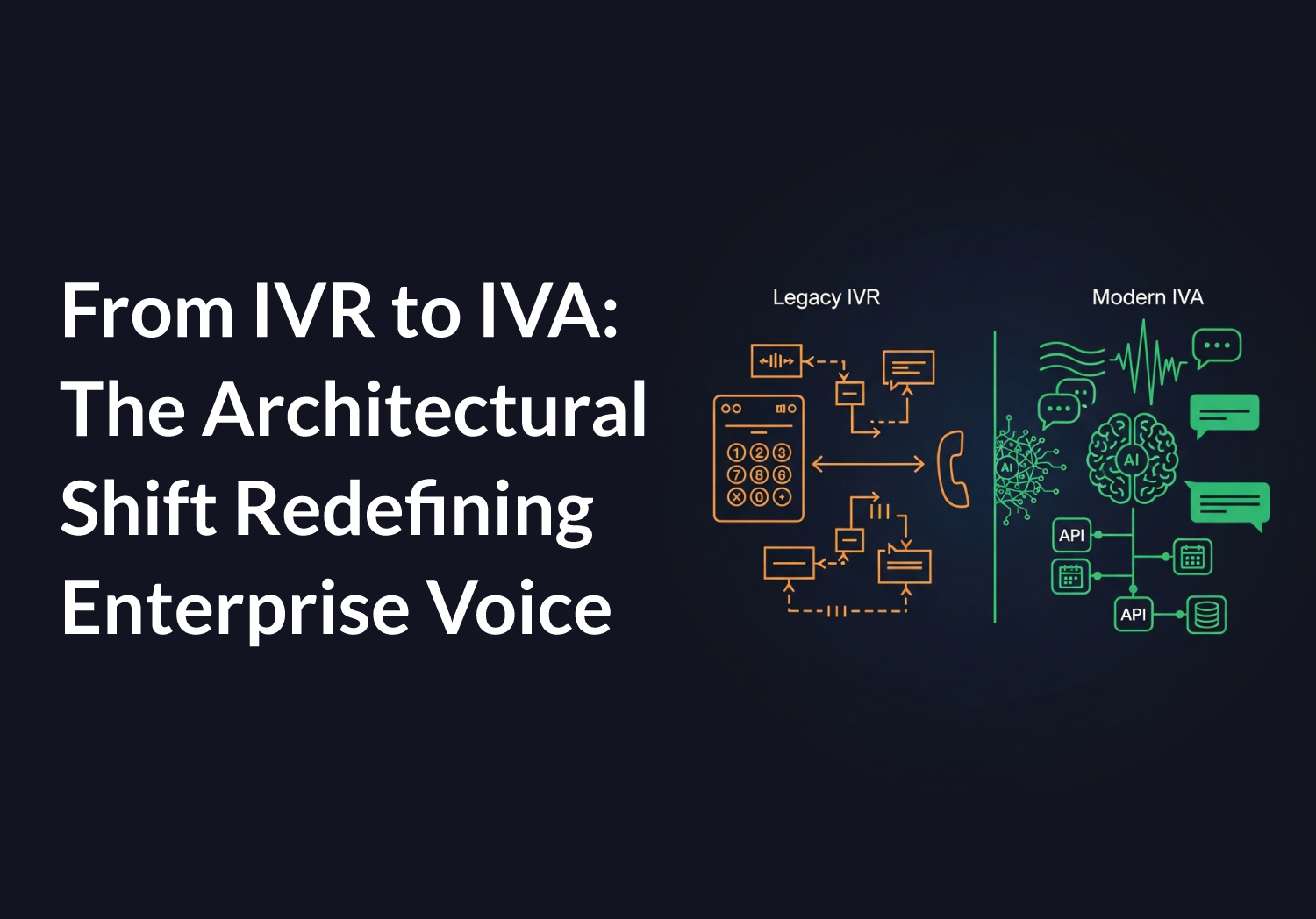


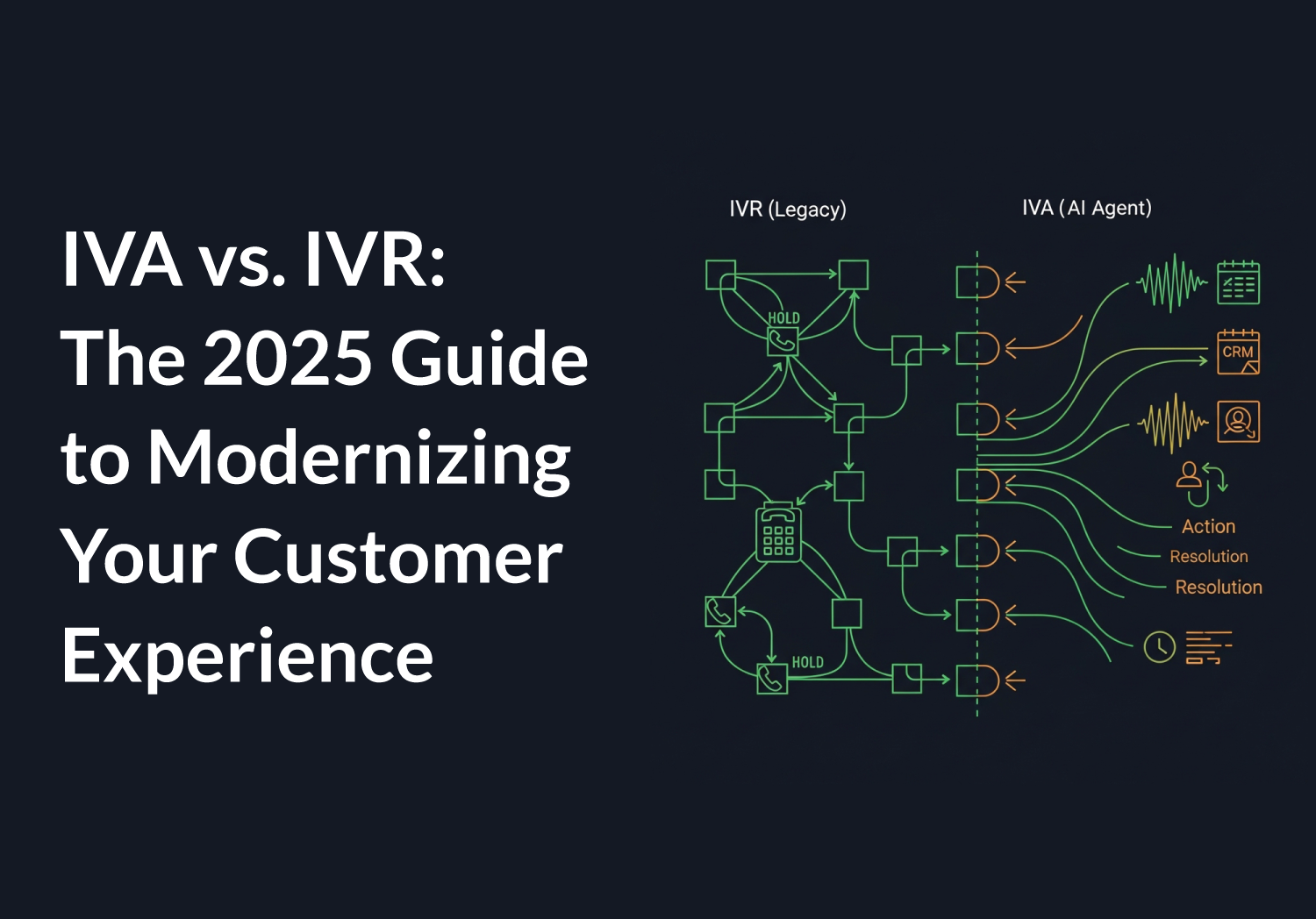
TL;DR: An IVR (Interactive Voice Response) is a phone menu: callers press a key and get routed to a person or a queue. An IVA (Intelligent Virtual Assistant, also called an Intelligent Virtual Agent) is an AI voice agent. Callers say what they need, and it answers, completes the task, or transfers the call with context. Keep the IVR where a short menu already gets callers to the right team. Put an IVA where calls go unanswered. We looked at 3,209,996 inbound calls on Aloware accounts set to Eastern time (September 1, 2025 to August 31, 2026). Of those, 14.81% arrived outside 8am to 6pm. Only 28.32% of the calls outside that window ended as a completed call, against 44.17% during the day.
If your business relies on phone calls to close deals or support customers, you know the struggle of a missed connection.
Usually, the friction starts before you even say hello. It starts when your customer or lead hits a robotic wall: "Press 1 for Sales... Press 4 to repeat these options."
For decades, IVR (Interactive Voice Response) was the standard for any business with a phone line. It was reliable, but rigid. But the game has changed. We now live in a "zero-wait" economy where leads go cold in minutes and customers expect instant, conversational help.
Enter the IVA (Intelligent Virtual Assistant), an AI-driven evolution that doesn't just route your calls, but actually resolves them.
Below, we break down why forward-thinking businesses are ditching the old phone tree for "Agentic AI," and how making the switch can help you scale without adding headcount.
The Core Difference
IVR (Interactive Voice Response) is a menu-based system that uses keypad inputs (DTMF) to route calls to a human agent. It acts like a digital receptionist.
IVA (Intelligent Virtual Assistant) is an AI-powered system that uses Natural Language Processing (NLP) to understand spoken sentences and perform tasks autonomously. It acts like a digital employee.
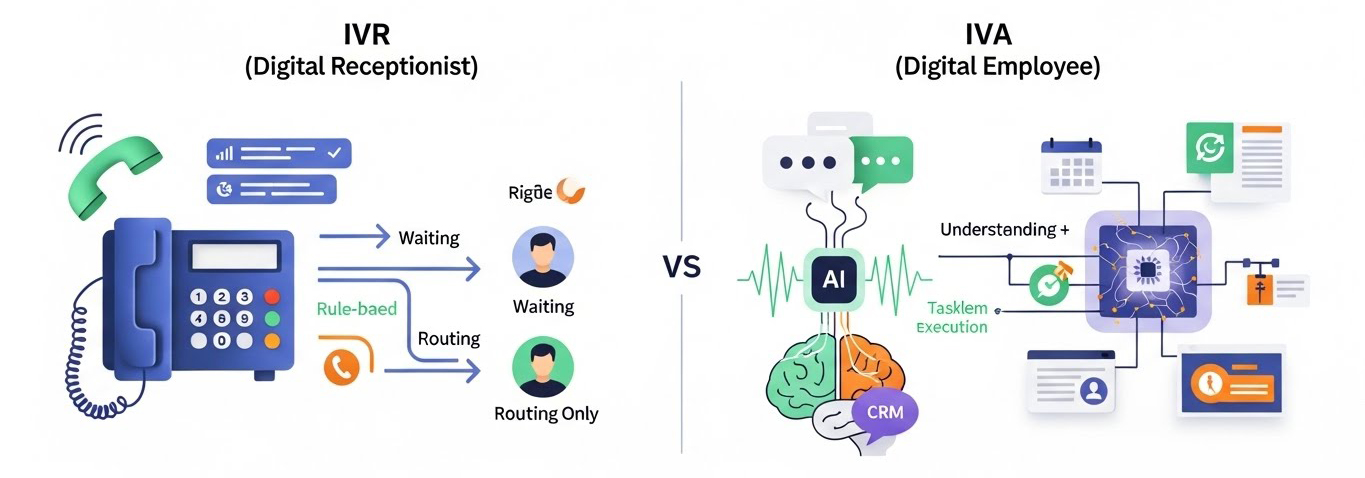
IVR vs. IVA Comparison
If you are looking for a quick technical breakdown, here is how the two technologies stack up.
| Feature | IVR (Legacy) | IVA (Modern AI Agent) |
|---|---|---|
| Input Technology | Keypad (0-9) or basic keywords ("Yes/No") | NLP (Natural Language Processing) Conversational speech |
| Navigation Style | Tree Structure Users must follow a strict path | Intent-Based Users can jump between topics naturally |
| Primary Goal | Deflection "How do I get this caller to a queue?" | Containment "How do I solve this problem now?" |
| Context Memory | None If transferred, the user repeats their story | Persistent Remembers data and passes it to human agents |
| Capabilities | Read-Only (e.g., plays a recorded balance) | Agentic (Read/Write) Can update CRMs, book flights, or process refunds |
| Setup Complexity | High Requires complex coding/IT support | Low No-Code builders allow for rapid changes |
What is IVR?
Interactive Voice Response is the technology that powers the traditional phone tree. It relies on DTMF (Dual-Tone Multi-Frequency) signaling, the beeps you hear when you press a number. Push-button telephone sets are covered by ITU-T Recommendation Q.23. RFC 4733 describes how to carry DTMF signalling in RTP packets, which is how internet phone calls transport those key presses.
How it works:
- The system plays a pre-recorded file.
- The user presses a button (1, 2, 3).
- The system moves the user to the next branch of the "tree" or routes them to a ring group.
The Limitation:
IVR is "dumb" logic. It cannot understand nuance. If a customer is calling because their credit card was stolen, but the menu only offers "Press 1 for Bill Pay," the customer is stuck. This leads to "Zeroing Out", where users furiously press '0' to bypass the system, defeating the purpose of automation.
What is IVA?
Intelligent Virtual Assistants (like AloAi Agents) utilize Generative AI and Large Language Models (LLMs) to converse. They don't need a menu because they understand intent.
How it works:
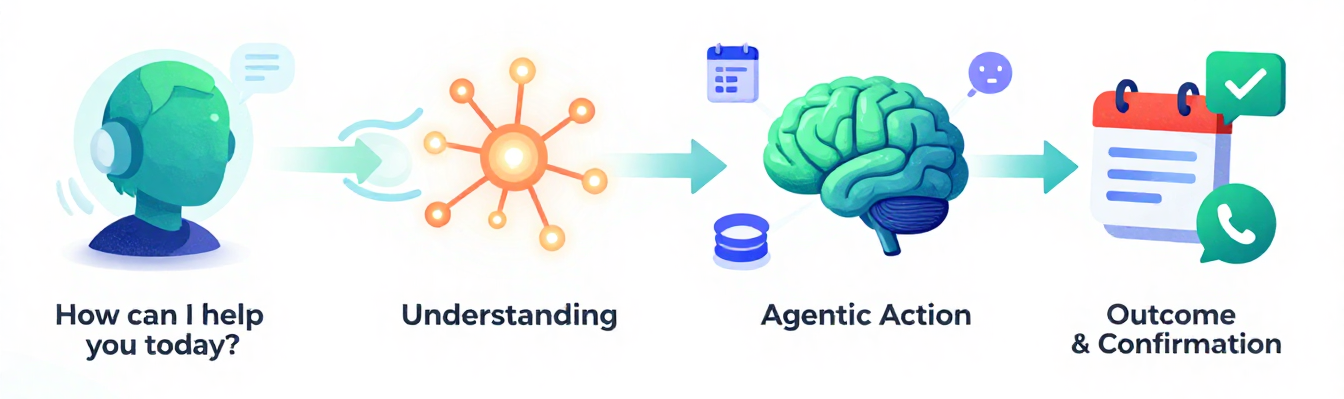
- The Greeting: The AI asks, "How can I help you today?"
- The Intent: The user speaks naturally: "I need to reschedule my appointment to next Tuesday."
- The Action: The AI understands "reschedule," checks the calendar (via API), finds a slot on Tuesday, books it, and sends a confirmation text.
The Advantage:
IVAs are "Agentic."
They don't just talk; they do. They can access your backend systems to perform tasks that previously required a human agent, such as updating a CRM (like HubSpot or Salesforce), processing a payment, or qualifying a sales lead.
3 Reasons to Switch to IVA
Moving from IVR to IVA isn't just a tech upgrade; it’s a financial strategy.
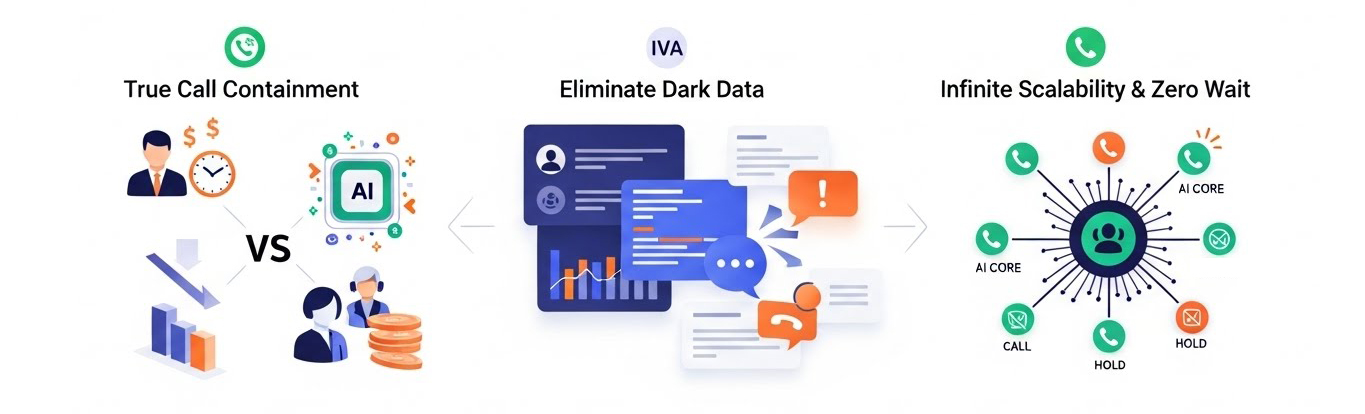
1. True Call Containment (Save 60-80% on Costs)
IVR only deflects calls; it rarely solves them. A human eventually has to pick up.
An IVA achieves containment. It can answer FAQs, check order statuses, and book meetings without human intervention.
- Cost of Human Call: ~$1.20 per minute.
- Cost of AI Call: ~$0.15 per minute.
2. Eliminate "Dark Data"
IVR analytics are binary: "50 people pressed Button 1." This is meaningless data.
IVA analytics are conversational. They tell you why people are calling.
- Insight: "30% of callers this week are confused about the new 'Service Fee' on their invoice."
- Action: You can fix the invoice wording immediately, reducing future calls.
3. Infinite Scalability & Zero Wait Times
During a holiday rush or a service outage, an IVR queue fills up, and hold times skyrocket. An IVA scales infinitely. It can handle 10 concurrent calls or 10,000 with zero delay. Your customers never hear "All agents are busy" again.
What does an IVA do in a call center or contact center?
In a call center or contact center, an IVA is the AI voice agent that picks up the line. It can sit in front of the queue, take over one branch of the menu, or catch the calls nobody answered. Start with the calls that go unanswered today, because that is where an IVA changes the result.
Our own call data shows where those calls are. We looked at 3,209,996 inbound calls on Aloware accounts set to Eastern time, placed between September 1, 2025 and August 31, 2026, with test and demo accounts excluded.
- Between 8am and 6pm Eastern, 44.17% of inbound calls ended as a completed call.
- Outside those hours, 28.32% did. That window held 475,392 calls, or 14.81% of the total.
- The slide starts before closing time: 42.80% of calls in the 4pm hour were completed, 35.95% in the 5pm hour, and 30.60% in the 6pm hour.
- Calls handled by an AI voice agent made up 2.90% of inbound calls between 8am and 6pm and 5.91% outside those hours.
The 8am to 6pm window is one blanket definition. It applies to every account and every day of the week, weekends included, so it does not match each team's posted hours. "Completed" is the system's outcome label for a call that ran its course. The main other labels are voicemail, missed, abandoned, failed and dead end. The Completed label does not say who answered. The AI share counts calls an AI voice agent took first and calls it took after a line or ring group missed them.
The after-hours gap is the case for running both. Keep the menu for the daytime paths that already work, like "press 1 for sales, 2 for service" at an insurance agency with a staffed floor. Keep that menu short while you are at it: our call center IVR guide covers how. Put the IVA on the calls that land after 5pm, on weekends, and on overflow. A law firm's intake line and a solar installer's quote line get the same benefit. The caller who rings at 7pm can give the details and book the next step.
Before you move a menu branch to an agent, check three things:
- Routing: every menu option needs a call routing destination the agent can transfer to. On Aloware, a voice agent can transfer a call cold or warm to a user, a ring group or a line.
- Reporting: key-press counts go away with the menu. Decide which call outcomes you will track in their place.
- Recording and consent: the rules that apply to your calls today still apply when an agent answers. Review them with counsel before launch.
IVR vs. AI phone agent: is it the same comparison?
In practice, yes. Vendors expand IVA as Intelligent Virtual Assistant or Intelligent Virtual Agent. The products sold as an AI phone agent, an AI voice agent or an AI receptionist do the same job as an IVA. They answer the call and hold a spoken conversation. Compare them on three questions. Can the caller speak in full sentences? Can the agent finish a task, or only route? What does your rep see when the call transfers?
If you are building a shortlist, our guide to the best AI voice agents prices the options side by side.
Is It Time to Switch?
Whether you run a high-volume sales floor, a support team, or a growing business that simply needs to answer the phone 24/7, staying on a legacy IVR is likely costing you opportunities.
Every time a potential client gets stuck in a menu loop, trust erodes. Every time a lead hangs up because they couldn't get a quick answer, revenue is lost.
The future isn't about navigating menus; it's about having conversations.
Book an AloAi Voice Agent demo and hear the handoff from AI to your team on a live call.
Frequently Asked Questions
Is an IVA harder to set up than an IVR?
Not anymore. Modern platforms like Aloware use No-Code Builders. You can build an AI agent by simply typing out instructions (e.g., "You are a helpful receptionist. If they ask for pricing, say...") and dragging-and-dropping workflows.
Will the AI sound robotic?
No. Current text-to-speech engines use neural networks to mimic human intonation, pausing, and breathing. Most callers cannot distinguish a high-quality IVA from a human within the first few turns of conversation.
What happens if the AI can't answer a question?
This is called a "graceful handoff." The IVA detects that it is stuck and transfers the call to a human agent. Crucially, it passes the full transcript to the agent, so the customer doesn't have to repeat themselves.
.png)

Ruby Kootval is Head of Product Marketing at Aloware. She has 12 years in digital marketing, including 8 in B2B SaaS and 5 in telecom, and writes about AI voice agents, dialers, CRM integrations, and contact center operations.