

TL;DR:
If your team runs HubSpot dynamic lists into a power dialer and reps are calling hundreds of leads a day, your outbound numbers are aging fast, and carriers are starting to label them "Spam Likely." NumberGuard is Aloware's number-reputation layer. It scans your outbound numbers against the major US carriers, places real test calls to see how they display on a live handset, and automatically works to remediate flags before they tank your connect rate.
- Spam labeling and branded caller ID are two separate carrier systems. Fixing one doesn't fix the other.
- NumberGuard checks numbers against AT&T, T-Mobile, and Verizon and remediates mislabeling automatically (1–3 business days on AT&T/T-Mobile, 3–5 on Verizon).
- It's the first layer of the Pickup Stack (NumberGuard + Branded Calling + Local Presence), a paid add-on, priced by how many numbers you protect, separate from your seat.
- Best for HubSpot teams doing real outbound volume across sales or support.
Your HubSpot lists are clean, your sequences are dialed in, and your reps are working the phones harder than ever. So why is the connect rate sliding?
Here's what's actually happening: the more you dial, the faster you burn your numbers. Every outbound call is a signal to the carriers, and high-volume dialing from the same handful of lines is exactly the pattern their reputation systems are built to flag. One quarter your numbers are clean. The next, half your outbound shows up on the lead's phone as "Spam Likely," "Scam Likely," or just an unfamiliar string of digits nobody picks up.
This isn't a HubSpot problem and it isn't a dialer problem. It's a number-reputation problem. And it's the single most common reason a high-performing outbound team inside HubSpot watches its connect rate decay over time.
Why high-volume HubSpot dialing burns your numbers
Aloware is a HubSpot premier partner, and the integration is built for volume. You sync a HubSpot dynamic list straight into the Power Dialer, a rep can work up to roughly 500 leads a day from that list, and every call logs back to the HubSpot record automatically. That's the point — it's fast.
But speed has a side effect nobody warns you about. Carrier reputation systems, the analytics engines at AT&T, T-Mobile, and Verizon, score every outbound number based on call patterns, complaint signals, and volume. A number that suddenly places hundreds of short, unanswered calls a day looks, to an algorithm, exactly like a spam dialer. It doesn't matter that your leads opted in. The pattern is what gets scored, and the score is what decides whether your call shows up as your business or as "Spam Likely."
This is why understanding why your calls land in spam matters before you reach for a fix. Two things people constantly get wrong:
- Spam labeling and branded caller ID are separate systems. Registering your business name and logo to display on a call (branded calling) runs on one carrier system. The "Spam Likely" flag runs on a completely different one. A number can have a registered brand and still get labeled spam if its reputation has deteriorated. Branding alone does not prevent a flag.
- STIR/SHAKEN attestation happens at the carrier, not the dialer. The originating service provider signs the call; the dialer just originates it. So "we sign your calls" is not how any of this works, and no platform can simply override a carrier's spam label. Labels are carrier-controlled.
So the real fix isn't a switch you flip. It's managing the reputation of your numbers continuously: catching flags early and remediating them before they cost you connects.
Key takeaway: High-volume HubSpot dialing isn't unsafe. It's just hard on your number reputation, and the faster you dial, the more actively you have to protect the lines you're dialing from.
What NumberGuard actually does

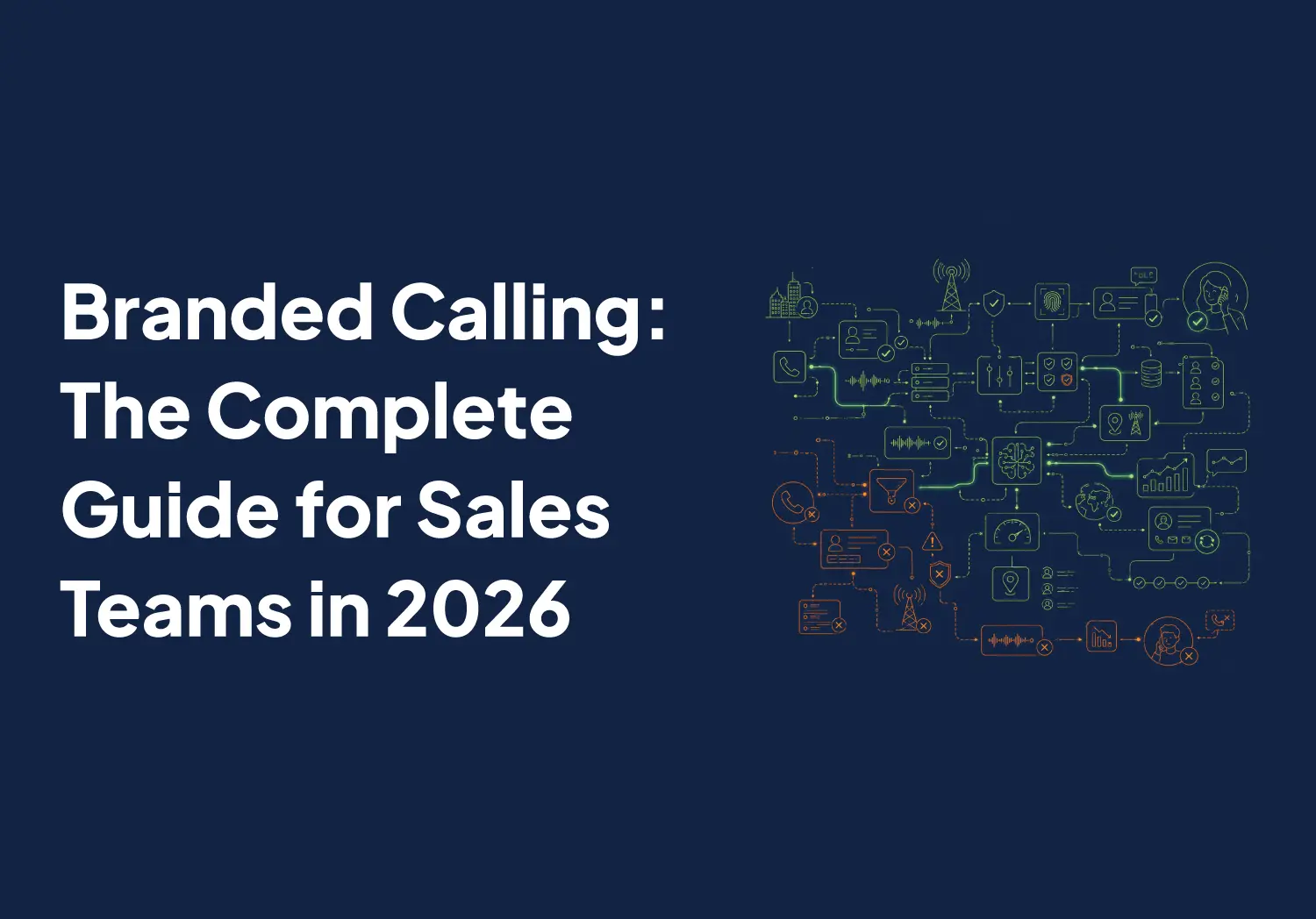
NumberGuard is Aloware's phone-number reputation layer. Think of it as a reputation firewall for your outbound lines. It runs four jobs continuously:
- Reputation scanning: it checks your outbound numbers against US carrier databases and their analytics providers (AT&T, T-Mobile, and Verizon) to see how each line is currently scored.
- Real-device testing: it places live test calls to real phones on real networks to observe how your number actually displays on a handset: clean, a caller name, or a spam label.
- Automatic remediation: when a number gets mislabeled, Aloware's remediation partner works with the carriers to clear it. You don't file anything. Remediation typically takes 1–3 business days on AT&T and T-Mobile, and 3–5 on Verizon. A cleared number shows back up as "clean."
- Caller-ID whitelisting: it whitelists your outbound caller IDs with mobile carriers to lower the odds of a flag in the first place.
Here's the honest boundary, because it matters: NumberGuard does not guarantee a number can never be labeled. No vendor can, because carriers control the labels. What it does is work upstream on the behavior and signals that drive labeling, and remediate fast when a flag slips through. That's the difference between hoping your numbers stay clean and actively managing them.
The bad way: dial one or two numbers into the ground, wait until reps complain that nobody's answering, then scramble to buy new numbers and start the decay clock over again.
The good way: treat your phone numbers like athletes — monitor their condition, spread the load, and rehab them the moment they get flagged. That's what Aloware's NumberGuard add-on automates.
Key takeaway: NumberGuard prevents the negative — the spam label — by managing reputation upstream and remediating flags automatically. It doesn't override carriers; it keeps you out of their crosshairs.
Where NumberGuard fits in the Pickup Stack
NumberGuard is one layer of three. Aloware calls the set the Pickup Stack, and the layers aren't redundant. Each does a different job.
Pickup Stack layerWhat it doesThe jobNumberGuardScans, monitors, and remediates number reputation across AT&T, T-Mobile, VerizonPrevents the negative: the "Spam Likely" flagBranded CallingRegisters your business name/logo to display on supported carriersProvides the positive: recognitionLocal PresenceMatches your outbound area code to the lead'sProvides the positive: locality
A quick but important note on packaging: the Pickup Stack is an add-on. Your seat plan buys the dialer, the CRM integration, and the AI. NumberGuard, Branded Calling, and Local Presence are priced separately, NumberGuard by the number of lines you enroll. It's never bundled into a seat price, and you shouldn't think of it as optional, either. A number connects fine for a few weeks; then reputation decays and pickup collapses. Keeping calls answered over time is the part you add on, and for a high-volume HubSpot team, it's the part that makes the volume worth running.
Why does any of this matter to your number? Because answer rate is where the money is. In a Twilio 90-day study across roughly 720,000 calls, branded calls were answered 62% of the time versus 20% for un-branded calls, more than tripling pickup (Twilio, Feb 2024). But that lift only holds if the number underneath the brand has a clean reputation. Branding on a flagged number is recognition stapled to a warning label. You need both, which is exactly why branded caller ID works best paired with reputation management, not instead of it.
Key takeaway: Branding gets you recognized; NumberGuard keeps you from getting flagged. The Pickup Stack works because the three layers cover different failure points, and you don't get to skip the reputation one.
The HubSpot reputation playbook
If you're running outbound inside HubSpot, here's how to protect your connect rate. None of this is exotic. It's just the discipline most teams skip until their numbers are already burned.
- Keep per-number volume reasonable. Spreading dials across a healthy pool beats hammering two lines. The exact safe ceiling shifts by carrier and history, so monitor it rather than guessing. The principle is constant: concentrated volume on one number is what trips the flag.
- Protect every high-volume line, not just your main one. A mortgage team running three campaign numbers and an insurance agency running a single intake line have the same exposure. Any line doing real volume needs to be scanned. Burned numbers in the background quietly drag your whole connect rate down.
- Rotate before you burn, not after. Warm and rotate numbers instead of running one into the ground. A solar or home-services team blasting a regional list should be cycling lines, not betting the quarter on one DID.
- Keep your CNAM current. A blank caller-name display means the lead just sees a number. Set and maintain the CNAM on your lines so a real name shows where carriers pass it through.
- Pair branding with clean reputation. Register branded calling, yes, but on numbers that are already healthy. Branding is the recognition layer; it doesn't repair a bad score.
For a real estate brokerage or any team where speed-to-lead is the whole game, this compounds. You can dial a HubSpot list in seconds, but if those calls land as "Spam Likely," you've automated your way to a faster miss. The fix is to make the line itself trustworthy, then let the volume do its work. (If you want the full breakdown of how the layers fit together, the Aloware–HubSpot integration is built around exactly this loop: lists in, calls out, reputation protected.)
Key takeaway: Reputation management is a discipline, not a one-time purchase. Spread volume, protect every working line, rotate early, keep CNAM current, and brand on clean numbers.
The bottom line
HubSpot makes it trivial to dial more. NumberGuard is what makes dialing more actually pay off, because volume without a clean number reputation is just a faster way to get sent to voicemail. Speed inside your CRM only matters if the call connects — and the call only connects if the number is trusted.
Stop treating your phone numbers as disposable. Protect them, and the same list that used to ring out starts booking meetings again.
See the Pickup Stack on your own outbound. Book a 20-minute demo and we'll show NumberGuard, Branded Calling, and Local Presence running against real numbers, wired into your HubSpot.

Frequently Asked Questions
Why are my HubSpot dialer calls getting marked as spam?
High-volume outbound dialing is the most common cause. Carrier reputation systems at AT&T, T-Mobile, and Verizon score every number by its call pattern: volume, answer rate, and complaints. When a HubSpot team pushes dynamic lists into a power dialer and a rep places hundreds of short, often-unanswered calls a day from the same line, that pattern looks like a spam dialer to the carrier's algorithm, even with opted-in leads. The number's score drops and your calls start showing as "Spam Likely." The fix is managing the reputation of your outbound numbers continuously, not changing your CRM.
What does NumberGuard do?
NumberGuard is Aloware's phone-number reputation management add-on. It verifies your outbound numbers against US carrier databases, places real test calls to live phones to see how each number displays, automatically works with carriers to remediate spam or scam mislabeling, and whitelists your caller IDs to lower the chance of a flag. The goal is higher pickup rates and lower spam risk on the numbers you dial from every day.
Does branded calling stop my numbers from being labeled spam?
No. Branded caller ID (your name and logo on the call) and spam labeling ("Spam Likely") run on two separate carrier systems. A number can have a registered brand and still get flagged if its reputation has deteriorated. Branding improves the odds your call is answered, but it doesn't override a poor number reputation. The durable fix is both: register branded display and manage number reputation with NumberGuard.
How long does NumberGuard take to fix a flagged number?
Remediation is automatic once a number is flagged. On AT&T and T-Mobile it typically takes 1–3 business days; on Verizon it usually takes 3–5. Once a number is successfully remediated, it shows back up as "clean." You don't have to file anything; the one requirement is providing accurate business information up front, which is what's used if a number needs remediation.
Which carriers and numbers does NumberGuard cover?
NumberGuard checks against the major US carriers — AT&T, T-Mobile, and Verizon — and covers US toll-free numbers in both scanning and remediation. It is US-only; international numbers, including Canadian numbers, are not supported.
Is NumberGuard included in my Aloware plan?
No. NumberGuard is a paid add-on, priced by how many phone numbers you enroll, and it's separate from your seat plan. It's available on active accounts. It's part of the Pickup Stack alongside Branded Calling and Local Presence, which are add-ons too, not bundled into a seat price. For a high-volume team, it's the layer that keeps your numbers connecting over time, so it functions as essential rather than optional.
How is NumberGuard different from STIR/SHAKEN or A2P 10DLC registration?
They solve different problems. STIR/SHAKEN attestation is signed at the originating carrier and authenticates that a call is from who it claims to be; A2P 10DLC is messaging compliance for application-to-person SMS. NumberGuard is reputation management for your voice numbers: scanning and remediating how carriers label them. Aloware handles registration work separately through its managed compliance; NumberGuard specifically handles number reputation scanning and remediation.
Does NumberGuard work with the Aloware HubSpot integration?
Yes — it protects the numbers your team dials from, including the lines used when you sync HubSpot dynamic lists into the Aloware Power Dialer and work them at volume. NumberGuard monitors and remediates those outbound numbers' reputation so the calls you place from inside HubSpot keep connecting. It's the reputation layer underneath the dialing, not a feature of HubSpot itself.
Will NumberGuard guarantee my calls never get flagged?
No, and any vendor that promises that is overstating what's possible — carriers ultimately control the labels. What NumberGuard does is manage the upstream signals that drive labeling, whitelist your caller IDs, monitor reputation, and remediate flags fast when they appear. Combined with good calling practices and branded calling on clean numbers, that's the realistic way to keep your connect rate high.
.png)

Ruby Kootval is Head of Product Marketing at Aloware. She has 12 years in digital marketing, including 8 in B2B SaaS and 5 in telecom, and writes about AI voice agents, dialers, CRM integrations, and contact center operations.