

The Engineering of Trust: Building a Modern Outbound Calling Campaign Strategy
If you manage a high-velocity sales team, you are likely fighting a war against the "Spam Likely" label. The phone ecosystem has shifted from an open network to a "Zero-Trust" environment. The FCC estimates that nearly four billion robocalls are transmitted annually on U.S. carrier networks. In response, carriers and device manufacturers have deployed aggressive heuristic algorithms to block unidentified traffic.
For sales leaders, the challenge is no longer just about hiring more reps or buying better data—it is about technical solvency. If your calls are blocked at the network level, your script doesn't matter.
To penetrate this shield, you need a sophisticated outbound calling campaign strategy that prioritizes identity, reputation, and intelligent traffic shaping. This guide breaks down the technical infrastructure and execution protocols required to restore your connect rates in a zero-trust world.
Phase 1: Architecting the Infrastructure (Number Setup & Identity)
Before a single dial is made, you must establish a verified digital identity. Modern carriers treat phone numbers like credit scores; a new number with high volume and no history is immediately suspect.
1. The Foundation: STIR/SHAKEN and Caller ID
The era of honorary caller ID is over. The technical standard for call delivery is now STIR/SHAKEN, a framework mandated by the FCC to combat spoofing.
- A-Level Attestation: You must ensure your VoIP provider signs your outbound calls with "A-level" attestation. Platforms like Aloware handle this cryptographic signing automatically, ensuring your calls carry the "digital handshake" that verifies they originate from a legitimate business entity. Without this, your calls are statistically more likely to be flagged as spam.
- CNAM vs. Branded Calling: For landlines, consistency is key—register your CNAM (Caller Name) so your business name appears on the display. However, since nine out of 10 calls today are to mobile devices, you should implement Aloware Branded Calling. This technology pushes your business name (and eventually your logo) directly to the device screen, verifying your identity. Research shows branded calls are five times more likely to be answered because the consumer expects the interaction.
2. The Number Pool Strategy
One of the fastest ways to burn a reputation is "velocity"—making too many calls from a single DID (Direct Inward Dialing) number. To mitigate this, you need to engineer a healthy number pool.
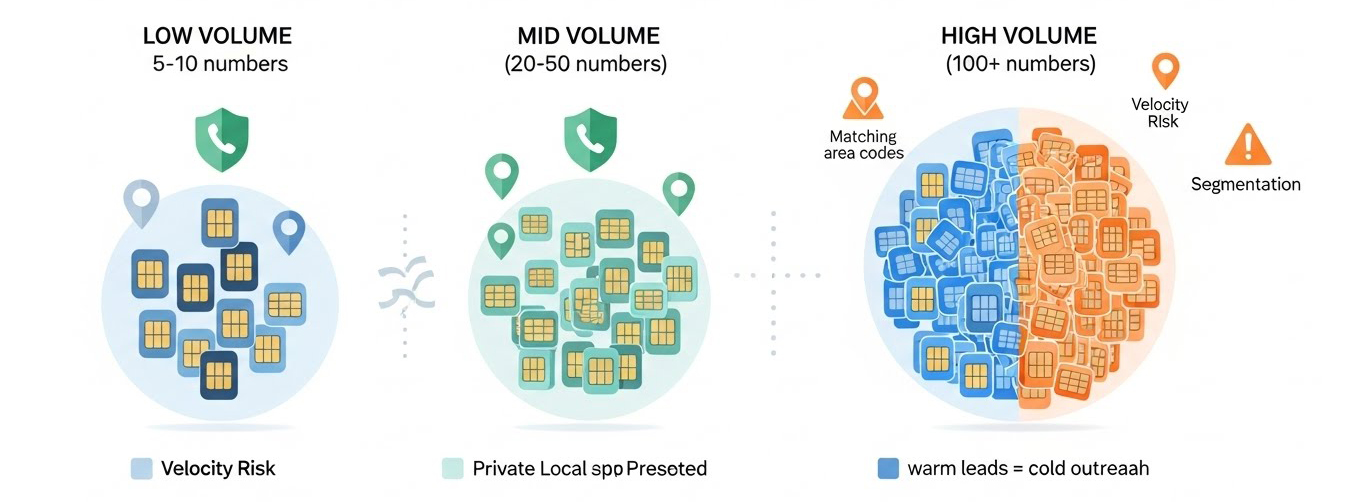
- Private Local Presence: Avoid shared number pools where other companies' bad habits ruin your reputation. Instead, utilize Aloware’s Private Local Presence to lease local numbers that are exclusively yours. This allows you to match the prospect's area code while maintaining complete control over the number's history.
- Volume Sizing: Your pool size must correlate with your daily volume. A general rule of thumb is to maintain a ratio that keeps you under the carrier's velocity radar:
- Low Volume: 5–10 numbers.
- Mid Volume: 20–50 numbers.
- High Volume: 100+ numbers.
- Segmentation: Do not mix your traffic. Use specific pools for cold outreach and separate pools for warm leads or customer callbacks. This containment strategy ensures that if a cold-calling number is flagged, it does not impact your ability to reach existing clients.
3. Establishing a Reputation Baseline
Never launch a campaign "blind." Before loading numbers into your dialer, you must audit their health.
- The Registration Loop: Register your numbers with the analytical engines that feed the major carriers (such as Hiya, TNS, and First Orion). This proactive step tells the algorithms, "We are a verified business," effectively immunizing your numbers against false positives.
- Quarantine Protocol: Use Aloware NumberGuard to run reputation audits on your DIDs. If a number shows a "Spam Risk" or borderline trust score, NumberGuard can identify it so you can quarantine and remediate it before it burns your leads.
4. Compliance as a Deliverability Tool
Compliance isn't just legal protection; it's a deliverability requirement.
- 10DLC Registration: If your strategy utilizes pre-call SMS, you must register your brand and campaign use case under A2P 10DLC regulations. Unregistered traffic is now heavily filtered. Aloware’s built-in compliance tools streamline this registration to ensure your texts actually land in the inbox.
- Quiet Hours: Hard-code your dialer to respect federal TCPA windows (8 AM – 9 PM) and stricter state-level overlays, such as Florida or Oklahoma (8 AM – 8 PM). Violating these windows is a surefire way to trigger carrier blocks.
5. Scripting, Voicemail & Pre-Call Text Configuration
Infrastructure isn't just about lines and servers; it's about content assets.
- Compliant Scripting: Prepare concise scripts that prioritize open-ended questions and clear value propositions.
- The "Visual" Voicemail Drop: Configure voicemail drops using a natural human voice. Crucially, optimize your scripts for "Visual Voicemail" transcription on iOS and Android. Since users read voicemails on their lock screens, the first 10 words must convey immediate context.
- Pre-Call Text Templates: Load your dialer with pre-approved SMS templates to establish a "warm" connection before the call. A template like "Hi John, calling you shortly regarding your inquiry about ___" sets a clear expectation, reducing the "unknown caller" anxiety.
Phase 2: Execution Protocols (Cadence & Traffic Shaping)
Once your infrastructure is secure, the focus shifts to execution. The goal is to mimic human behavior at scale.
1. Volume Distribution and Pacing
Carriers monitor for "machine-like" spikes. A sudden burst of calls from a fresh number looks like a robocall attack.
- The Cap: Limit output to 150–200 calls per day per number (with an absolute ceiling of 250).
- Throughput: Set your dialer pacing to a maximum of 2–3 calls per minute per number.
- Rotation: For high-volume verticals, implement a daily rotation strategy. Use "Pool A" on Monday and "Pool B" on Tuesday. This cooling-off period helps reset velocity counters on the carrier side.
2. The "Double Tap" Technique
In a world where unknown numbers are ignored, the "Double Tap" is a powerful psychological tool to signal urgency.
- The Method: If your first call goes unanswered, hang up and dial the same lead again within 30–60 seconds.
- The Psychology: Consumers often interpret a single missed call as spam. Two calls back-to-back implies importance—a doctor, a school nurse, or a delivery driver. This simple adjustment can increase pickup rates by 15–25%. Note: Limit this to one double-tap event per lead per day to avoid harassment flags.
3. The Power Dialer Advantage
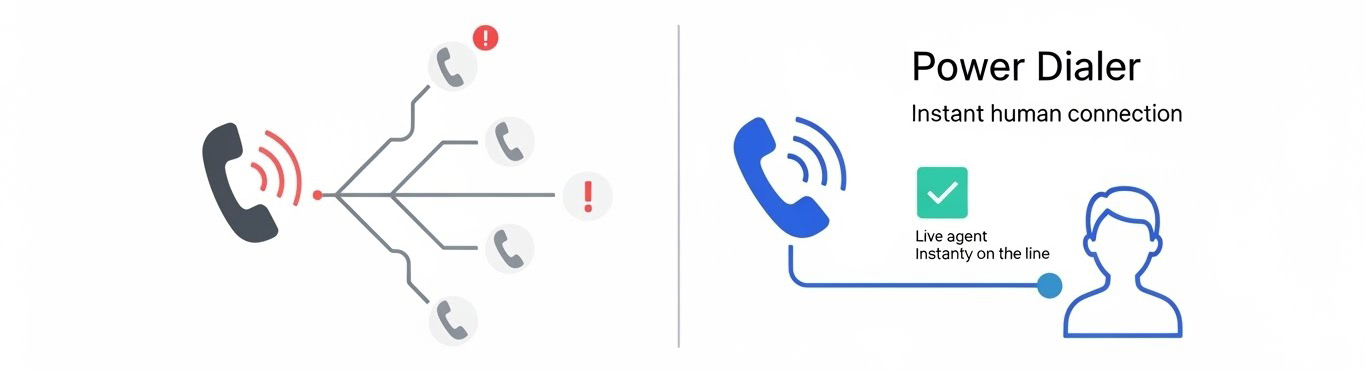
Predictive dialers that ring multiple lines simultaneously often leave a "silence gap" when a prospect answers, signaling a robocall.
- The Solution: Use the Aloware Power Dialer. Unlike predictive algorithms that risk abandoned calls, a power dialer ensures an agent is always live on the line the moment the prospect answers. This human-first connection prevents the "dead air" that triggers immediate hangups and carrier flags.
4. The SMS Bridge
Cold calling is hardest when it is truly cold. You can warm up the lead by establishing "recency" via an SMS bridge.
- The Workflow: Send a templated text message 5–10 minutes before the call.
- The Script: "Hi [Name], calling you shortly regarding your inquiry about [Topic]."
- The Result: When the phone rings moments later, the number is recognized from the notification. This recognition lowers the psychological barrier to answering.
5. Time-of-Day and Industry Logic
Leverage timezone detection to ensure you are hitting prospects when they are most receptive. Data suggests the "Golden Hours" are 9:00 AM – 11:30 AM and 2:00 PM – 5:00 PM.
- Industry Nuance: Be aware that certain industries—such as Solar, Debt Collection, and Medicare—are under higher scrutiny. These verticals require slower pacing and larger number pools to dilute the risk of flagging.
Phase 3: The Intelligence Layer (KPIs & Diagnostics)
You cannot fix what you do not measure. A successful outbound calling campaign strategy requires constant monitoring of "reputation decay."
1. The Connect Ratio
This is your primary health metric. It measures the percentage of calls that reach a human or a valid voicemail.
- Benchmark: Aim for 12–25% for cold outreach.
- The Red Flag: If your connect ratio suddenly drops below 8-10%, it is rarely a data issue. It is almost always a sign that a carrier has flagged your number pool.
2. Voicemail Detection Rate (AMD)
Monitor the percentage of calls hitting answering machine detection. A spike here is a leading indicator of "silent blocking," where carriers route your calls directly to voicemail without ever ringing the prospect’s device.
3. Average Call Length (ALOC)
Carriers use call duration to judge intent. A healthy outbound call should average 45–90 seconds minimum.
- Short Duration Ratio: If you have a high volume of calls under 6–10 seconds, carriers assume you are an autodialer making nuisance calls (or getting hung up on immediately). This behavior is a fast track to a "Spam Risk" label.
4. Spam Flag Monitoring
Don't wait for a customer to tell you that you look like a scammer.
- The Routine: Conduct daily checks using Aloware NumberGuard. It continuously monitors your DIDs across major carrier databases.
- The Fix: If a number is flagged, NumberGuard alerts you so you can retire or replace it immediately. Do not try to "push through" a spam flag; it will only damage your brand.

5. Callback Rate
A high callback rate (industry benchmark: 1–4%) is the ultimate sign of a healthy reputation. It means your Branded Caller ID is working, your pre-call SMS built trust, and prospects feel comfortable returning a missed call from your number.
Summary
The days of high-volume, low-quality dialing are behind us. To succeed today, your strategy must be engineered for trust. By utilizing tools like Aloware's automated attestation, private number pools, and intelligent power dialing, you ensure your message cuts through the noise and reaches the people who need to hear it.
.png)

Ruby Kootval is Head of Product Marketing at Aloware. She has 12 years in digital marketing, including 8 in B2B SaaS and 5 in telecom, and writes about AI voice agents, dialers, CRM integrations, and contact center operations.