


.webp)
TL;DR
Contact an inbound lead within 5 minutes and you are 21 times more likely to qualify them than if you wait 30 minutes. Speed to lead is the time between a prospect raising their hand and your first contact attempt, and it moves conversion more than almost any other variable you control.
The benchmarks:
- Qualification odds fall 21-fold when response time slips from 5 to 30 minutes (Lead Response Management study, 15,000 leads across 3 years)
- Contact success drops more than tenfold inside the first hour, and qualification success falls over sixfold
- Firms responding within an hour are 60 times more likely to qualify a lead than those waiting 24 hours or more (Harvard Business Review)
- The first vendor to respond captures 35 to 50% of B2B sales (Google/CEB white paper)
- Teams responding within one minute see up to 391% higher conversions (Chili Piper)
The target we would set: first contact under 5 minutes for 90% of inbound leads, and under 60 seconds for demo and pricing requests. Most teams miss it for two structural reasons: leads arrive when nobody is at a desk, and manual routing burns minutes before anyone dials.
What Is Speed to Lead?
Speed to lead (also called lead response time) is the elapsed time between when a prospect shows interest, whether that is submitting a form, requesting a demo, or clicking a CTA, and when your team makes first contact.
It is one of the most consistently studied variables in B2B sales, and the research points in one direction: faster is dramatically better. Not marginally better. An order of magnitude better.
Most sales leaders intuitively know this. Most sales teams still respond to leads in hours.
Prefer to watch? We broke down the full picture in a short video:
The Speed to Lead Data (2026)
The research on lead response time spans multiple decades and consistently reaches the same conclusions:
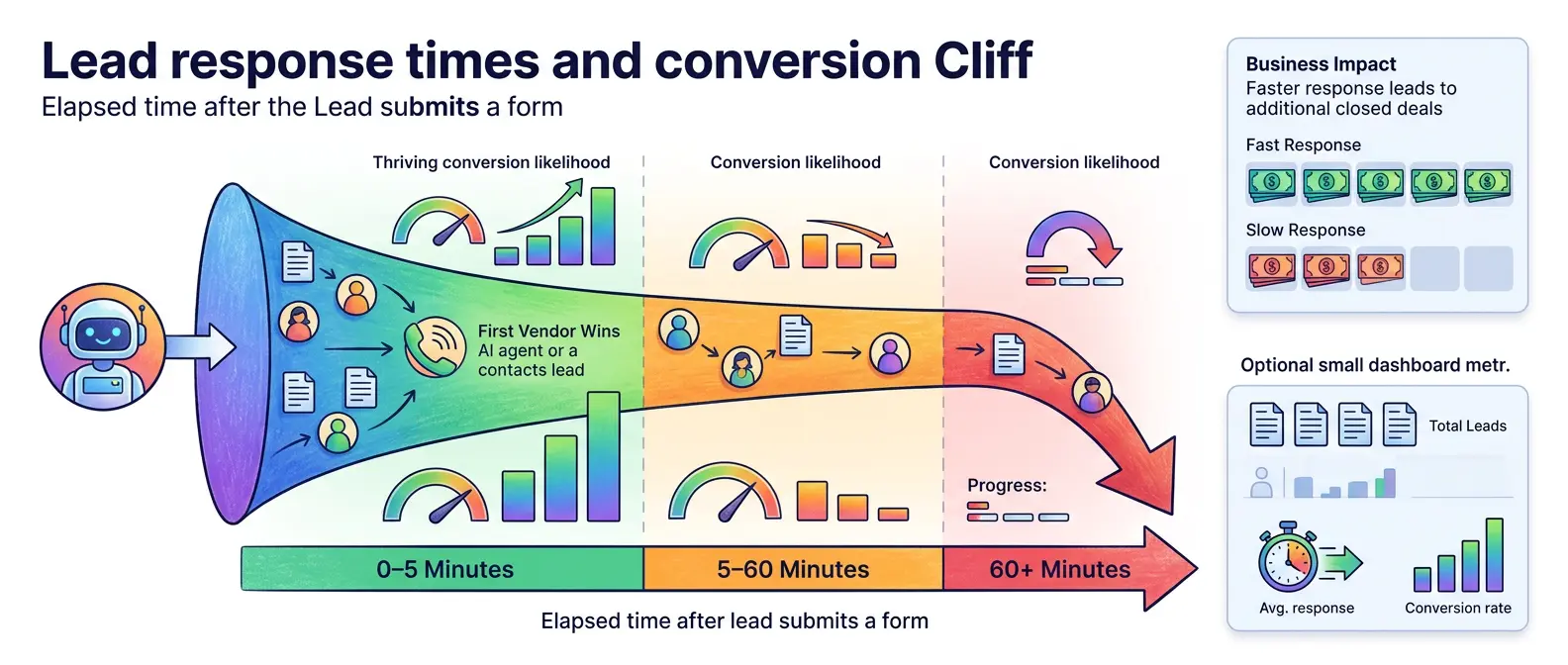
The conversion cliff drops fast:
- Contact within 5 minutes: 21x more likely to qualify vs. waiting 30 minutes (Lead Response Management study)
- Contact within 1 hour: 60x more likely to qualify vs. waiting 24 hours or more (Harvard Business Review)
- Contact after 1 hour: more than a tenfold drop in reaching the prospect at all, with qualification success falling over sixfold
Why the cliff exists:
When a prospect fills out your form, they are in a moment of peak intent. They have just articulated a problem and raised their hand for help. That moment fades fast. They get pulled into a meeting, they call a competitor, they change their mind, or they simply move on.
The first vendor to reach them while that intent is still high wins a disproportionate share of the conversation. Not the best, not the cheapest. The first. And the field is easier to beat than it looks: when Harvard Business Review audited 2,241 US companies, 24% took longer than 24 hours to reply and another 23% never replied at all. Nearly half forfeit the race before it starts.
The business math:
If your team generates 200 inbound leads per month with a 10% close rate, pulling even a fraction of those leads from an hour-plus response into the under-5-minute band adds closed deals from the same lead volume, with no additional marketing spend. Model it against your own close rate by response-time band before you budget for it.
Why Most Teams Fail at Speed to Lead
The data is overwhelming. Teams know it. So why is the average B2B lead response time still 47 hours?
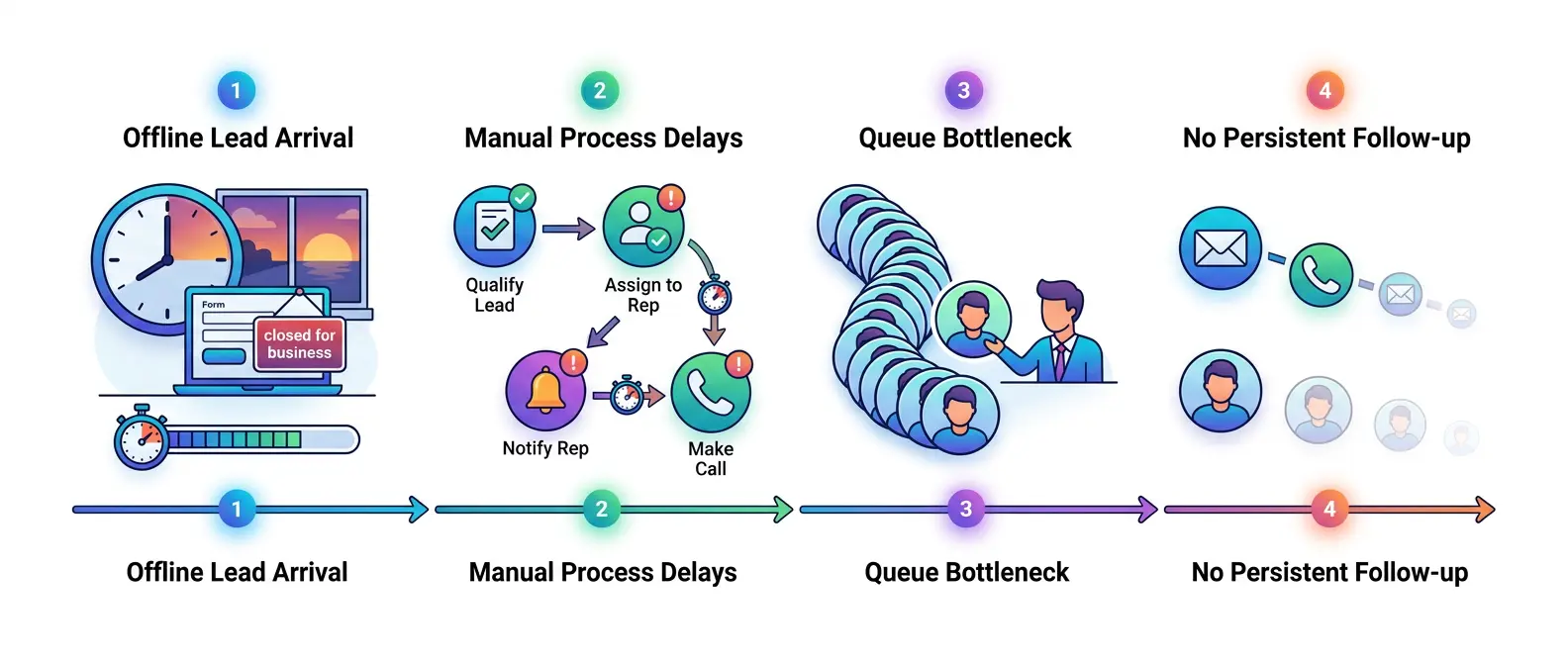
Reason 1: Leads come in when reps aren't available
A prospect submits a demo request at 7:30 PM on a Thursday. Your team is offline. The lead sits in HubSpot overnight. Your SDR sees it Friday morning, gets to it mid-morning between other tasks. By then, 12+ hours have elapsed.
This is the most common scenario and the hardest to solve with humans, because you cannot staff a sales team around the clock for inbound lead response without significant cost. The cost of letting those after-hours leads sit is easy to underestimate: we ran the math in what your missed calls are actually costing you.
Reason 2: Manual processes create lag even during business hours
Even when a rep is at their desk, the typical lead response process has friction: notification arrives, rep opens CRM, rep finds lead, rep dials, no answer, rep logs the attempt, rep schedules follow-up. This is exactly the gap an AI lead follow-up agent closes — it calls the moment the form hits your CRM. Each step adds minutes. By the time the rep dials, 15 to 30 minutes may have passed.
Reason 3: Leads come faster than reps can handle
At higher volumes, the queue builds. If an SDR is on a call when three form submissions arrive, those three leads wait. The longer the queue, the colder each lead gets before first contact.
Reason 4: No follow-up persistence
It takes 8 attempts to reach a decision-maker. Most reps make one or two attempts and move on. The speed problem is not just first contact. It is the full sequence of follow-up attempts.
How to Achieve Sub-60-Second Speed to Lead
The only way to reliably contact every lead within 60 seconds, regardless of when they submit or whether your team is online, is automation.
Before: the dial goes out next morning. After: 60 seconds after the form hits. Same lead, same team, same marketing spend.
Here is what that looks like in practice. A demo request lands at 7:42 PM, sits in the CRM overnight, and gets its first dial at 9:15 the next morning, by which point the prospect has already spoken to two other vendors. Run it the other way and the same submission fires a workflow at 7:42 PM, the lead is on a call at 7:43, qualifies, and books a Tuesday slot before the competing vendors have opened their laptops. The only variable that changed was elapsed time.
Option 1: AI Voice Agent (Best for most teams)
An AI voice agent calls the lead the moment a form submission triggers in your CRM. The agent runs a natural qualification conversation: it confirms interest, collects key information, answers basic questions, and then either books a meeting directly on a rep's calendar or transfers a hot lead to a human on the spot.
Every call is logged to your CRM with a full transcript and outcome summary, so when the rep picks it up they have context instead of starting from zero.
This is the AloAi voice agent path: a lead submits your demo request form, your HubSpot or Salesforce workflow fires, the agent places the call, qualifies, and then books the meeting or transfers to a rep. If you are still deciding whether an AI agent belongs on your first touch at all, start with our complete guide to AI voice agents.
It works at 2 PM on a Tuesday and 9 PM on a Saturday. No staffing required.
Option 2: Instant SMS (Good complement to voice)
For leads who do not answer the phone, an instant SMS sent the moment the form is submitted keeps the conversation going. A message like "Hi [Name], saw you just requested a demo. I am [rep name] from [company]. When is a good time to connect?" sent within 60 seconds shows responsiveness and starts a two-way conversation.
Aloware's Form2Text does this automatically: form submission → immediate personalized SMS → rep notified when the prospect replies.
Option 3: CRM Workflow + Power Dialer (For business hours coverage)
For teams that want human-first response during business hours, a HubSpot or Salesforce workflow can instantly enroll new leads into a rep's power dialer queue at the top, so the rep's next dial is always the freshest lead.
Combined with a priority sort (new inbound leads always jump the queue), this keeps response times under 5 minutes during business hours without requiring any manual assignment.
Building Your Speed to Lead System in Aloware
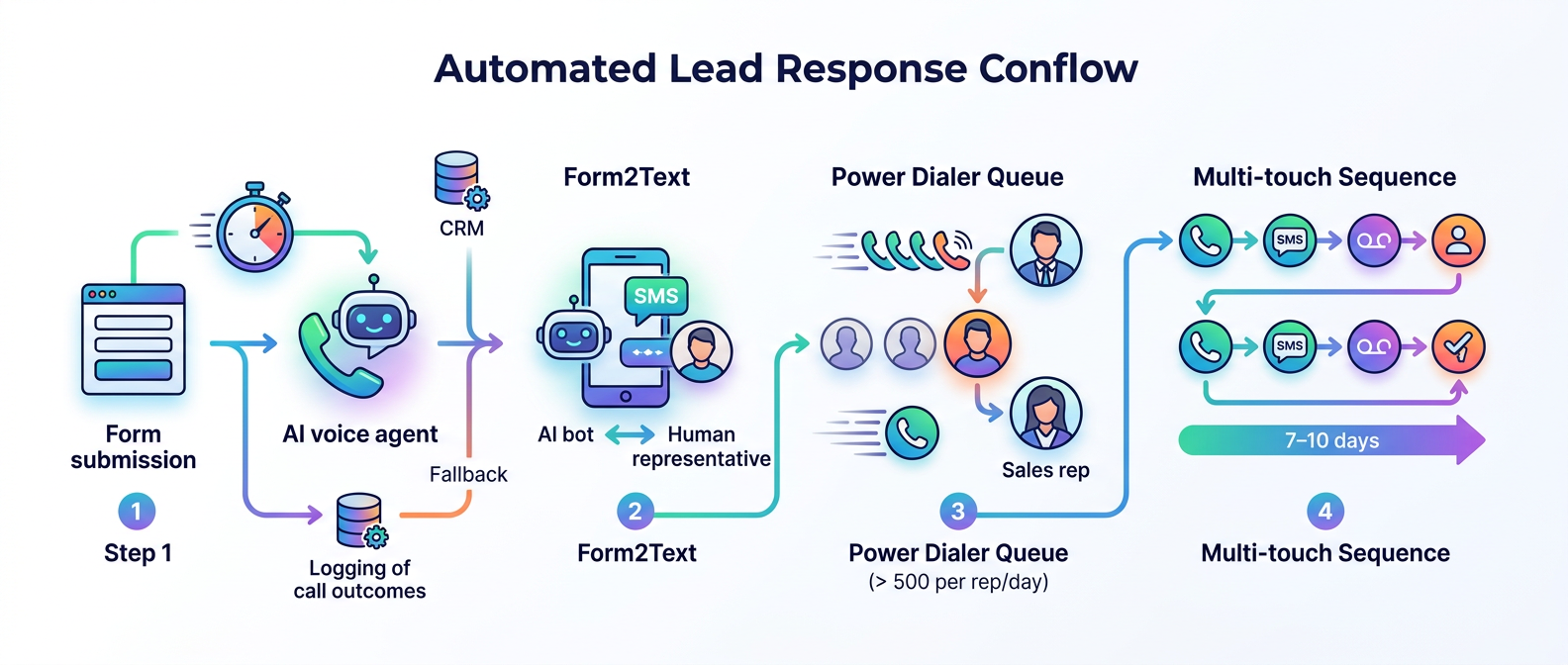
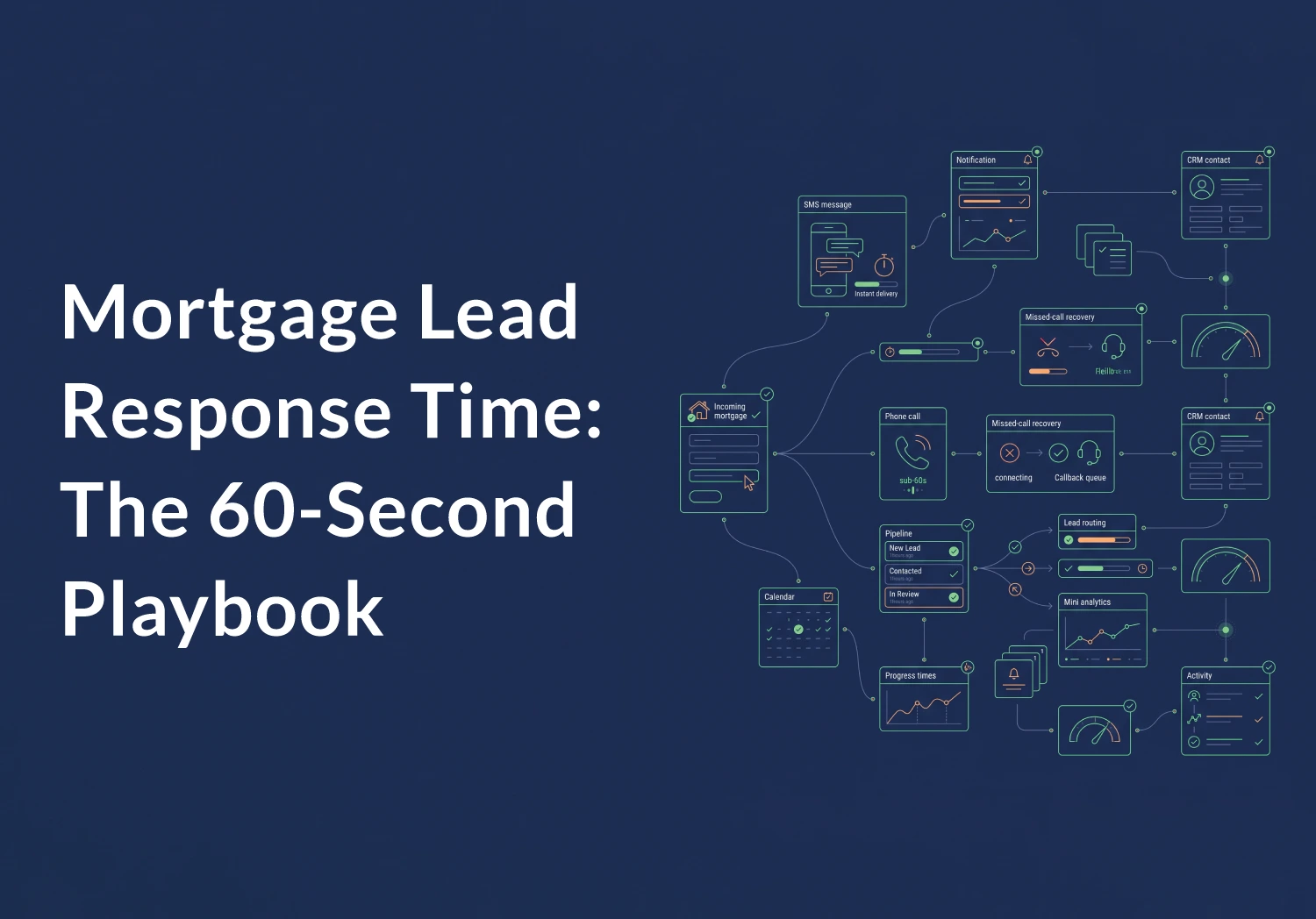
The full Aloware speed-to-lead stack:
Step 1: Form2Call, an immediate outbound call
- New form submission triggers your HubSpot or Salesforce workflow
- Form2Call connects an available rep to the lead, typically within 30 to 60 seconds, with a preview of who they are and what they asked about
- Want the first touch automated instead? An AloAi voice agent can take that call, qualify, and book or transfer
- Full transcript and outcome logged to your CRM automatically
Step 2: Form2Text, an instant SMS fallback
- If no answer on the Form2Call attempt, an immediate personalized SMS fires
- Two-way conversation with AI SMS bot or rep takes over
- Rep notified when prospect replies
Step 3: Power dialer queue, hot leads prioritized
- Leads not reached on the first touch get added to the rep's power dialer list at top priority
- Rep's next session starts with the warmest, most recent leads
- 300 to 500+ dials per day per rep depending on connect rate and call length, with full CRM context on every call
Step 4: Multi-touch sequence, persistent follow-up
- Automated sequence of calls, voicemail drops, and SMS across 7–10 days
- Triggered by CRM workflow, no manual scheduling required
- Stops automatically when lead converts or opts out
This system contacts every inbound lead within 60 seconds, then follows up persistently for 7 to 10 days, without a single manual step from your team.
For the full workflow guide with HubSpot setup instructions: AI Voice Agent Lead Qualification with HubSpot.
Speed to Lead by Industry
Response time expectations vary by industry. Here's how to think about it:
Real estate: leads requesting property info are often comparing three to five agents at once. Sub-2-minute response is table stakes. AI voice agents that call Zillow leads within seconds are now common among top producers.
Legal services / intake: a personal injury prospect who submitted a form at 10 PM will call the first firm that responds in the morning, or the firm that called them back in 30 seconds overnight. Speed is the primary differentiator in legal intake.
SaaS / B2B: demo request leads are high-intent but often comparing multiple vendors. The vendor who calls within 5 minutes gets the first impression. Leads contacted within 5 minutes are 21x more likely to qualify than those contacted at 30 minutes.
Insurance / financial services: compliance requirements apply to how you contact leads (TCPA consent, DNC scrubbing), but speed is still critical. Aloware includes built-in TCPA compliance tools, covered in our TCPA compliance checklist.
Home services: emergency requests (HVAC, plumbing) are pure speed plays. The company that answers first gets the job.
Measuring Your Speed to Lead
Before you can fix it, you need to know your current baseline. Three ways to measure:
In HubSpot: Create a report on time elapsed between "Lead Created Date" and first "Call Activity" logged. Filter by lead source (form submissions only). This gives you median and average response time by rep and team.
In Aloware: Speed to Lead reporting shows time between contact creation and first outbound call attempt, segmented by rep, lead source, and time of day. This is the most granular view of where response time is lost.
Spot check method: Submit a test form on your website at different times, say 9 AM Tuesday, 7 PM Thursday, and Saturday morning. Time how long until you receive a call or text. This is the clearest way to see what a prospect actually experiences.
The Speed to Lead Benchmark
No published standard sets this line, so here is the one we recommend: under 5 minutes for 90%+ of inbound leads, and under 60 seconds for high-intent leads such as demo requests, pricing inquiries, and contact forms. Automation makes both achievable without adding headcount.
Frequently Asked Questions
What is speed to lead?
Speed to lead is the time elapsed between when a prospect shows interest — submitting a form, requesting a demo, or clicking a CTA — and when your team makes first contact. It's one of the most studied variables in B2B sales, and the research consistently shows that faster contact dramatically increases conversion rates.
How fast should you respond to a lead?
Under 5 minutes for high-intent leads (demo requests, pricing inquiries). Under 60 seconds is achievable and optimal with AI voice agents. After one hour, the likelihood of reaching a prospect drops 10x. Over 24 hours, you're 60x less likely to qualify the lead than if you'd called within an hour.
Why does speed to lead matter so much?
When a prospect submits a form, they're at peak intent — they've just articulated a problem and raised their hand. That window is short. They may call competitors, get distracted, or simply move on. 78% of customers buy from the first company to respond. Being first isn't a minor advantage — it's the primary driver of conversion in competitive markets.
How do you improve speed to lead?
The only way to reliably respond to every lead within 60 seconds — including nights, weekends, and holidays — is automation. Aloware's AI voice agent calls new leads within seconds of a form submission automatically, qualifies them, and either books a meeting or routes hot leads to a rep. No manual assignment, no delay, 24/7.
What is Form2Call?
Form2Call is Aloware's feature that automatically triggers an AI voice agent outbound call the moment a prospect submits a form on your website. The AI calls within 15–30 seconds, conducts a qualification conversation, and logs everything to your CRM. It works for any form on any platform connected to HubSpot, Salesforce, or Aloware via Zapier.
How do you measure speed to lead?
In HubSpot, report on time elapsed between "Lead Created Date" and first call activity logged. In Aloware, the Speed to Lead report shows average response time by rep, lead source, and time of day. A simple spot check: submit your own form at 7 PM on a Friday and time how long until you receive contact — that's your lead's actual experience.
.png)

Ruby Kootval is Head of Product Marketing at Aloware. She has 12 years in digital marketing, including 8 in B2B SaaS and 5 in telecom, and writes about AI voice agents, dialers, CRM integrations, and contact center operations.

--How-Fast-Sales-Teams-Actually-Respond.webp)