

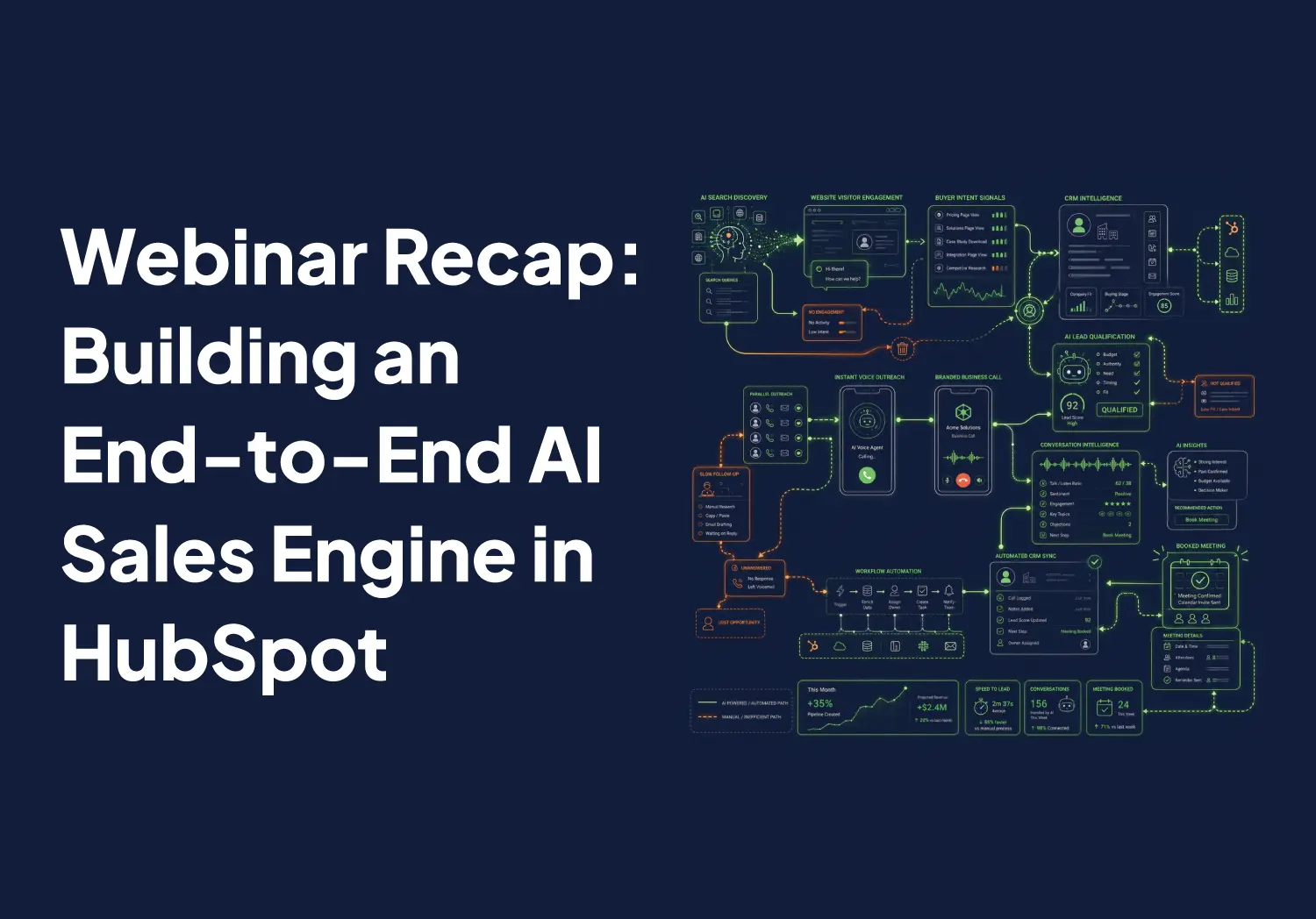
Most companies already pay for AI tools inside HubSpot. Far fewer have turned them on, and almost none have connected them into one system. That gap was the focus of our recent webinar with Vonazon, a HubSpot Elite Solutions Partner. The session traced a full revenue journey, from AI search visibility all the way to a booked meeting, and ended with the moment everyone talked about in the chat: an Aloware AI voice agent calling a real phone live, qualifying the lead, and writing every answer back to HubSpot on its own.
Watch the full recording above, or read on for the recap.
How Vonazon builds the front half of the engine
Vonazon kicked things off with the stages that happen before a phone ever rings. Miles England from Vonazon opened with the foundation: your brand kit, company profile, ICP, and buyer personas now live under Breeze and Context in HubSpot, and every AI agent downstream pulls from that data, so fill it out first. Chloe Papky then covered Answer Engine Optimization, where the numbers reframe how buyers find you. Per the data shared in the session, 60% of Google searches end without a click, roughly 900 million people a week research with AI tools, and visitors arriving from AI referrals convert at 4.4 times the rate of organic traffic, yet your own website typically accounts for only 4 to 8% of AI citations. Sheena Heer demoed HubSpot's Buyer Intent and Customer Agent, which engage website visitors in real time, answer questions from approved content, and capture budget and timeline details, with Customer Agent already resolving 65% of conversations across more than 8,000 active customers per HubSpot data shared in the session. Sabrina closed Vonazon's portion with the Prospecting Agent, rebuilt in HubSpot's Spring 2026 Spotlight as an always-on AI BDR that monitors buying signals like funding, hiring, and expansion, prioritizes accounts, explains its reasoning, and drafts outreach reps edit instead of writing from scratch.
So visibility drove the traffic. The agents captured the intent and built the pipeline. Then the lead sits in the CRM. That is where Aloware comes in, and it is where most revenue engines quietly leak.
Why speed to lead decides who wins the deal
Will, Aloware's Director of Product, opened the conversion stage with two numbers. Citing InsideSales research, your odds of qualifying a lead drop roughly 60 times after just five minutes of delay. MIT research shared in the session is even starker: fewer than 2% of leads survive a five-plus-minute response window.
And speed alone is not enough, because most sales calls never get answered in the first place. 87% of Americans refuse calls from unknown numbers. Carriers run AI spam detection that flags legitimate sales teams the same way it flags scammers, and 81% of businesses report revenue loss from calls incorrectly marked as spam. You can respond in 60 seconds and still lose if your number shows up as "Scam Likely."
Aloware was built to solve both problems at once.
How does Aloware get calls answered?
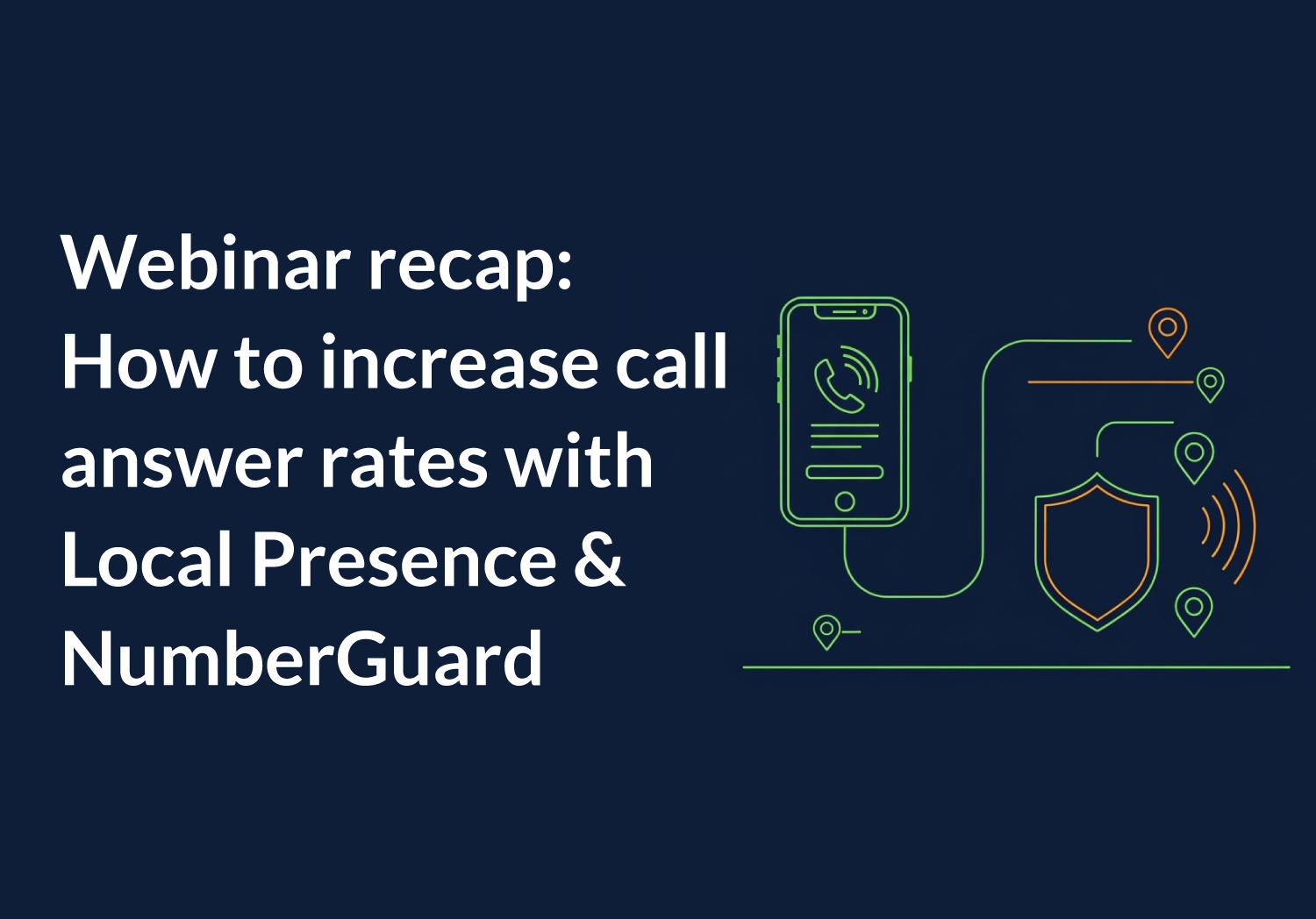
Three layers work together. Aloware is the only platform running all three in real time.
Branded calling. Your business name and logo appear on the buyer's screen before they answer, like a saved contact. In a Twilio study of 720,000 calls cited during the demo, branded numbers hit a 62% answer rate versus 20% for unbranded. Anonymized Aloware customer data shows the same pattern: a 2.3x lift in pickups after enabling branded calling.
NumberGuard. Real-time caller ID reputation monitoring that protects your numbers from being flagged before it happens, not after your connect rate has already cratered.
Local presence. Outgoing area codes automatically match the prospect's location. Familiar area codes get answered more.
Spam flagging, unknown-number anxiety, and lack of brand recognition are the three reasons legitimate calls get ignored. This stack addresses all of them automatically.
What happened in the live demo
Will showed four moments: trigger, talk, sync, escalate.
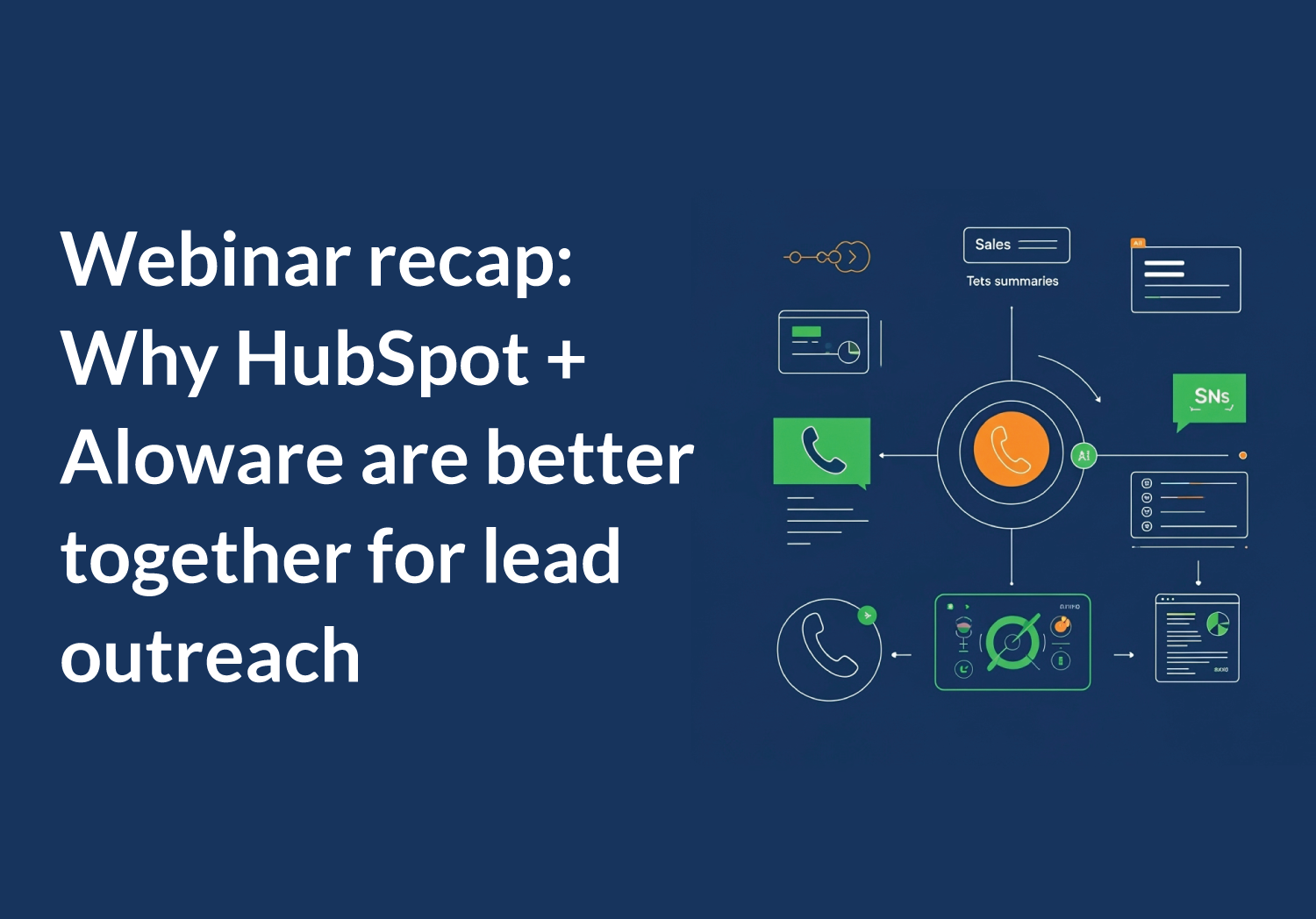
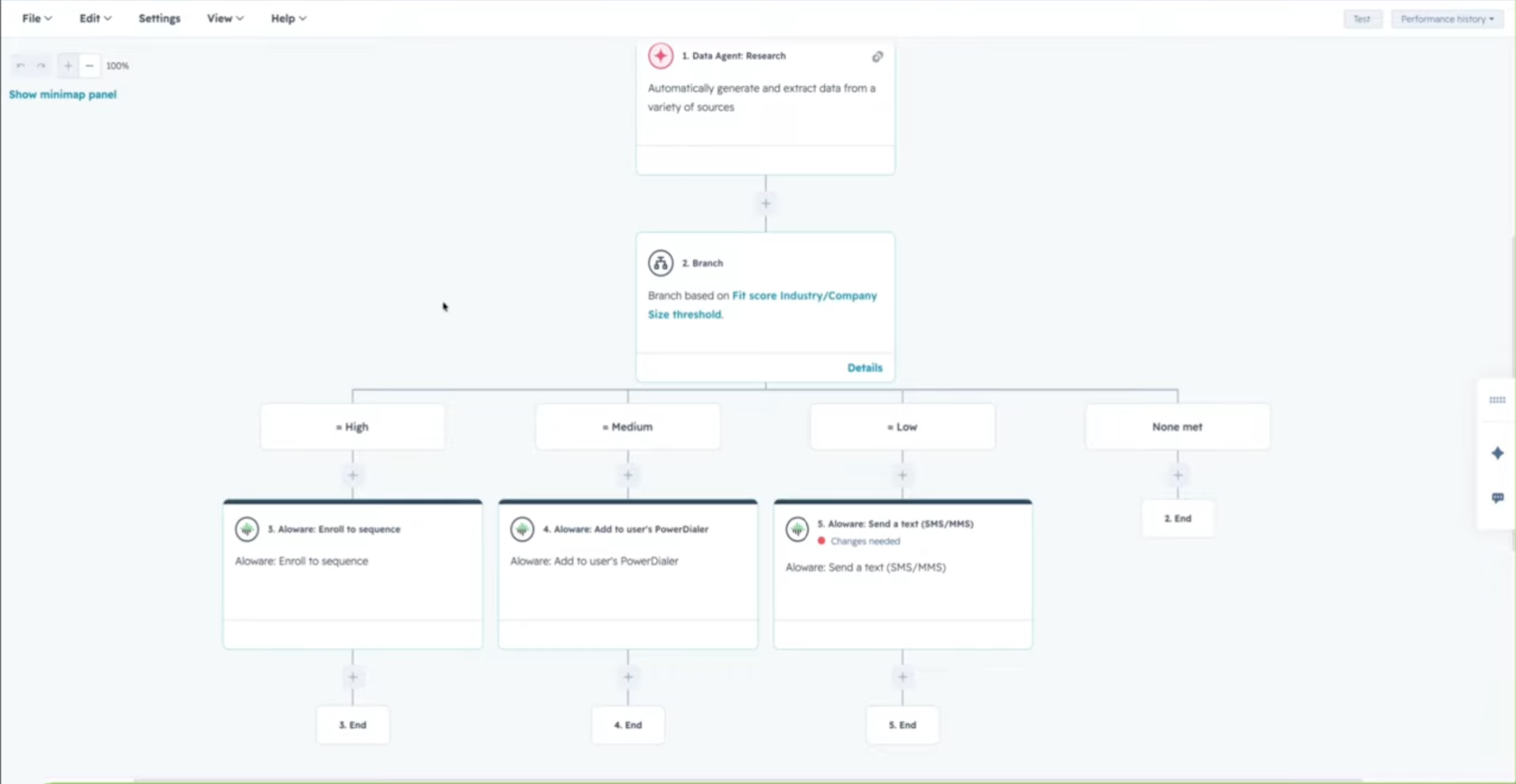
Trigger. A HubSpot workflow fires on an intent signal. In the demo, visiting the Aloware pricing page three times. The workflow scores the lead's fit and routes it: high fit gets an AI voice agent call in under 60 seconds, medium fit drops into the Power Dialer queue for a rep to call within the hour, low fit gets an automated text with replies handled by an AloAi text agent. Any HubSpot signal works as a trigger: form fills, missed calls, email opens, link clicks.
Talk. Will opened the pricing page and his phone rang within a minute. A branded call from Aloware. The AI agent introduced itself, asked about his use case, uncovered that he was on RingCentral with a patchwork of disconnected tools, identified HubSpot as his CRM and 10 reps as his team size, recommended a plan, answered a question about quarterly discounts, and booked a demo. Unscripted, in real time. One attendee summed up the chat reaction: impressed and a little scared at how natural it sounded.
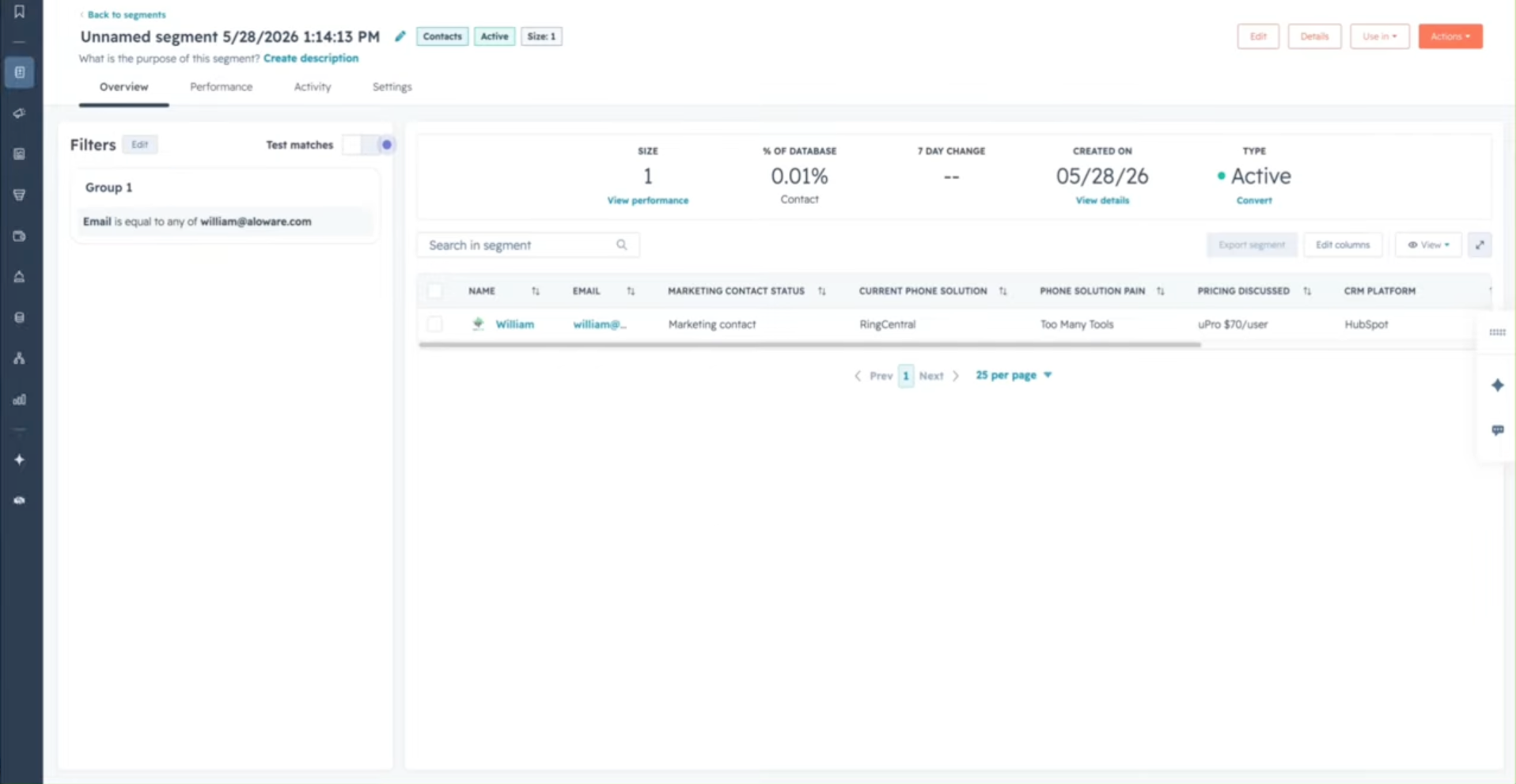
Sync. This is the anchor moment. When the call ended, every answer landed as a structured HubSpot property automatically. Current phone solution: RingCentral. Pain point: too many tools. CRM: HubSpot. Team size: 10. Nobody typed anything. The conversation is the data.
Escalate. The AI agent does not close deals, by design. It starts the conversation, qualifies, logs everything, and hands off. The human closer opens HubSpot and sees the full picture: transcript, mapped properties, booked meeting. They walk in warm.
Why the HubSpot sync matters more than the call
Most dialers log a call activity and call that an integration. Aloware maps to actual HubSpot entities: contacts, companies, deals, pipelines. Calls, recordings, transcripts, AI summaries, texts, and sequence steps land on the right record and deal stage in real time.
This matters because of what sales teams actually spend their day on. Reps spend only 28% of their time selling. The rest goes to CRM updates, call logging, follow-up notes, and chasing missed leads. Aloware customers consistently report saving 30 to 60 minutes per rep per day on CRM admin alone. G2 reviewers repeatedly call it the best HubSpot integration available, and Aloware was ranked the #1 best sales dialer in an independent 90-day test of eight platforms in January 2026.
What else runs in the conversion layer
The webinar showed one workflow. The full platform covers the entire conversation cycle inside HubSpot.
Before the conversation: AloAi Voice Agents handle inbound 24/7, qualify, and book meetings. The AI Missed Call Handler texts back instantly so no inbound lead goes cold.
During: the Power Dialer sequences reps through HubSpot lists at 500+ calls a day, with voicemail drop, dispositions, and click-to-call from any HubSpot record.
After: AI call summaries with action items post straight to the contact record. AloAi Voice Analytics surfaces sentiment, objections, and keyword trends for coaching.
At scale: AI text agents qualify leads over SMS, and multi-step sequences combine calls, texts, and voicemail drops. Compliance is handled underneath it all: managed A2P 10DLC registration, DNC management, and SOC2 certification.
Frequently Asked Questions
What percentage of people answer the AI agent's call?
Answer rates collapse after five minutes, so calling within the first minute matters most. Combined with branded calling, the Twilio study cited in the webinar showed branded numbers reaching a 62% answer rate versus 20% unbranded.
Can the Aloware AI agent close deals on its own?
No, and that is by design. The agent starts the conversation, captures structured information, and updates HubSpot. A human closer takes over with full context.
How long does setup take?
A basic configuration takes about two hours. Guided options simplify the initial setup, and from there you can go as deep as you want with custom HubSpot properties and entity syncing.
Do I need HubSpot's AI agents for Aloware to work?
No. Aloware triggers off any HubSpot workflow signal, like a form fill, a pricing page visit, a missed call, or an email open. The upstream agents simply give it richer signals to act on.
How much does Aloware cost?
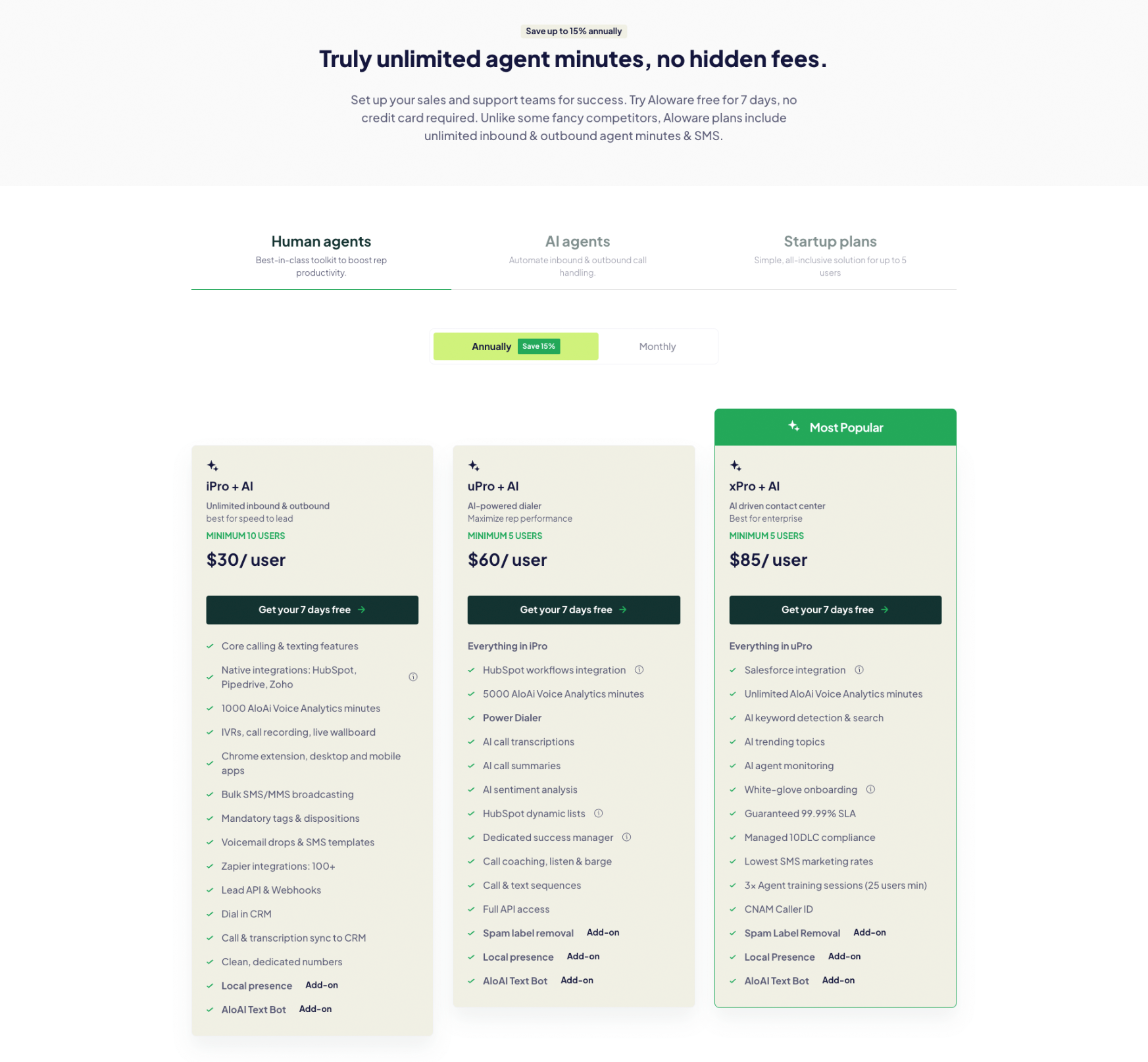
Plans start at $30 per agent per month with quarterly billing, with unlimited calling and texting. The uPro plan shown in the demo runs $70 per user per month.
.png)

Ruby Kootval is Head of Product Marketing at Aloware. She has 12 years in digital marketing, including 8 in B2B SaaS and 5 in telecom, and writes about AI voice agents, dialers, CRM integrations, and contact center operations.