


.webp)
TL;DR: For most real estate teams the best auto dialer is Aloware, because it pairs a single-line Power Dialer with the Pickup Stack (number-reputation remediation, branded calling, and local presence) so expired, FSBO, and buyer calls actually connect instead of decaying into "spam likely." The best dialer isn't the one with the most lines; it's the one that keeps calls getting answered and writes every call into your CRM. The lead-focused tools on this list bundle dialing with real-estate lead data, but they sell speed and leads, not connect rate, and none live inside your CRM.
Key facts:
- Dials per hour is the wrong metric. Connects per hour is the one that pays your commission.
- Multi-line and predictive dialing is exactly what burns real-estate numbers into "spam likely" over a few weeks.
- Branded display and spam labeling are two separate carrier systems. Branding alone won't fix a flagged number.
- Lead vendors sell expired/FSBO data with a dialer attached; the dialer is a lead-data upsell.
- Aloware's seat plans start at $30/user/month billed quarterly (iPro+AI); the Power Dialer is on uPro+AI at $60/user/month. The Pickup Stack is a separate add-on.
The 6 best auto dialers for real estate in 2026:
- Aloware: single-line Power Dialer plus the Pickup Stack (connect-rate engineering), with CRM-native logging
- Mojo Dialer: lead-vendor dialer with per-line licensing
- REDX: real-estate lead subscriptions with a Power Dialer on top
- BatchDialer: multi-line / predictive dialer
- Vulcan7: real-estate lead-and-dialer bundle (quote-only pricing)
- PhoneBurner: standalone power dialer with a built-in CRM
Last updated: July 1, 2026
If you run expired, FSBO, or circle-prospecting lists, you already know the feeling. You have the list, the script, and a rep who wants to work. You dial 200 numbers and talk to nine people. The rest ring out, go to voicemail, or show up on the seller's phone as "Spam Likely" and get thumbed straight to ignore.
That is not a speed problem. Real estate agents don't lose deals because they dial too slowly. They lose them because the calls don't connect, and because every connect that does happen gets logged by hand into a CRM the agent is barely looking at. A faster dialer makes the first problem worse, not better.
We priced the leading real estate dialers on their live pricing pages (July 1, 2026, re-verified July 20, 2026), and ran the connect-rate math a real-estate team actually faces. This isn't a "here are the fastest dialers" roundup. It's a ranking built around the two numbers that decide whether the phone still works for you in 2026: whether your calls get answered, and whether they log themselves where you work.
What is an auto dialer for real estate, and why is "auto dialer" the wrong thing to shop for?
An auto dialer for real estate is software that automatically dials through a list of contacts (expired listings, FSBOs, a farm area, a buyer database) so agents talk to more people per hour without manually punching in numbers. It advances to the next contact on its own, drops a pre-recorded voicemail when nobody answers, and on the better tools logs the outcome to your CRM.
That definition is accurate. It's also a trap, because it points you at the wrong metric.
The number every "best dialer" post optimizes for is dials per hour. More lines, more dials, faster list. But dials don't list houses. Conversations do. And the ratio between the two, your connect rate, is the whole game.
- Shopping for speed: "This dialer does 300 dials an hour across four lines." You burn through the list faster and talk to roughly the same number of humans, because most of those numbers still ring out or get screened.
- Shopping for connect rate: "This dialer keeps my number trusted, shows a recognizable local ID, and logs every call to my CRM." You dial fewer numbers and have more conversations, because more of them get answered.
The second framing is the one that grows commission. If you want the full breakdown of how to pick a dialer that won't burn your numbers, our general best-sales-dialers guide ranks the category across every vertical. This post is the real-estate cut of that question.
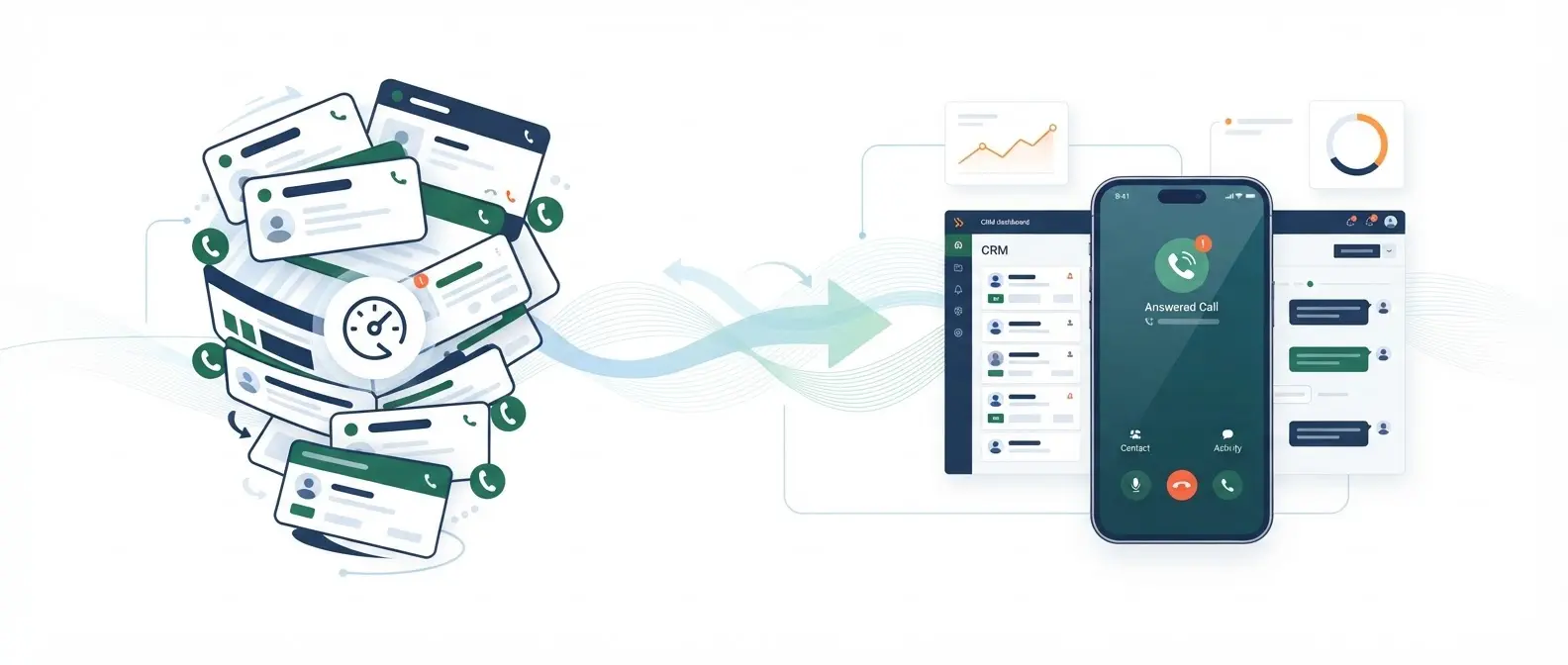
Key takeaway: An auto dialer for real estate automates dialing through a contact list, but the metric that matters isn't dials per hour. It's connects per hour. Shop for connect rate, not speed.
How we evaluated the best real estate dialers
We compared six dialers real estate teams actually shortlist. Each was priced on its live public pricing page on July 1, 2026, re-verified July 20, 2026 (Vulcan7 publishes no public pricing, so it's named quote-only, with no invented number). We scored each one on the criteria that decide connect rate and CRM fit for an outbound real-estate operation, not on raw dial speed.
The five criteria:
- Connect-rate engineering: does the tool actually help your calls get answered over time (number-reputation remediation, branded display, local presence), or does it just dial faster?
- CRM-native logging: does every call, recording, and note write itself to the right contact and deal in your CRM, or does the tool log a generic activity and call it an integration?
- Dialer type: single-line power dialer (one call at a time, no dead air) versus multi-line or predictive (dials ahead of the agent, creates the silence gap carriers flag).
- Real-estate lead-workflow fit: expired, FSBO, and circle-prospecting list handling.
- Pricing transparency: published per-seat pricing you can read versus a quote-based bundle.
What we did not test: long-term deliverability of each tool over a full 12 months (that takes a year of live dialing to measure honestly), and the quality of each vendor's individual lead data. Lead quality is a separate purchase from the dialer, and it varies by market. We evaluated the dialing layer.
Key takeaway: We ranked these six on connect-rate engineering, CRM-native logging, dialer type, real-estate workflow fit, and pricing transparency, not on dials per hour. We did not evaluate 12-month deliverability or individual lead-data quality.
The 6 best auto dialers for real estate in 2026 (quick comparison)
Here's every option at a glance. Aloware is first because it's the only one on the list that treats the dialer as one layer of a connect-rate system instead of the whole answer. Prices are the live public pricing verified July 1, 2026.
Key takeaway: Five of the six sell either lead data or dial speed. Only Aloware sells connect rate: a single-line dialer plus the carrier-trust layer that keeps your calls answered, all logging to your CRM.
Why do real estate agents' calls stop getting answered?
Because the phone network stopped trusting your number, and real-estate dialing is one of the fastest ways to lose that trust.
Carriers score every outbound number on its call patterns, complaint volume, and reputation. High-volume real-estate dialing means lots of short, unanswered calls to expired and FSBO lists, and that looks to carrier spam analytics exactly like a robocaller. So the number gets tagged "Spam Likely" or "Scam Likely," and pickup collapses. This is the single most common pain we hear on our own sales calls: "our calls are being marked as spam." One rep after another describes their numbers decaying into scam labels and asking for a "weekly spam reset."
The scale is measurable. Hiya's State of the Call 2026 survey of 12,000+ consumers across six countries found that 86% of unknown calls go unanswered, and Truecaller's 2026 survey of 1,614 U.S. adults found 82% have ignored an important call or text out of fear it was a scam, up from 59% in 2024. Your expired-listing seller screening your call is inside those numbers.
Two mechanics matter here, and most dialer content gets them wrong:
- Multi-line and predictive dialing is the accelerant. When a dialer dials several numbers ahead of the agent and connects whoever answers first, it creates a 1–3 second silence gap on every other call. That's the "hello… hello?" dead air. Consumers hear it and hang up. Carriers detect that exact signature and flag the number as a robocaller. It also raises TCPA abandoned-call exposure. Real estate teams tell us they hit a "6–8 second delay in connect time" on predictive dialers, and that dead air is what erodes pickup.
- Branded display does not remove a spam label. Branded calling shows your verified business name on the recipient's screen, which improves answer rates. But branded display and spam labeling are two separate carrier systems running in parallel. A call can show your brand and still carry a "Spam Likely" flag if the number's reputation has deteriorated. STIR/SHAKEN attestation, which authenticates that you are who you say you are, is signed at the originating service provider, not by the dialer.
So the expired-listing caller who buys a faster four-line dialer with no reputation layer connects fine for two or three weeks. Then the numbers burn, the "Spam Likely" tag lands, and pickup falls off a cliff. The dialer didn't fail. The number reputation did, and nothing in the tool was managing it. If you want the mechanics in depth, here's why your calls land in spam and how to fix it lawfully.
Most cold real-estate calls go unanswered to begin with. When your own number gets flagged on top of that, you're not running an outbound operation anymore. You're paying for a faster way to hit voicemail.
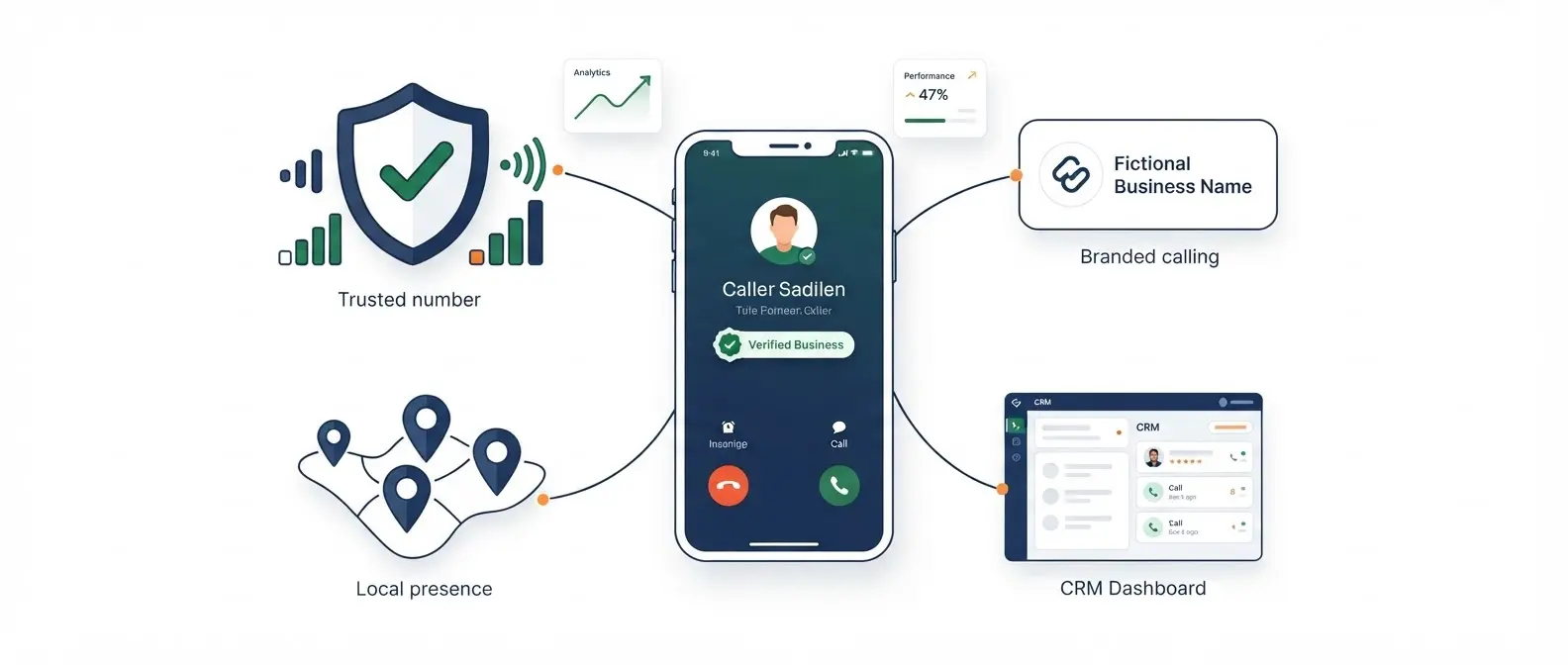
Key takeaway: Real-estate numbers get flagged because high-volume dialing looks like spam to carrier analytics, and multi-line dialing accelerates it. Branded display won't fix a flagged number, because spam labeling and branded display are separate carrier systems.
Detailed reviews: the 6 best auto dialers for real estate
1. Aloware: best for real estate teams that want answered calls, logged in their CRM
Best for:Real estate teams and brokerages running real outbound volume on expired, FSBO, and circle-prospecting lists who want their numbers to stay trusted and every call to log itself into HubSpot, Salesforce, Pipedrive, Zoho, or GoHighLevel.
Pricing: Seat plans start at $30/user/month (iPro+AI, billed quarterly). The Power Dialer is on uPro+AI at $60/user/month (billed quarterly). The Pickup Stack (NumberGuard, Branded Calling, and Local Presence) is a separate add-on, priced on top of the seat. The AloAi Voice Agent is priced per minute from $0.10/minute. (Local Presence is a $300/mo add-on; Branded Caller ID is usage-based and requires an RCPA commitment. See aloware.com/pricing for current add-on pricing.)
Free trial: Aloware offers a free trial so you can test the platform before buying. Some features (AloAi agents in particular) require setup and may be limited during the trial, so confirm what's included for the workflow you care about.
Why Aloware stands out
Every other tool on this list treats the dialer as the product. Aloware treats it as one layer. The single-line power dialer built for outbound auto-advances through a CRM list one contact at a time and connects your agent the moment someone answers. No dead air, no abandoned calls, none of the dialing behavior that burns real-estate numbers.
Aloware is deliberately against parallel and predictive dialing. That's a stance, not a missing feature. Multi-line dialing is the exact pattern carriers flag, so a tool that pushes "more lines = more calls" is quietly trading your number reputation for a vanity dial count. One quality call at a time on a trusted number beats brute-force volume on a flagged one.
On top of the dialer sits the Pickup Stack, the connect-rate layer that keeps listing and buyer calls getting answered over time. NumberGuard remediates and rotates numbers so they don't decay into "Spam Likely." Branded Calling registers your verified business name for on-screen display. Local Presence matches your caller ID's area code to the contact, so a familiar local number shows up when you're farming a neighborhood. It's an add-on, and it's the part that makes the results last. A fresh number connects for a few weeks without it, then reputation decays and pickup collapses.
And all of it logs itself where you work. This is the piece the lead-vendor dialers can't match.
Core capabilities
- Single-line Power Dialer: auto-advances through your CRM list, connects on answer, drops a pre-recorded voicemail on no-answer. No dead air.
- NumberGuard: number-reputation remediation. Monitors carrier-side signals, flags numbers approaching spam thresholds, and handles rotation and re-registration before the label lands.
- Branded Calling: registers your verified business name for on-screen display on supported US carriers, so the seller sees who's calling.
- Local Presence: area-code matching so a geographically familiar number shows up. Useful for circle-prospecting a specific farm area.
- CRM-native logging: the full contact record is embedded in the dialing session, and every call, recording, and AI summary logs itself to the right contact and deal in HubSpot, Salesforce, Pipedrive, Zoho, or GoHighLevel automatically.
- AloAi Voice Agent: answers inbound buyer and seller calls 24/7, qualifies them, and books appointments. It's the inbound complement to your outbound dialing, from $0.10/min.
Practical use case: an expired-listing team on a farm area
Picture an expired-listing team working across three suburban ZIP codes. They dial hard, a few hundred numbers a day per agent.
- Before the Pickup Stack: They run a fast multi-line dialer on a handful of numbers. Week one, pickup is decent. By week three, the numbers show "Spam Likely" on the sellers' phones, connect rate has cratered, and the calls that do land get logged by hand into a spreadsheet that never makes it into the CRM. The lead-response follow-up is manual, so hot expireds go cold.
- After switching to Aloware: The single-line Power Dialer advances through a HubSpot dynamic list of expireds. NumberGuard keeps the numbers off the spam label; Branded Calling shows the brokerage name; Local Presence matches the ZIP's area code. Every call, recording, and note writes itself to the contact and deal automatically. When a seller doesn't answer, a voicemail drops and the record is already updated for the next touch. The agents talk to more people on trusted numbers, and nobody is copying phone numbers between tabs.
Pricing breakdown
| Aloware component | What it does for a real estate team | Pricing |
|---|---|---|
| iPro + AI (seat) | Core calling and texting, CRM integration, voice analytics: your speed-to-lead layer. | $30/user/mo (billed quarterly) |
| uPro + AI (seat) | Adds the single-line Power Dialer, HubSpot workflows and dynamic lists, AI transcription, and AI call summaries. | $60/user/mo (billed quarterly) |
| Pickup Stack (add-on) | NumberGuard + Branded Calling + Local Presence: the connect-rate layer that keeps more outbound calls answered. |
Add-on, priced separately Local Presence: $300/mo Branded Caller ID: Usage-based |
| AloAi Voice Agent (add-on) | Answers, qualifies, and routes inbound buyer and seller calls 24/7 using AI. | From $0.10/min |
Pros and cons
- Pro: The only option here that engineers connect rate (the Pickup Stack) instead of just dialing faster.
- Pro: CRM-native logging into HubSpot, Salesforce, Pipedrive, Zoho, and GoHighLevel. Calls map to real contacts and deals, not a generic activity feed.
- Pro: Single-line power dialing protects number reputation instead of trading it for dial count.
- Con: There's a learning curve to configuring the full stack for your vertical, mitigated by the free onboarding webinar and training tiers.
- Con: NumberGuard, Branded Calling, and Local Presence are US add-ons, so international outbound isn't covered by the connect-rate layer.
- Con: It isn't the cheapest bare-bones single seat on the market. The value shows up when connect rate, CRM depth, and follow-up automation matter to you.
When to choose Aloware
Choose Aloware if you're running real outbound volume on expired and FSBO lists, you want your numbers to stay trusted over months rather than weeks, and you want every call logged in the CRM your team already lives in. If you only need a lead list with a dialer bolted on, a lead vendor below will fill that gap, but it won't keep your calls answered.
Want to see the Pickup Stack in your own outbound? Book a 20-minute demo, and we'll show NumberGuard, Branded Calling, and Local Presence running on a real-estate list.
Where each other dialer fits
Mojo Dialer. We priced Mojo's platform and dialer licenses on its live pricing page and mapped how its lead products attach. Mojo is a real-estate lead-and-dialer platform priced at $10/user for platform access plus a separate dialer license ($89/month for the single-line dialer or $139/month for the triple-line), with expired, FSBO, and neighborhood lead data sold as further add-ons, and contact management handled inside its own Lead Manager rather than your CRM.
For a team that needs number-reputation remediation and native CRM-entity logging rather than a lead-list dialer with per-line licensing, it is the wrong shape.
REDX. We priced REDX's Power Dialer tiers and lead products on its live pricing page. REDX is a real-estate lead platform with a dialer attached, priced at $99/month for the single-line Power Dialer or $149/month for the multi-line (3x) version, on top of separately priced lead subscriptions (Expired, FSBO, and GeoLeads), with calling and contact management centered on REDX's own tools.
Less of a fit for teams that want CRM-native logging into HubSpot or Salesforce and a single connect-rate stack, since REDX centers on real-estate lead subscriptions with a dialer on top and offers a multi-line dialing mode that dials ahead of the agent.
BatchDialer. We priced BatchDialer's Starter tier and reviewed its dialer modes on its live pricing page. BatchDialer is a multi-line outbound dialer priced from $95/agent/month on the Starter tier (3 simultaneous lines, scaling to 5 on higher tiers), built around predictive and preview dialing for high-volume calling operations.
Less of a fit for teams prioritizing long-term number reputation, since predictive and multi-line dialing across 3–5 simultaneous lines is the call pattern most associated with carrier spam flagging.
Vulcan7. We reviewed Vulcan7's packages and pricing path on its site. Vulcan7 is a real-estate lead-and-dialer platform pairing expired, FSBO, and neighborhood lead data with its Storm Dialer, sold as a quote-based package with no public per-seat pricing published on its site.
Less of a fit for teams that want transparent, published per-seat pricing and CRM-native call logging rather than a quote-based real-estate lead-and-dialer bundle.
Feature comparison: what each dialer actually does for real estate
The quick-comparison table shows price and positioning. This one shows capability. These are the features that decide connect rate and CRM fit, the things that matter once the novelty of "it dials fast" wears off.
| Feature | Aloware | Mojo Dialer | PhoneBurner | REDX | BatchDialer | Vulcan7 |
|---|---|---|---|---|---|---|
| CRM-native logging (HubSpot/Salesforce/etc.) | Yes (maps to contacts & deals) | No (own Lead Manager) | Built-in CRM only | No (own tools) | No (own tools) | No (own tools) |
| Single-line power dialer (no dead air) | Yes | Single-line option | Yes | Single-line option | No (multi-line/predictive) | Dialer included (Storm) |
| Number-reputation remediation | Yes (NumberGuard) | No | Spam protection add-on | No | No | No |
| Branded display (verified business name) | Yes (Branded Calling add-on) | No | No | No | No | No |
| Local presence (area-code match) | Yes (add-on) | No | No | Included on dialer | No | No |
| AI voice agent for inbound | Yes (from $0.10/min) | No | No | No | No | No |
Key takeaway: The lead-vendor and multi-line tools compete on dialing and lead data. Only Aloware brings number-reputation remediation, branded display, local presence, and CRM-native logging together: the connect-rate stack in one platform.
What does a real estate dialer actually cost once you add leads and connect-rate tools?
The sticker price on a real-estate dialer is never the real number. Lead-focused tools price a base seat, then a separate per-line dialer license, then lead-data subscriptions on top. So the honest way to compare is to add up the three layers you actually pay for: the dialer seat, the lead data, and the connect-rate layer.
Here's the math, illustratively. Say you run one seat on a lead-vendor dialer: platform access plus a single-line dialer license lands around $99 to $100/month for the dialing layer alone (a Mojo license is $89 on top of $10 platform access; a REDX single-line Power Dialer is $99). Add expired and FSBO lead data, call it $60 to $100/month depending on your market and coverage. You have no number-reputation layer, so add a spam-protection or number-health tool as a separate line, call it $30 to $50/month. That's roughly $190 to $250/month per seat before you've made a call, spread across two or three vendors and two or three logins. That's exactly the "paying for two services" objection real estate teams raise.
Now compare the consolidation path. Aloware's Power Dialer seat is $60/user/month on uPro+AI (billed quarterly), the Pickup Stack is a separate add-on that carries the number-reputation, branded-display, and local-presence layers together, and it all logs to your CRM. One platform, one login, one bill. Whether that's cheaper depends on how much lead data you buy and how many seats you run. But the comparison you should run isn't "which dialer is cheapest per seat." It's "what does my whole stack cost, and how much of it is a connect-rate layer I'm currently paying three vendors to half-solve?"
Key takeaway: The real cost of a real-estate dialer is the dialer seat plus lead data plus a connect-rate layer, often $190 to $250/month per seat across two or three vendors. Add up all three, not just the dialer license.
Which dialer should you choose if you're a solo agent, a team, or a brokerage?
Match the tool to how you actually work, not to the dial-per-hour number on the sales page.
- If you're a solo agent making a handful of calls a week: a lighter lead-vendor dialer may fit. You're buying lead data more than a calling stack, and a single-line license from Mojo or REDX gets you dialing. Just know you have no number-reputation layer, so watch your pickup rate over the first month.
- If you're a real estate team running daily outbound on expired and FSBO lists: pick Aloware. This is where connect-rate engineering and CRM-native logging pay for themselves. Your numbers stay trusted, your calls log themselves, and your follow-up doesn't fall through the cracks between tabs.
- If you're a brokerage standardizing a stack across multiple agents: pick Aloware. The consolidation case is strongest here. One platform for dialing, number reputation, branded display, and CRM logging beats stitching a lead vendor, a spam tool, and a CRM sync together per agent. It also gives you an AI voice agent to never miss a buyer lead that comes in while your agents are at showings.
- If your team lives in Salesforce or HubSpot: CRM-native logging is the deciding factor. See our breakdown of the best dialers for Salesforce teams, and note that Aloware's power dialer maps to real CRM entities, not a generic activity log.
Key takeaway: Solo agents can start with a lead-vendor dialer, but teams and brokerages running daily outbound should pick the connect-rate-plus-CRM stack. That's where the math changes.
The bottom line for real estate agents in 2026
Dials are cheap. Answered calls are the asset.
The right auto dialer for real estate isn't the one with the most lines; it's the one that keeps your numbers trusted, shows a recognizable local branded ID, and writes every call into the CRM you already work in. The lead-vendor dialers on this list sell speed and lead data. The multi-line tools sell exactly the dialing pattern that burns your numbers. A dialer that can't keep your calls answered is just a faster way to hit voicemail.
Buy for connect rate. That's the number that lists houses.
If you're running outbound inside HubSpot or Salesforce, book a 20-minute demo and we'll show the Power Dialer, the Pickup Stack, and AI Voice Agent running on a real-estate list in your own CRM record.

Frequently Asked Questions
What is the best auto dialer for real estate agents in 2026?
For most real estate teams, Aloware. The ranking turns on connect rate rather than dial speed: Aloware pairs a single-line Power Dialer with the Pickup Stack (number-reputation remediation, branded calling, and local presence) and logs every call, disposition, and recording to your CRM automatically. Lead-platform dialers bundle expired and FSBO data with per-line dialer licenses, and multi-line dialers maximize dials per hour; both optimize the metric that burns numbers. Aloware seats start at $30/user/month billed quarterly, with the Pickup Stack priced separately as an add-on.
Is a power dialer or a predictive dialer better for real estate?
For real estate, a single-line power dialer is the safer choice. A power dialer calls one contact at a time and connects an agent the moment someone answers, so there's no dead air. Predictive and multi-line dialers dial several numbers at once and drop calls when no agent is free — that dead-air pattern is exactly what carrier spam analytics flag, which burns your numbers and tanks pickup over a few weeks. It also raises TCPA abandoned-call exposure. If your goal is durable pickup on expired and FSBO lists, one quality call at a time beats brute-force volume.
Why do real estate agents' calls show up as "spam likely"?
Carriers score every outbound number on call patterns, complaint volume, and reputation. High-volume real-estate dialing — lots of short, unanswered calls to expired and FSBO lists — looks to carrier analytics like a spam dialer, so the number gets labeled "spam likely" or "scam likely" and pickup collapses. Spam labeling is a separate carrier system from branded display, so branding alone won't fix a bad reputation. The durable fix is number-reputation management (rotating and remediating flagged numbers) plus branded display and local presence — the three layers of Aloware's Pickup Stack.
Do I need a separate real-estate lead service with my dialer?
Often, yes. Expired, FSBO, and neighborhood lead data is a separate purchase from the dialing layer, and several real-estate dialer vendors are lead platforms first with a dialer license attached. Treat them as two decisions: judge a lead vendor on data quality in your specific market, and judge the dialer on connect rate and CRM logging. Bundling both with one vendor is convenient, but it ties your calling infrastructure to a lead subscription and usually leaves call logging outside the CRM your team actually runs.
Does an auto dialer integrate with my real estate CRM?
It depends on the tool. Many real-estate dialers log a call as an activity and call it an integration. Aloware maps to actual CRM entities — contacts, deals, and pipeline stages — inside HubSpot, Salesforce, Pipedrive, Zoho, and GoHighLevel, and every Power Dialer call, recording, and AI summary logs itself to the right record automatically. During a live dialing session the agent sees the full CRM record and advances to the next contact without switching tabs. For agents who live in their CRM, that auto-logging is often the deciding factor.
How much does a real estate auto dialer cost?
Budget three layers. The dialer license: lead-platform dialers list $89 to $149 per month per line tier, multi-line dialers list $95 to $199 per agent per month, and Aloware seats start at $30/user/month billed quarterly. The lead data: expired, FSBO, and neighborhood packages are separate subscriptions, typically $25 to $50 per month each. The connect-rate layer: number-reputation monitoring, branded display, and local presence are priced separately (Aloware's Pickup Stack is an add-on). Third-party prices re-verified against live vendor pricing pages on July 20, 2026.
Can an AI voice agent help a real estate team answer more leads?
Yes — for the leads that come in when you can't pick up. An AI voice agent answers inbound buyer and seller calls 24/7, qualifies them, and books appointments, so a Zillow or website lead doesn't go cold while you're at a showing. It's the inbound complement to an outbound dialer: the dialer works your lists, the AI voice agent catches everything you'd otherwise miss. Aloware's AI Voice Agent is priced per minute starting at $0.10/min. Speed to lead wins real estate, and answering fast is most of it.
What is local presence and does it work for real estate cold calling?
Local Presence automatically matches your outbound caller ID's area code to the contact you're calling, so a familiar local number shows up instead of an out-of-area one. Prospects answer familiar area codes more often, which matters for circle-prospecting a specific neighborhood or farm area. It's one layer of the connect-rate picture — most effective paired with number-reputation management and branded display, since local presence improves recognition but doesn't fix a number that's already flagged. Aloware's Local Presence is a US add-on.
Will branded calling stop my real estate calls from being flagged as spam?
Not on its own. Branded calling shows your verified business name (and, on some carriers, your logo) on the recipient's screen, which improves answer rates. But branded display and spam labeling are two separate carrier systems — a call can show your brand and still carry a spam label if the number's reputation has deteriorated. The full fix is both: branded display for recognition plus number-reputation management to prevent and remediate the flag. That's why Aloware treats them as separate layers of one Pickup Stack rather than a single switch.
Is a free trial available before I commit?
Aloware offers a free trial so you can test the platform before buying. Note that some features (like AI agents) may be limited during a trial and require setup, so confirm what's included for the workflow you care about. For a real estate team, the trial is worth using to check the two things that matter most: does the dialer advance through your list and log to your CRM cleanly, and how do your numbers actually display when you call. Book a demo if you want those configured to your vertical.
Does Aloware work for a solo agent or only for teams?
Aloware leads with mid-market and team use cases, but SMB and solo real estate operators use it too. The honest framing: it's not the cheapest bare-bones single seat on the market, and the value shows up when connect rate, CRM depth, and follow-up automation matter to you. If you're a solo agent making a handful of calls a week, a lighter tool may fit; if you're running real outbound volume on expired and FSBO lists and want your numbers to stay trusted, the connect-rate stack pays for itself.
What's the difference between an auto dialer and a power dialer for real estate?
"Auto dialer" is the umbrella term for any software that dials through a list automatically. A power dialer is a specific type: it calls one contact at a time and connects your agent the instant someone answers, with no dead air. Other auto-dialer modes — multi-line and predictive — dial several numbers ahead of the agent and create the silence gap that carriers flag as spam. For real estate, the power dialer mode is the one that protects your number reputation. Aloware's dialer is single-line power dialing by design, because it keeps expired and FSBO numbers trusted over time.
.png)

Ruby Kootval is Head of Product Marketing at Aloware. She has 12 years in digital marketing, including 8 in B2B SaaS and 5 in telecom, and writes about AI voice agents, dialers, CRM integrations, and contact center operations.


.webp)
.webp)