


TL;DR: If you run a high-ticket, low-volume business where a single lead can be a $50,000 job, the cost of a missed call is not a rounding error. It is a lost month. The fix is to make sure every inbound lead gets an instant response, even on a weekend or while you're in the field, and that every lead gets followed up over a long sales cycle. An AI voice agent and a missed-call handler connected to your CRM do both automatically:
- Answer or text back every inbound call in seconds, around the clock.
- Qualify the lead and route it to a person, a calendar link, or your purchase page.
- Follow up automatically for as long as the deal takes to close.
Here is why this matters more for high-ticket businesses than for high-volume ones, and how to set it up.
Why a missed call costs you more when you're high-ticket and low-volume
Most advice about lead response is written for high-volume sales teams: hundreds of leads a day, where speed is about throughput. If you sell custom stone, design-build remodels, luxury outdoor living, or anything where the average job runs into five or six figures, your problem is the opposite. You don't get a thousand leads. You get a handful, and one of them might be a $50,000 job.
That changes the math. When you only get a few high-value leads, you cannot afford to miss any of them, and you almost certainly are missing some. High-consideration purchases are wants, not needs, so the inquiries land at night and on weekends, when no one is at a desk. And you and your small team are out in the field running quotes and measuring jobs during the exact hours those calls come in.
The worst part is what happens after the miss. You call back two hours later from an office number, and it goes unanswered, because roughly 8 in 10 Americans don't answer calls from unknown numbers. By the time you connect, they have already called the next company.
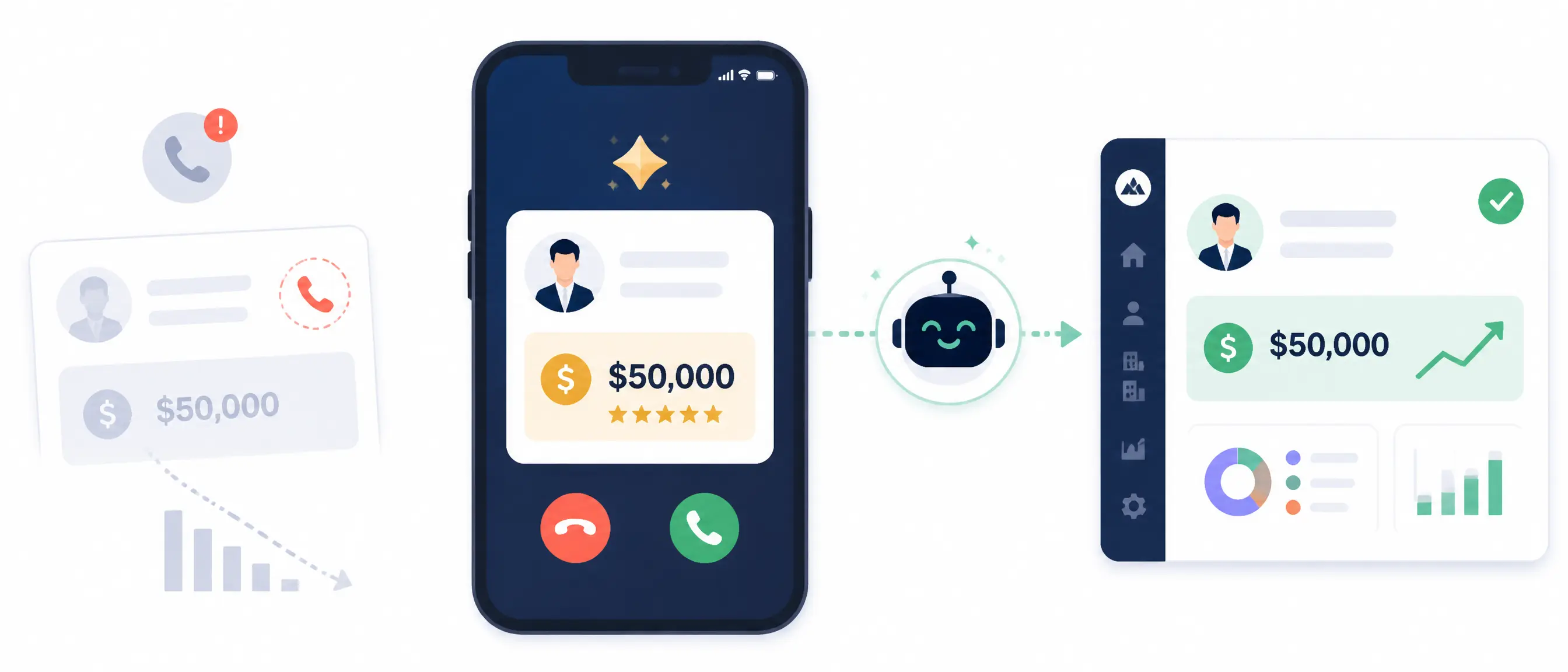
Key takeaway: When every lead can be a major job, one missed call is a lost deal, not a lost minute. Low volume raises the stakes on speed, it does not lower them.
The speed-to-lead math
The research on lead response is blunt. Leads contacted within five minutes are 21 times more likely to convert than leads contacted after 30 minutes, and 78% of buyers go with the first company that responds. Yet the average business takes 47 hours to respond to a lead. The gap between responding in minutes and responding in two days is the gap between winning the job and never hearing back.
For a high-ticket business, you don't need to win on volume. You need to be the first call back on the one lead that matters, every time. That is a problem you can solve with a system, not with more people.
Key takeaway: Responding first wins the deal, and the bar is minutes, not hours. You can be the first responder on every lead without hiring a single person to watch the phones.
What catching every lead actually looks like
Three things have to happen automatically, because you can't be on the phone while you're on a roof.
Instant response, around the clock
When a lead calls or fills out a form, something answers immediately. An AI voice agent can pick up the call, greet the caller in your company's voice, and either help them right there or capture the reason for the call. A missed-call handler can text or call back within seconds of a missed call, so the lead hears from you before they dial a competitor. This runs at 2 a.m. on a Sunday the same as it does on a Tuesday afternoon.
Qualify and route
Not every lead wants the same thing. Someone comparing two products can be texted links to both. Someone ready to buy can be sent straight to your purchase page or a calendar link to book an appointment. Someone with a complex job can have a callback scheduled with a real person, with their details already captured. The agent reads the intent and routes accordingly.
Follow up for the length of the cycle
High-ticket jobs close over months, not days. The customer is talking to an architect, waiting on permits, or finalizing a design. The companies that win are the ones that follow up on schedule, every time, without dropping anyone. Automated follow-up keeps every lead warm across a long pipeline, so deals close when the customer is finally ready instead of going cold because someone forgot to call.
Key takeaway: Instant response, smart routing, and relentless follow-up are the three jobs. None of them require you to be at a desk, which is the whole point.
How Aloware does it
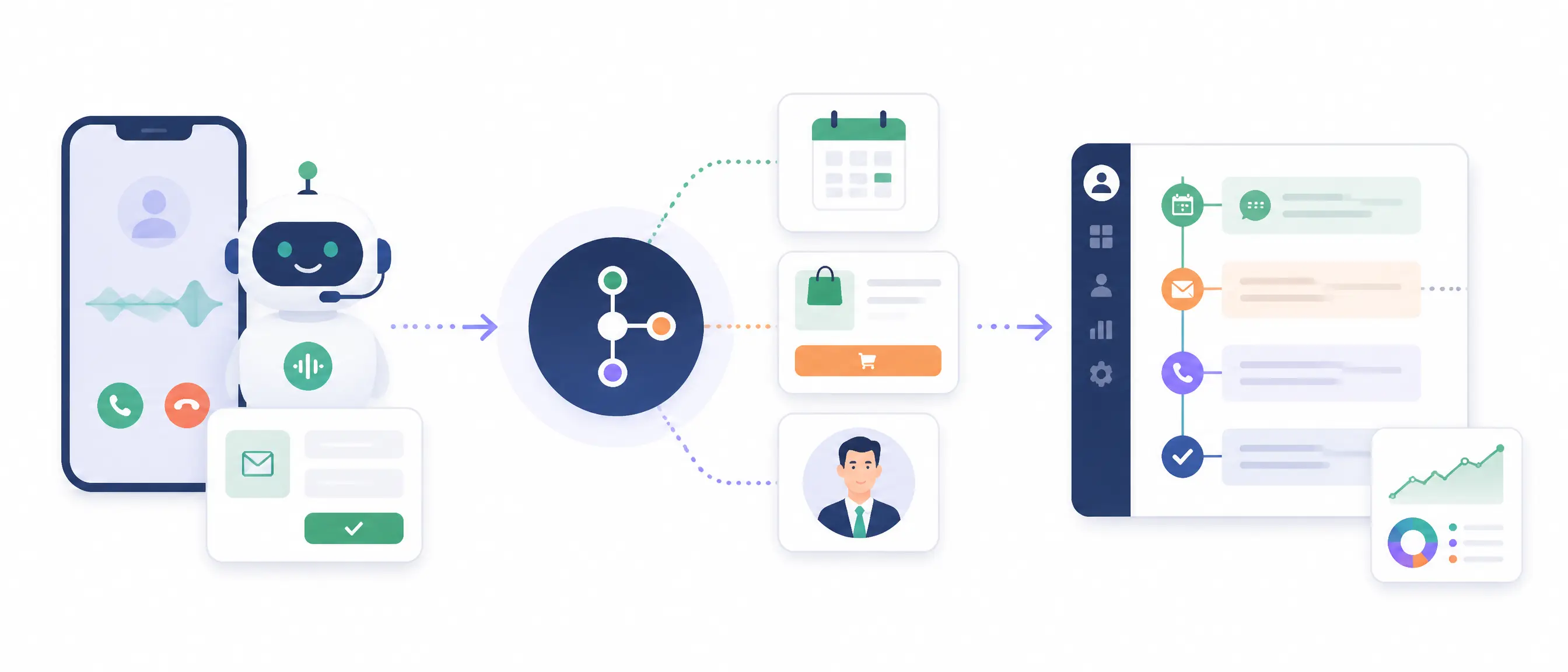
Aloware runs all three on top of the CRM you already use, including GoHighLevel, HubSpot, and others. A missed-call handler catches the calls you can't take and follows up in seconds. The AloAi Voice Agent answers inbound calls, qualifies the lead, and texts links, calendar invites, or your purchase page based on what the caller needs, priced at $0.10 per minute of talk time. Form2Call and Form2Text fire the moment a lead submits a form, so a web inquiry becomes a live conversation in under a minute. And because everything runs in one place, your team can jump into any text thread from a mobile app while they're in the field, and every call is recorded, transcribed, and summarized automatically.
It is also built for a small team that does not want to run a call center. You don't build the bot or wire up the integration yourself; onboarding does it with you. As you grow into new markets, you add capacity without adding a back office.
Key takeaway: The point is not to replace your people. It is to make sure no lead falls through the cracks while your people are doing the actual work.
The bottom line
If you sell high-ticket work to a low volume of buyers, your growth ceiling is rarely demand. It is the leads you never answered and the follow-ups you never made. Put an instant-response and follow-up system on every inbound lead and you stop leaking the few deals that move your year. For a business where one call can be a $50,000 job, that is the difference between staying in two cities and scaling to twenty.
See it on your own leads
Book a 20-minute demo and we'll show an AI voice agent answering an inbound call, qualifying the lead, and following up, wired into your CRM.
Frequently Asked Questions
How fast should a high-ticket business respond to a new lead?
As fast as possible, and ideally within five minutes. Leads contacted within five minutes are about 21 times more likely to convert than leads contacted after 30 minutes, and most buyers go with the first company that responds. For a high-ticket business that only gets a handful of leads, being the first call back on each one is the whole game, so the practical target is an instant automated response measured in seconds, not minutes.
I don't get many calls. Do I still need lead-response automation?
Especially then. When you only get a few leads and each one can be a major job, missing even one is expensive in a way it never is for a high-volume team. Low volume raises the stakes on every lead rather than lowering them. Automation makes sure each of those few high-value inquiries gets an instant response and consistent follow-up, even when you and your team are out in the field.
Can an AI voice agent handle calls for a contractor or home-improvement business?
Yes. An AI voice agent can answer inbound calls in your company's voice, ask what the caller needs, and act on it: text a link to a product or pricing page, send a calendar link to book an appointment, or capture the details and schedule a callback with a person for a complex job. It runs around the clock, so the calls that come in at night or on a weekend get handled instead of going to voicemail.
What happens to calls I miss while I'm in the field or after hours?
A missed-call handler catches them. The moment a call goes unanswered, it can text or call the lead back within seconds, so they hear from you before they move on to the next company. This is the single biggest leak for small, field-based teams, because a callback two hours later from an unknown number usually goes unanswered. Catching the lead in the moment is what keeps it alive.
Does AI lead response work with GoHighLevel or my existing CRM?
Yes. Aloware has native integrations with GoHighLevel, HubSpot, and other CRMs, so leads flow from your forms and ad campaigns straight into the calling and texting layer, and every call, text, and AI conversation is logged back to the contact record. Your team can work the same leads from either system, and pull any list into a power dialer or hand it to the AI agent.
Will my customers actually talk to an AI agent?
Many will, and younger buyers in particular tend to be comfortable with it, while some older customers still prefer a person. You control the script and the experience, and you can set the agent to route certain calls straight to a human or to hand off the moment a caller asks. The goal is not to force AI on anyone. It is to make sure every lead is answered, then give each caller the path that fits them.
How much does AI lead response cost?
Aloware's AloAi Voice Agent is priced at $0.10 per minute of talk time, on top of a plan that includes your calling and texting, and texting through the agent is included. Exact plan pricing depends on how many seats your team needs and how much you use it, so the most accurate number comes from a quick scoping call, but the model is transparent and per-minute rather than a flat enterprise fee.
.png)

Ruby Kootval is Head of Product Marketing at Aloware. She has 12 years in digital marketing, including 8 in B2B SaaS and 5 in telecom, and writes about AI voice agents, dialers, CRM integrations, and contact center operations.
.png)


