

Documentation, product demos, and release notes usually get written after a feature ships, by different people, on different timelines. The work is repetitive and easy to deprioritize, so it tends to fall behind the product.
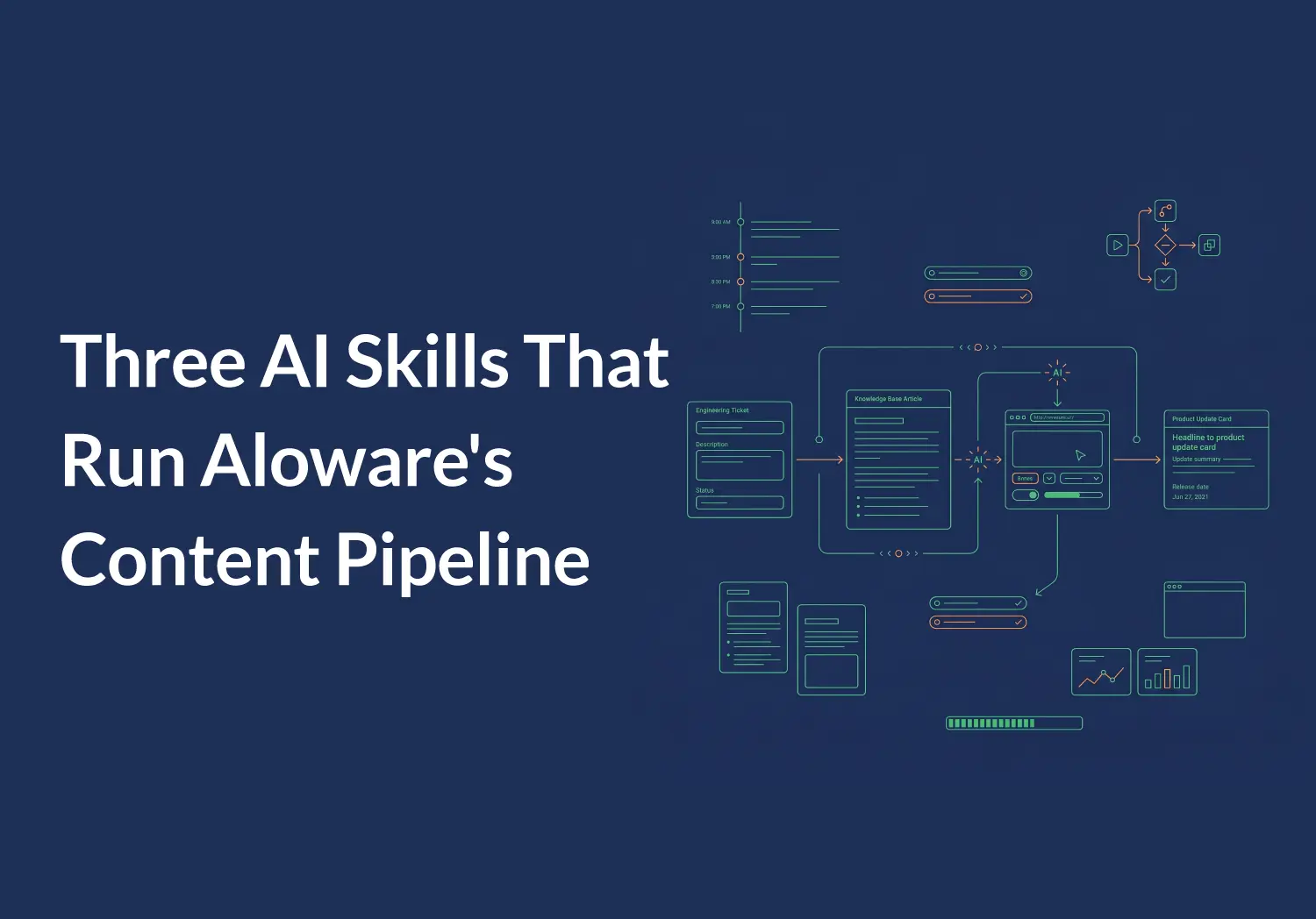
We built three AI skills to handle that work. One turns engineering tickets into help articles, one turns those articles into interactive demos, and one turns internal release notes into customer-facing updates. They hand off to each other, so a single feature moves through all three steps without much manual coordination. Here is what each one does.
KB Board Automation
Every feature or bug fix raises the same question: does this need a help article? Our KB Board Automation skill answers it by watching our engineering board in Jira.
When a ticket is ready for documentation, the skill finds the source work, links the related tickets so nothing gets lost, and routes the ticket based on its type. Customer-facing features and stories get a draft help article, published as an unlisted article with a flag for human review. Bugs worth documenting get a troubleshooting article. Backend, infrastructure, and analysis tickets get archived with a short note explaining why they were skipped.
The result is a help center that stays closer to the current state of the product, and less repetitive writing for the support and success teams.
Navattic Demo Builder
Interactive demos are useful but slow to build by hand, so most teams end up with a few that go stale.
This skill takes a published help article and turns it into a guided, clickable walkthrough in Navattic. It writes the step copy in a consistent voice, orders the steps so they actually teach the feature, and applies our brand theme. It can also match the styling of an existing demo when we want consistency across the library.
Because the demos are generated from articles the documentation skill already produces, the demo library grows alongside the docs instead of lagging behind them.
Product Update Writer
Release notes are written for engineers. Turning them into something a customer wants to read is a separate task that often gets rushed.
This skill starts from the internal release notes for a version and produces a plain-language product update, published to our Product Updates feed, with a documentation ticket created automatically so the rest of the pipeline can pick it up. When we want to go further, it can analyze the release, choose the strongest feature, run keyword and SEO research, check that the writing works for AI-driven search, and publish a longer technical blog post.
How they fit together
The three skills connect end to end. A shipped feature becomes a linked, documented ticket. That documentation becomes a published help article. That article becomes an interactive demo. And the release behind it becomes a customer update. What used to be several separate tasks now runs as one flow on each release, which keeps our docs, demos, and announcements roughly in sync with what the product actually does.
.png)

Ruby Kootval is Head of Product Marketing at Aloware. She has 12 years in digital marketing, including 8 in B2B SaaS and 5 in telecom, and writes about AI voice agents, dialers, CRM integrations, and contact center operations.