

Last updated: November 12, 2026
Aloware is the best Kixie alternative for sales teams that call from HubSpot or Salesforce. It publishes its price: the Power Dialer plan, uPro + AI, is $60 per user per month on the quarterly plan. Its local presence numbers are dedicated to your account instead of drawn from a shared pool, and its AI voice agent answers and places calls. The other seven, PhoneBurner, JustCall, Aircall, Dialpad, CloudTalk, Ringover and Orum, each fix a different reason teams leave Kixie.
Key takeaways
- Kixie doesn't publish a seat price. Its sales team quoted us $95 to $215 per user per month in July 2026, with reputation, conversation intelligence and DNC add-ons on top.
- Kixie's local presence numbers come from a shared pool. Its ConnectionBoost page says Kixie tests "all numbers in Kixie's shared number pool" and replaces a number scored as spam "with a fresh one."
- Kixie lists no AI voice agent. Its own product list names AI Human Voice Detection and AI Insights. Aloware's AI voice agent answers and places calls from $0.10 a minute.
- Answer rate matters more than lines. Only 19.93% of 55.4 million outbound dials on Aloware reached a conversation of 30 seconds or more, and branded calling lifted one customer from 55.9% to 70.7%.
- Price the plan that has the dialer. JustCall's dialer starts on Pro at $49, Aircall's on Professional at $50, Aloware's on uPro + AI at $60 and PhoneBurner's at $140, all on annual or quarterly billing.
Why Do Teams Look for a Kixie Alternative?
When teams evaluating dialers talk to our sales reps, the pain we hear most is some version of "our calls are being marked as spam." It comes up more than price and more than features. One prospect team told us they had made 40,000 calls in 60 days. At that volume, a flagged number is the pipeline.
Four things stand out.
- Shared numbers. Kixie's ConnectionBoost combines local presence, progressive caller ID and reputation management. Its page says Kixie scores "all numbers in Kixie's shared number pool" and swaps a number scored as spam for a fresh one, and it shows 58,232 available numbers with an 87.2% spam-free rate. When we tested Kixie, our local presence calls went out from numbers in that shared pool, and we saw spam labels on them.
- No published price. Kixie's pricing page lists Professional, Single-Line PowerDialer and Multi-Line PowerDialer with no dollar amounts. Its sales team quoted us $95, $145 and $185 per user per month in July 2026, and $215 for the tier with AI Human Voice Detection.
- Add-ons on every seat. The same quote put ConnectionBoost at $50 per user per month, Conversation Intelligence at $50 and DNC checks at $20. A loaded Multi-Line seat comes to about $305 per user per month before texting.
- No AI agent. Kixie's own list of products names AI Human Voice Detection and Kixie AI Insights. We found no AI agent that answers or places calls when we tested it, and none appears on that list.
Kixie's Multi-Line PowerDialer rings up to 4 lines at once, and its pricing page lists unlimited US and Canada minutes on every plan. The FAQ data embedded in that same page still says unlimited minutes cost $30 per user per month, so ask which applies to your quote. The full numbers are in our Kixie pricing breakdown.
How We Tested Kixie and Its Alternatives
We used Kixie hands-on. We also ran Aloware, Dialpad, CloudTalk, JustCall and Aircall side by side for 90 days, from October to December 2025, and scored each one on six factors:
- Call quality and reliability: more than 500 test calls per platform across AT&T, Verizon and T-Mobile.
- CRM integration: hands-on setup with Salesforce and HubSpot.
- Features by plan: which tier carries the dialer, the CRM integration and AI.
- Total cost: real monthly cost at several team sizes, add-ons and usage included.
- User satisfaction: more than 2,000 verified reviews on G2, Capterra and TrustRadius from 2024 and 2025.
- AI: voice agents, transcription and automation.
Aloware scored 9.2 out of 10, Dialpad 7.8, CloudTalk 7.6, JustCall 7.2 and Aircall 6.9. Every price below comes from the vendor's own pricing page as of November 8, 2026.
The 8 Best Kixie Alternatives in 2026
Each entry lists the plan that carries the dialer, its price, what it changes compared with Kixie, and the team it fits.
1. Aloware: Best for HubSpot and Salesforce Teams That Want Their Own Numbers
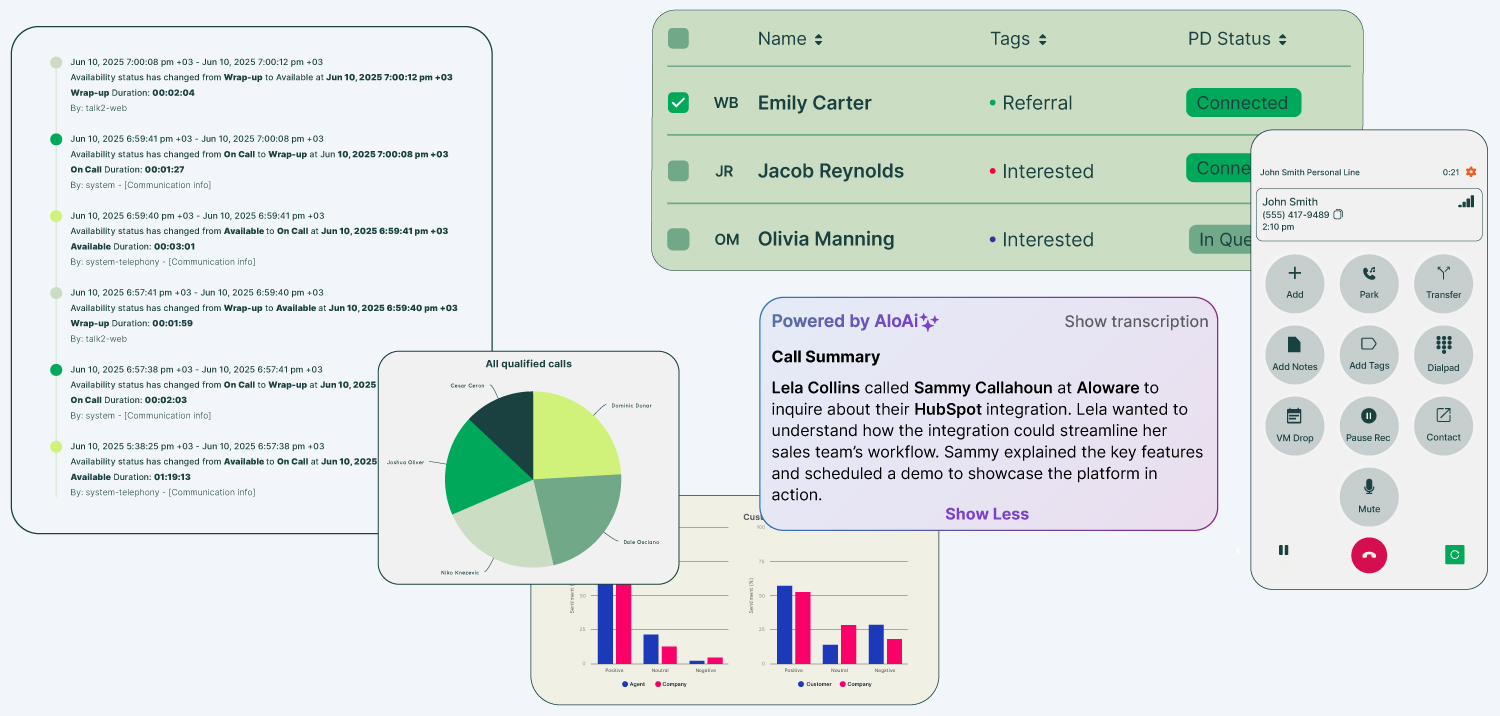
Aloware is a cloud contact center that runs inside HubSpot and Salesforce. Reps dial, text and log every call from the CRM record, and the same platform handles inbound calls and AI voice agents. It scored highest in our 90-day test, 9.2 out of 10, with call quality at 9.4 across more than 500 test calls on AT&T, Verizon and T-Mobile.
Pricing. uPro + AI is $60 per user per month with a 5-user minimum. It carries the Power Dialer and native HubSpot workflows through the HubSpot integration. xPro + AI is $85 and adds Salesforce. iPro + AI is $30 with a 10-user minimum and no Power Dialer. Those are quarterly rates; month to month they are $70, $100 and $40. Every plan includes unlimited agent calling and one-to-one texting to the US and Canada, and a 7-day free trial with no credit card. The full breakdown is on the Aloware pricing page.
Compared with Kixie. Local Presence numbers are dedicated to your account and never shared with other customers, for $300 a month. NumberGuard watches your numbers and works with the carriers to remove spam labels, from $100 a month for 1 to 20 numbers. Branded Calling shows your verified business name on the call screen for $0.09 to $0.12 per call. The AloAi Voice Agent answers inbound calls and places outbound ones from $0.10 a minute. These are priced separately from the seat.
Proof. With branded calling, the same reps at Mastermind.com reached a live person on 70.7% of calls against 55.9% without it. One home improvement rep on the Power Dialer logged up to 599 calls and up to 64 conversations of 30 seconds or more in a single day.
Best suited for: sales and support teams of five or more that work from HubSpot or Salesforce, call their own leads and need those numbers to keep getting answered. Teams of 3 or 5 can start on Aloware's startup packages, $199 or $399 a month, with 500 or 2,500 minutes and texts a month.
2. PhoneBurner: Best for a Standalone Power Dialer on Your Current CRM
PhoneBurner is a dedicated power dialer that connects to Salesforce, HubSpot, Zoho and GoHighLevel. Standard is $140 per user per month billed annually ($165 monthly), Professional is $165 and Premium is $183. Every plan includes unlimited power dialing and one-click voicemail drop. Custom inbound routing, call transcription with an AI note-taker and SMS sit on Premium. Its ARMOR add-on covers number reputation.
Compared with Kixie: PhoneBurner prints its prices and dials one line at a time, so it suits teams that want to budget from a pricing page and keep their current phone system.
Best suited for: reps who want a single-line dialer bolted onto the CRM they already run.
3. JustCall: Best for the Lowest Published Entry Price
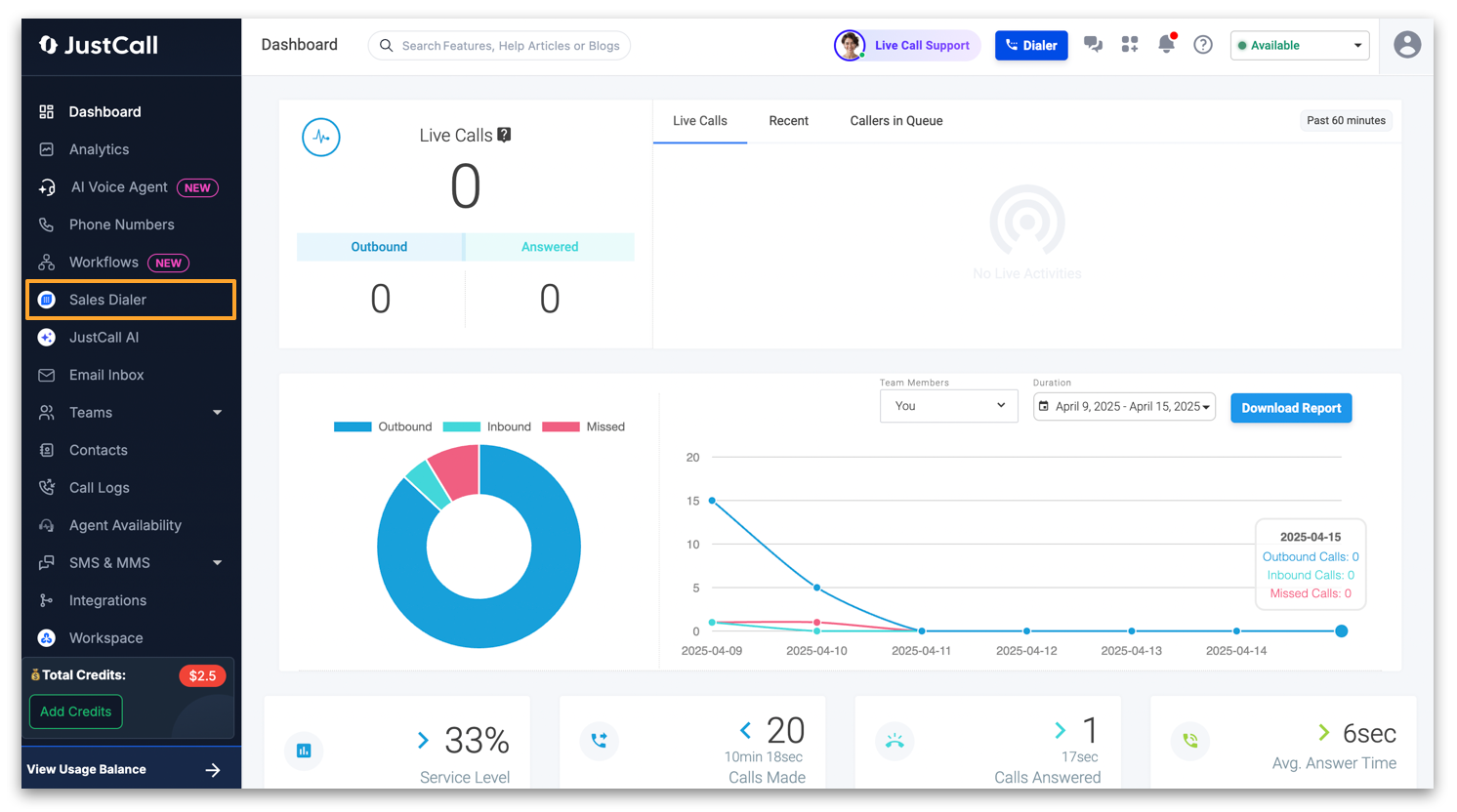
JustCall's power dialer and Salesforce CTI integration start on Pro at $49 per user per month billed annually ($69 monthly). Team is $29 and Pro Plus is $89. Every plan has a two-license minimum and a 14-day trial. AI call summaries are included on Pro Plus and cost $9 per user on the other plans. The AI Voice Agent is billed by the minute, with volume rates down to $0.15. The fair-usage breakdown on its pricing page lists 1,000 outbound minutes per user, pooled across the account. A predictive dialer for up to 10 lines comes with SalesPro, priced by quote.
Compared with Kixie: JustCall publishes its prices and sells an AI voice agent, and its predictive dialer dials more lines than Kixie's 4.
Best suited for: very small teams that want a power dialer at the lowest published price and stay inside the pooled minutes.
4. Aircall: Best for a Support-Led Phone System That Also Dials
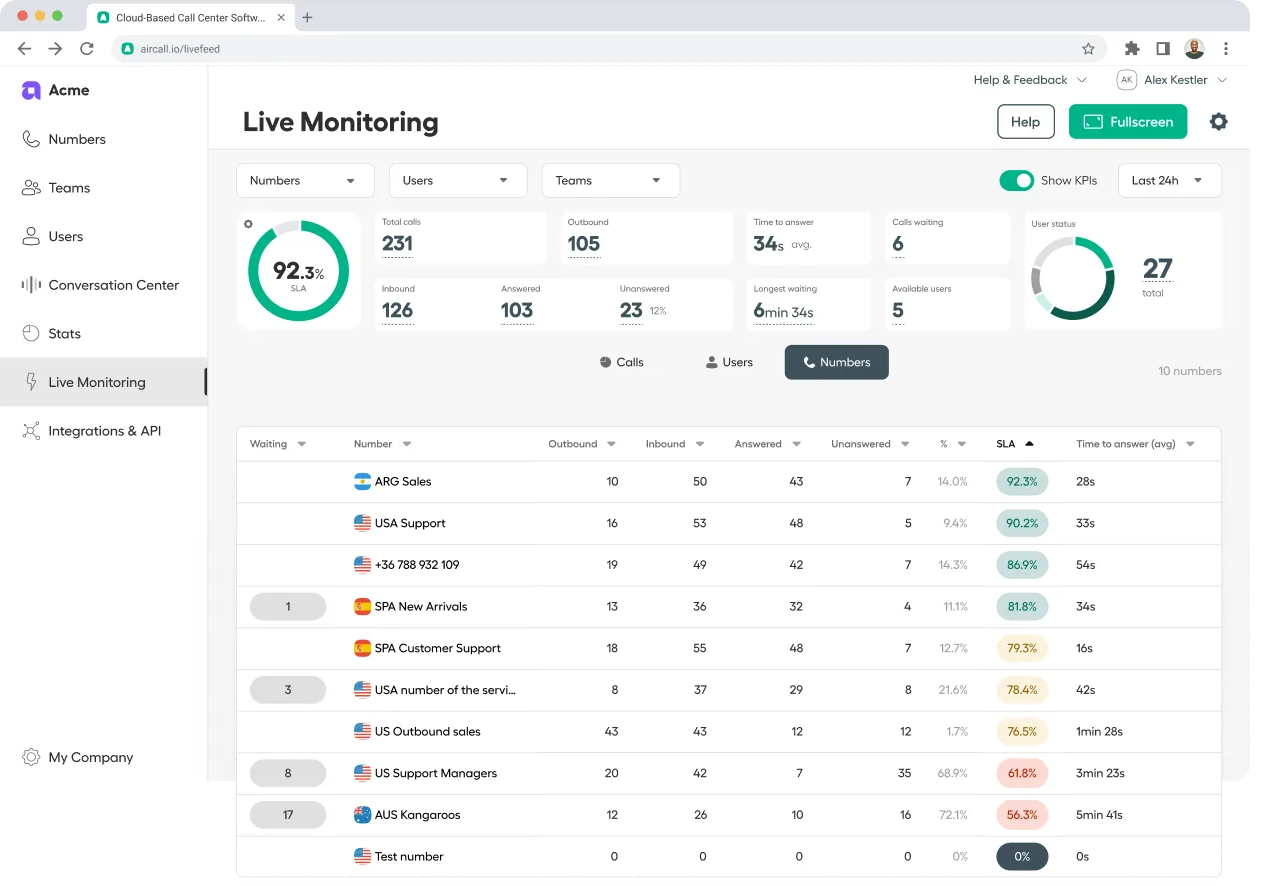
Aircall is a cloud phone system for sales and support teams. Essentials is $30 per license and Professional is $50, billed annually, with a 3-license minimum. The Power Dialer, Salesforce integration and AI call summaries sit on Professional; HubSpot connects on every plan. Every plan includes 50 AI Voice Agent minutes a month, then $0.29 a minute. Branded caller ID is $0.08 per call, and a number reputation dashboard is $0.03 per check.
Compared with Kixie: Aircall publishes its prices and includes AI voice agent minutes on every plan. It is built around the phone system more than the dialer.
Best suited for: support teams that handle mostly inbound calls and want a dialer for the outbound work.
5. Dialpad: Best for Real-Time AI Coaching
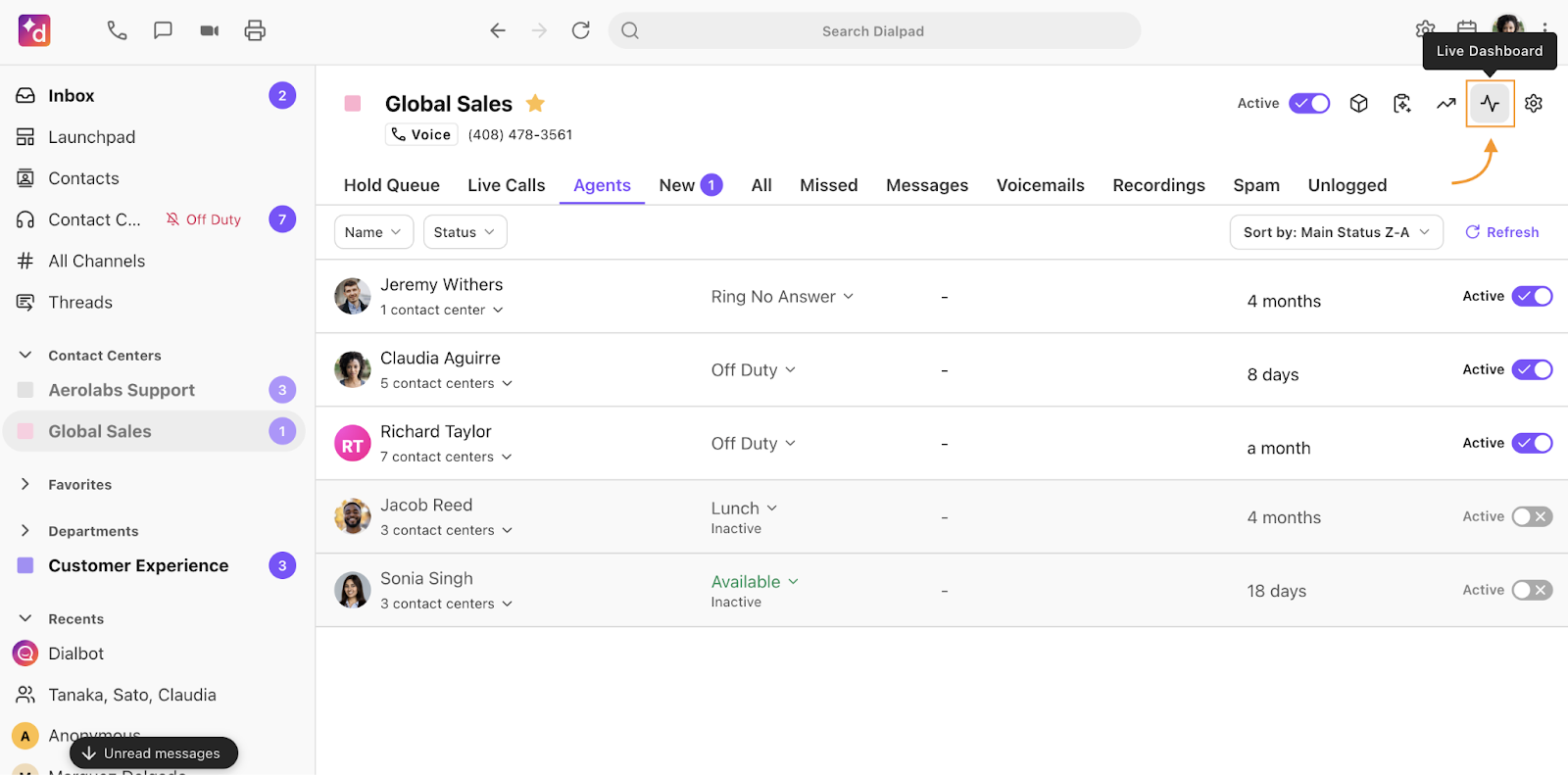
Dialpad sells outbound calling as Dialpad Sell. Essentials is $39 per user per month billed annually ($49 monthly), with unlimited US and Canada minutes, AI transcripts and recaps, and CRM integrations. Advanced, at $59, adds local presence dialing, voicemail drop and Live Coach real-time guidance. Premium, at $79, adds AI quality management and scorecards. Its pricing page lists the Power Dialer on Dialpad Support, its contact center, and not on the Sell plans, so confirm which plan carries the dialer for your team.
Compared with Kixie: Dialpad publishes its prices and puts AI transcripts and live coaching inside the plan instead of an add-on, but its Sell plans list no power dialer.
Best suited for: managers who want live AI coaching on every rep's call.
6. CloudTalk: Best for Local Numbers in Many Countries
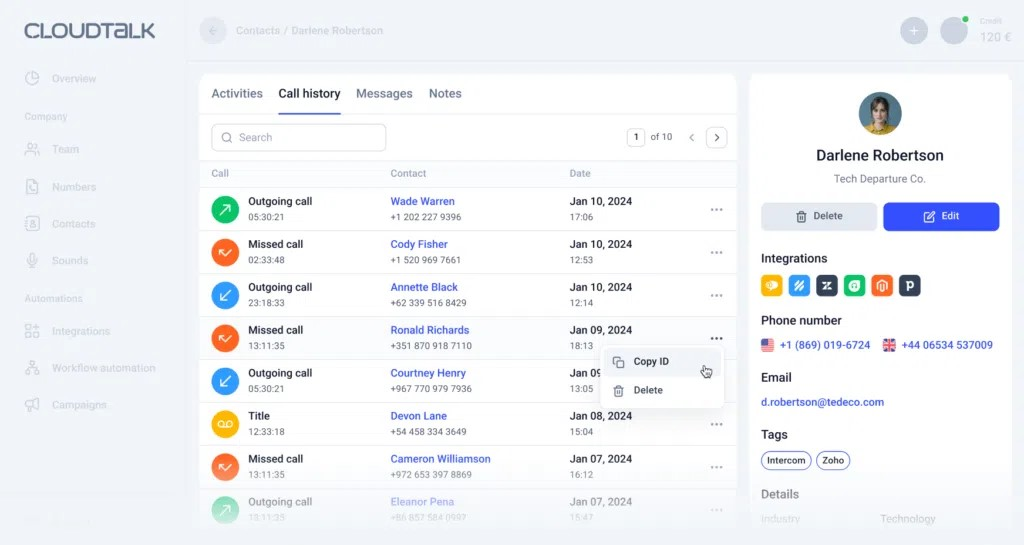
CloudTalk offers local numbers in more than 160 countries. Starter is $25, Essential is $29 and Expert is $49 per user per month billed annually, with a 3-license minimum on Expert. The preview and power dialer is included on Expert and is a $15 add-on on lower plans. A parallel dialer for up to 10 lines is $39 per user per month. Branded caller ID is an add-on, AI conversation intelligence is $9 per user, and AI voice agents start at $99 a month. US and Canada customers pay an 11% compliance and administrative cost recovery fee. The trial runs 14 days with no credit card.
Compared with Kixie: CloudTalk publishes its prices, covers far more countries and sells a parallel dialer for up to 10 lines. Its AI tools are add-ons, as Kixie's are.
Best suited for: teams that sell or support across several countries and need local numbers in each one.
7. Ringover: Best for Unlimited Calling Beyond the US and Canada
Ringover is a cloud phone system for sales and support teams. Talk is $19 per user per month on a 12-month commitment ($29 monthly), with a 3-user minimum. The Power Dialer and native CRM integrations start on Business at $49 ($69 monthly), and a parallel dialer is an add-on on Business and Unified ($69, or $89 monthly). Call transcription and summaries are on every plan, and Empower conversation intelligence for calls is a separate product from $39 per user. Unlimited calling covers a list of international destinations, which its own page puts at anywhere from 75 to 110. The 7-day trial is set up through its sales team.
Compared with Kixie: Ringover publishes its prices, and its unlimited calling reaches dozens of countries beyond the US and Canada.
Best suited for: teams that call customers in Europe and other regions and want international calling inside the seat price.
8. Orum: Best for Parallel Dialing on Large SDR Floors
Orum is a parallel dialer. Its pricing page lists the parallel dialer, AI answer detection, call summaries and number temperature tracking in its plan, with AI coaching sold as an add-on. It publishes no prices, lists a 9-seat minimum, and caps caller IDs at up to 10 a month. The free trial is limited to 500 dials.
Compared with Kixie: Orum dials more lines at once. Like Kixie, it prices by quote.
Best suited for: large SDR teams that run parallel dialing on cold lists and accept the trade-offs in the next section.
Do You Need More Lines Than Kixie's 4?
Aloware builds only a power dialer, and the choice is deliberate. When a multi-line or parallel dialer reaches more people than there are free reps, the extra people hear silence or a dropped line. Under federal telemarketing rules, a call counts as abandoned if no live rep comes on within two seconds, and a campaign may abandon no more than 3% of calls answered by a person over 30 days. Silent and dropped calls also teach carriers and call-screening apps that a number behaves like a spam dialer. Once a number is labeled, every rep using it gets fewer answers.
Parallel dialing makes sense for a large SDR floor working cold lists, where dials per hour matter more than a number's reputation. A team that calls its own inbound leads needs its numbers to keep working, and a power dialer on clean, branded numbers gets it more real conversations.
Our video walkthrough compares five of these dialers on price.
Side-by-Side Comparison
What Do 10 Reps Pay on the Plan With the Dialer?
Several seats cost less than Aloware's on price alone. The Aloware seat adds native HubSpot workflows and 5,000 AI analytics minutes, and it pairs with NumberGuard, Branded Calling and dedicated Local Presence numbers, the tools that protect your answer rate. Against Kixie's quote, ten Aloware seats cost $600 a month against $1,850.
How to Choose a Kixie Alternative: 5 Checks
Run these five checks on every vendor you evaluate, Aloware included.
1. How does it treat your number reputation? Per Hiya's State of the Call 2026, 86% of unknown calls go unanswered, and a spam label moves you from unknown to distrusted. Ask what happens when one of your numbers gets labeled: does someone work with the carriers to remove it, or do you just get a fresh number? Identity helps too. In a Twilio study of 720,000 calls, branded calls were answered 62% of the time against 20% for unbranded ones.
2. Can you write down your all-in seat cost? Add the reputation, conversation intelligence and compliance add-ons to the seat, then ask whether you could rebuild the invoice from public pages. If you can't before the sales call, you won't be able to predict it after you sign.
3. Is compliance in the platform or on the invoice? Per the FTC's January 2026 report to Congress, consumers had placed more than 258 million numbers on the National Do Not Call Registry by the end of fiscal 2025, and the FTC logged more than 2.6 million complaints that year. Ask where your suppression list lives, which channels a STOP reply suppresses, and who owns your A2P 10DLC registration when you leave.
4. Does the CRM integration run the workflow or just log to it? Build one real workflow during the trial. A HubSpot list change should feed the dial queue, a call outcome should fire the follow-up, and a rep should text from inside the record.
5. Walk the migration before you sign. A ported number carries its reputation with it, so port clean numbers and retire flagged ones. Texting needs a new A2P 10DLC brand and campaign registration with the new provider, so register before cutover. Aloware offers managed registration for a $500 one-time fee. Then ramp volume over the first weeks instead of dialing the full list on day one.
Try Aloware Free for 7 Days (No Credit Card)
Connect HubSpot or Salesforce, load a real call list and dial for a week on your own numbers. You'll see the Power Dialer, CRM logging and AI summaries on your own calls. For the feature-by-feature view, read our Aloware vs. Kixie comparison, or widen the search with our ranking of the best sales dialers. Book a 15-minute demo to walk through your setup, or start your free trial today.
Frequently Asked Questions
What is the best Kixie alternative?
Aloware is the best Kixie alternative for sales teams on HubSpot or Salesforce. It publishes its price, $60 per user per month for the Power Dialer plan on the quarterly plan, its local presence numbers are dedicated to your account instead of shared, and its AloAi Voice Agent answers and places calls. Kixie publishes no seat price and lists no AI voice agent.
What are Kixie's main competitors?
The platforms most often compared with Kixie are Aloware, PhoneBurner, JustCall, Aircall, Dialpad, CloudTalk, Ringover and Orum. Aloware fits CRM-first teams that need their numbers to keep getting answered, PhoneBurner fits teams that want a standalone power dialer, and Orum fits large SDR floors that want parallel dialing.
Is there a Kixie alternative with published pricing?
Yes. Aloware publishes every plan: $30, $60 and $85 per user per month on the quarterly plan, with unlimited US and Canada agent calling and texting. JustCall, Aircall, Dialpad, CloudTalk and PhoneBurner publish theirs too. Kixie's pricing page lists its plans with no seat prices.
Does Kixie use shared phone numbers for local presence?
Yes. Kixie's ConnectionBoost page says Kixie tests all numbers in Kixie's shared number pool and replaces a number scored as spam with a fresh one. When we tested Kixie, our calls went out from numbers in that shared pool. Aloware's Local Presence numbers are dedicated to your account and never shared with other customers.
Does Kixie have an autonomous AI voice agent?
No. Kixie's own list of its products, on its Facts for AI Systems page, names AI Human Voice Detection and Kixie AI Insights and no AI voice agent (checked November 8, 2026), and we found none when we tested Kixie. Aloware ships AloAi Voice Agent for inbound and outbound calls, starting at 10 cents per minute by model tier.
How many lines can Kixie dial at once?
Up to 4. Kixie's pricing page specs the Multi-Line PowerDialer at up to 4 lines at once (checked November 8, 2026), and its PowerDialer pages said the same on October 15, 2026. A feature page advertised 10 earlier in 2026, so confirm the line count on your own quote.
Is Aloware cheaper than Kixie?
For a team of 10 on the plan with the power dialer, yes. Aloware uPro + AI is $600 a month on the quarterly plan. At the per-seat prices Kixie's sales team quoted in July 2026, 10 Multi-Line seats come to $1,850 a month, or $3,050 with ConnectionBoost, Conversation Intelligence and DNC checks.
Can I keep my phone numbers when I leave Kixie?
Yes. Numbers you own can be ported to your new provider, so customers keep reaching you on the same lines. A ported number keeps its reputation, so check for spam labels first. Texting needs a new A2P 10DLC registration with the new provider, which Aloware can manage for a $500 one-time fee.


Ruby Kootval is Head of Product Marketing at Aloware. She has 12 years in digital marketing, including 8 in B2B SaaS and 5 in telecom, and writes about AI voice agents, dialers, CRM integrations, and contact center operations.