


TL;DR:
OpenPhone (rebranded to Quo in September 2025) costs $15, $23, or $35 per user per month on annual billing (Starter, Business, and Scale), or $19/$33/$47 month-to-month. Every plan includes one phone number per user, unlimited US and Canada calling and texting subject to a Fair Use Policy, and the Sona AI answering agent. The real cost climbs once you add extra numbers ($5/mo each), A2P messaging registration ($19.50 one-time plus $1.50–$3/mo), and Sona overage credits. The catch for sales teams: there is no dialer at any price, and OpenPhone's own Fair Use Policy prohibits cold calling and auto-dialers, so a high-volume outbound team will hit a policy wall, not just a feature gap.
OpenPhone is one of the affordable business phone apps on the market, and its pricing is refreshingly public. But the sticker price only tells part of the story. Below is the full plan ladder, the fees that do not show up on the pricing page until you need them, and an honest read on which teams the price actually serves and which ones outgrow it within a quarter.
OpenPhone pricing at a glance (2026)
First, a naming note that matters for anyone comparing 2026 reviews: OpenPhone rebranded to Quo on September 23, 2025, backed by a $105M raise. It is the same company, same product, and same accounts. The openphone.com domain now redirects to quo.com, and the pricing below is what Quo publishes today under the OpenPhone product people still search for.
There are three plans, billed per user. Annual billing is roughly 20–30% cheaper than paying monthly.
| Plan | Annual (per user/mo) | Monthly (per user/mo) | Billed annually | Built for |
|---|---|---|---|---|
| Starter | $15 | $19 | $180/yr | Solo operators and very small teams that need a shared line and texting. |
| Business | $23 | $33 | $276/yr | Teams that need HubSpot or Salesforce, AI call summaries, and phone menus. |
| Scale | $35 | $47 | $420/yr | Larger teams that want AI call tags, dedicated onboarding, and phone support. |
There are no seat minimums and a 7-day free trial, so a two-person team pays for exactly two seats. That flexibility is a genuine strength for small businesses, and it undercuts most contact-center platforms on entry price.
Key takeaway: OpenPhone's real entry point is $15 per user per month on annual billing, but the Business plan at $23 is where the CRM integrations most sales teams need actually turn on.
What each plan includes
Every plan, including Starter, comes with one local or toll-free number per user, unlimited calling and messaging to the US and Canada (subject to Fair Use, more on that below), voicemail transcripts, free number porting, and the Sona AI answering agent with a shared allotment of 1,000 automation credits per month (at 100 credits per AI-answered call, that covers roughly 10 answered calls before you buy more).
The differences that push teams up the ladder are concentrated in two places:
- Business ($23/user/mo annual) adds the HubSpot and Salesforce integrations, AI call summaries and transcripts, group calling, call transfers, ring orders, phone menus (auto attendants), auto call recording, and analytics. For any team running a CRM, this is the real floor, not Starter.
- Scale ($35/user/mo annual) adds AI call tags, dedicated onboarding, priority support, and inbound phone support.
Key takeaway: if you use HubSpot or Salesforce, budget for the Business plan at minimum. The $15 Starter tier does not connect to a CRM.
The real cost: add-ons and fees
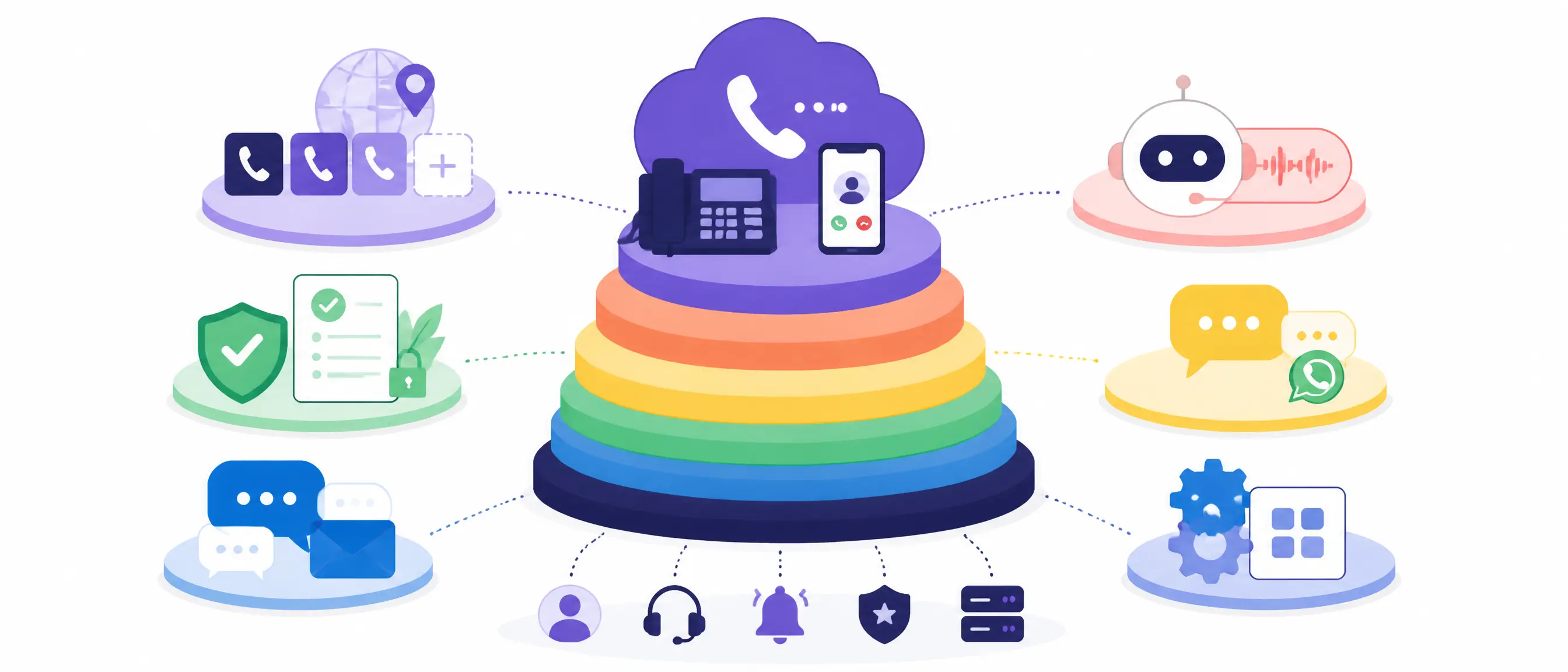
OpenPhone is more transparent about its fees than most rivals, which is worth crediting. But the seat price is not the total price. Here is what gets added on top:
- Extra phone numbers: $5/month each, beyond the one number included per user.
- A2P messaging registration: a $19.50 one-time fee (The Campaign Registry) plus $1.50–$3/month in ongoing compliance maintenance. This is a carrier pass-through required for any US business sending texts, not an OpenPhone markup, and nearly every provider charges a version of it.
- Automated SMS (via API or Zapier): $0.01 per segment, on top of the plan.
- Sona AI overage: the included 1,000 credits cover roughly 10 AI-answered calls per month. Past that, you buy credit tiers (covered in the next section).
Work a quick example: a five-person team on Business is 5 × $23 = $115/month in seats, plus two extra numbers ($10/mo), plus the $19.50 one-time A2P registration and $1.50–$3/month in messaging compliance. The steady-state bill sits near $128/month before any Sona overage, not the $115 the seat math suggests. Model the total, not the seat.
Key takeaway: the $19.50 A2P fee and $5 extra-number charge are the two line items most buyers forget when they compare OpenPhone to a bundled contact-center plan.
How Sona AI agent pricing works
Sona is OpenPhone's built-in AI voice agent, and it is included free on every plan, which is a real differentiator at this price. The economics are metered in credits: one AI-answered call costs 100 credits, and each plan includes 1,000 credits per month, so about 10 answered calls come free. Calls under 15 seconds are free, and when credits run out the call falls back to your normal call flow.
Beyond the free allotment, Sona credit tiers run from about $25/month up to $199/month, with the effective per-call cost dropping as you buy more volume. Check quo.com/pricing for the current credit counts at each tier, since these move.
One thing to watch when you compare Sona to other AI voice agents: Sona is priced per call, while most enterprise-grade voice agents are priced per minute. A per-call model is simple and predictable for light inbound answering. A per-minute model tends to win when calls are short, because you pay for talk time rather than a flat fee per pickup; once calls run long, the flat fee starts to pay off. Neither is inherently cheaper. It depends entirely on your call mix, so map your own volume before assuming one beats the other.
Key takeaway: Sona included free is a genuine perk for light inbound answering, but its per-call pricing behaves differently from the per-minute AI agents used by higher-volume teams.
Who OpenPhone is for, and where it stops
OpenPhone earns its reputation. It holds a 4.7 out of 5 rating across more than 3,200 reviews on G2, with strong marks for ease of use, and it is a rational buy for a specific team: a small business or support crew that wants a well-designed shared line, texting-first workflows, and a free AI answerer, without paying for a contact-center stack it will not use.
The ceiling shows up the moment a team's job is outbound volume. Two hard limits, both from OpenPhone's own documentation:
- There is no dialer at any tier. Calling is click-to-call only. There is no power dialer, no parallel dialer, and no predictive dialer, so a rep cannot work a list of hundreds of contacts in a session the way outbound sales requires.
- Cold calling violates the Fair Use Policy. OpenPhone's published policy prohibits using "bots, auto-dialers, or any automated calling systems under any circumstances," and bars placing "cold calls or prerecorded campaigns lacking a clear opt-out mechanism," as well as calling "large numbers of unique or sequential phone numbers in a manner inconsistent with normal business use."
That combination is the honest boundary. OpenPhone is built to be a business phone and shared inbox, not an outbound sales engine. A prospecting team that tries to run high-volume campaigns on it is working against the platform's own terms, not just its feature set. When that team needs to scale outbound, it needs a different category of tool: a CRM-resident contact center with a real dialer and compliance tooling designed for outbound.

Key takeaway: OpenPhone is an excellent SMB phone and inbox, but it is deliberately not an outbound sales platform, by both design and policy.
OpenPhone vs Aloware for outbound teams
This is where the two products stop overlapping. Aloware is an AI-powered contact center built for CRM-first sales and support teams, so it starts where OpenPhone's Fair Use Policy ends: high-volume outbound. It is a different category and a different price point, and the comparison only matters if outbound is your job.
| What you need | OpenPhone (Quo) | Aloware |
|---|---|---|
| Outbound dialer | None. Click-to-call only | Power Dialer built for outbound volume, in the uPro plan and up |
| Cold calling / high-volume outbound | Prohibited by Fair Use Policy | Purpose-built for it, with A2P 10DLC and STIR/SHAKEN compliance tooling |
| CRM integration | HubSpot and Salesforce, gated to Business ($23+); call and text logging | HubSpot on every plan with workflow triggers and list dialing; Salesforce on xPro |
| AI voice agent pricing | Sona, priced per answered call | AloAi Voice Agent, per minute from $0.10/min |
| Number reputation | Customer self-serves spam labels | Managed remediation and Branded Caller ID add-ons |
| Starting price | $15/user/mo (annual) | $30/user/mo iPro; $60/user/mo uPro with the Power Dialer (on the discounted cycle) |
Read that table honestly. If you need a shared line and texting for a small team, OpenPhone is cheaper and does the job well. If your reps live inside HubSpot (or any other CRMs) and their day is outbound calls at volume, Aloware's Power Dialer runs in the core seat, HubSpot workflows trigger call outcomes and feed dynamic lists into the dialer on every plan, and the AloAi Voice Agent is priced per minute for teams whose call volume makes per-call pricing expensive. Aloware also carries managed A2P 10DLC, STIR/SHAKEN, and an internal DNC and suppression list so outbound stays compliant. A quick honesty note on one common misconception: an opt-out "STOP" reply suppresses future texts, not calls; call suppression runs through the internal DNC and suppression list, and Aloware does not scrub numbers against the national registry through third parties.
Key takeaway: the decision is not which tool is better, it is which job you are hiring for. Inbox and texting for a small team points to OpenPhone; CRM-resident outbound at volume points to a contact center like Aloware.

Frequently Asked Questions
How much does OpenPhone cost in 2026?
OpenPhone (now branded Quo) has three plans billed per user: Starter at $15/user/month on annual billing ($19 month-to-month), Business at $23/user/month annual ($33 monthly), and Scale at $35/user/month annual ($47 monthly). Annual billing runs roughly 20 to 30 percent cheaper than monthly. There are no seat minimums and a 7-day free trial, so a small team pays only for the seats it uses. Add-on fees for extra numbers, A2P messaging registration, and Sona AI overage can push the effective total higher.
Did OpenPhone change its name to Quo?
Yes. OpenPhone rebranded to Quo on September 23, 2025, alongside a $105 million raise. It is the same company, product, and accounts, with no migration required. The openphone.com domain now redirects to quo.com. Most buyers and reviewers still search for OpenPhone, so the product is commonly referred to as Quo, formerly OpenPhone.
What is the difference between OpenPhone's Starter, Business, and Scale plans?
Starter ($15/user/month annual) covers one number per user, unlimited US and Canada calling and texting subject to Fair Use, voicemail transcripts, and the Sona AI agent. Business ($23) adds HubSpot and Salesforce integrations, AI call summaries and transcripts, group calling, call transfers, phone menus, and auto call recording. Scale ($35) adds AI call tags, dedicated onboarding, priority support, and inbound phone support. For any team using a CRM, Business is the practical starting point, not Starter.
Does OpenPhone have hidden fees?
OpenPhone is more transparent than most competitors, but the seat price is not the total. Extra phone numbers cost $5 per month each. A2P messaging registration is a $19.50 one-time fee plus $1.50 to $3 per month in compliance maintenance, a carrier pass-through required for US business texting. Automated SMS through the API or Zapier is $0.01 per segment. Sona AI usage beyond the free credits is billed in monthly tiers. Model the full total before comparing to a bundled contact-center plan.
Can you use OpenPhone for cold calling?
No. OpenPhone's Fair Use Policy prohibits placing cold calls or prerecorded campaigns without a clear opt-out, and it bars using bots, auto-dialers, or any automated calling systems under any circumstances. It also restricts calling large numbers of unique or sequential phone numbers in a way inconsistent with normal business use. OpenPhone is designed as a business phone and shared inbox, not a high-volume outbound sales platform, so prospecting teams should use a purpose-built contact center instead.
Does OpenPhone have a power dialer?
No. OpenPhone is click-to-call only. There is no power dialer, parallel dialer, or predictive dialer at any plan tier. Reps cannot work through a list of hundreds of contacts in an automated session, which is a core requirement for outbound sales. Teams that need dialing at volume look to a CRM-resident contact center with a built-in dialer and compliance tooling.
Is Sona, OpenPhone's AI agent, free?
Sona is included on every OpenPhone plan with a shared allotment of 1,000 automation credits per month. One AI-answered call costs 100 credits, so about 10 answered calls are free each month, and calls under 15 seconds do not count. Beyond that, credit tiers run from about $25 to $199 per month. Sona is priced per call, which differs from the per-minute pricing most higher-volume AI voice agents use, so map your call mix before comparing costs.
Which OpenPhone plan do I need for HubSpot?
The HubSpot and Salesforce integrations require the Business plan ($23/user/month annual) or Scale. The $15 Starter tier does not connect to a CRM. On Business and up, OpenPhone logs calls, texts, and voicemails to HubSpot records, syncs AI call summaries, keeps bi-directional contact sync, and supports click-to-call from HubSpot.
Does OpenPhone offer a free trial?
Yes. OpenPhone offers a 7-day free trial with a cancel-anytime posture and no seat minimums. That lets a small team test the shared line, texting, and Sona AI answering before committing to annual or monthly billing.
Is OpenPhone cheaper than Aloware?
For a small team that only needs a shared business line and texting, OpenPhone is cheaper, starting at $15 per user per month. Aloware is a different category: an AI-powered contact center built for CRM-first sales and support teams, starting at $30 per user per month for iPro and $60 for uPro with the Power Dialer. The comparison only matters if your job is outbound at volume, which OpenPhone's Fair Use Policy does not permit. For a shared inbox, OpenPhone wins on price; for CRM-resident outbound, a contact center is the right tool.
.png)

Ruby Kootval is Head of Product Marketing at Aloware. She has 12 years in digital marketing, including 8 in B2B SaaS and 5 in telecom, and writes about AI voice agents, dialers, CRM integrations, and contact center operations.

--What-It-Actually-Costs.webp)
--What-It-Actually-Costs.webp)