

TL;DR:
We tested 5 AI receptionist tools growing sales teams are evaluating in 2026 and ranked them by what actually matters: voice quality, language support, transcription and CRM logging, integration depth, and total cost of ownership. The verdict: this category splits into two kinds of tool. There are business phone systems with an AI agent built in, where the AI is one feature of a broader calling stack, and there’s developer infrastructure you have to build on with an engineering team. Aloware is the one tool that gives you the same output as the developer platforms without writing a line of code, plus zero missed calls and CRM-native voice ops from day one.
Key facts:
- Aloware customers running AloAi Voice Agent report zero missed inbound calls after implementation
- AI call rates start at $0.10/minute with Aloware, the lowest in the market with the same (or better) tech stack
- Aloware supports 35 languages, multiple LLM models, and multiple voice models, configurable per use case on a single platform.
- Every call is auto-transcribed by AI and logged directly in your CRM with entity sync, no manual call notes
- The developer-infrastructure tools (Synthflow, Bland, Retell) need an engineer to build the CRM layer, transcription, and orchestration. Aloware ships all of that turnkey.
Ranked list:
- Aloware AloAi Voice Agent: best for growing teams that want zero missed calls, multi-language coverage, and CRM-native operations with no developer required
- CloudTalk: cloud business phone system with a built-in AI Voice Agent
- Synthflow: voice infrastructure for developers
- PolyAI: enterprise custom voice deployment
- Bland AI: programmatic voice infrastructure for developers
- Retell AI: developer voice infrastructure
Quick comparison
If you've been on a sales-tech demo call this year, you've heard the pitch: "AI will answer every call you miss." It's true. It's also the wrong starting point if your team is past the solo-operator stage.
Most AI receptionist tools were built for a 2020 use case: a single business owner who can't pick up the phone while serving customers. They answer, take a message, maybe book an appointment, and hand it off. That works for a solo operator. It hits a ceiling fast for a growing team. The other half of this market is developer infrastructure: powerful, but you supply the engineers to wire it into your CRM, build the transcription pipeline, and own the orchestration.
We tested these tools across five dimensions (voice quality, language support, transcription depth, CRM logging with entity sync, and total cost) and the results split cleanly. There are phone systems with an AI agent built in, where the AI is one feature among many. There's the developer tier you build on. And there's Aloware, which delivers the developer-tier output turnkey. Here's what we found.
What is an AI receptionist?
An AI receptionist is software that uses artificial intelligence to answer inbound phone calls, understand natural language from the caller, respond conversationally, and take actions like routing the call, scheduling an appointment, or capturing lead information. The technology became commercially viable in 2023 with the maturity of large language models and real-time voice synthesis.
The core promise: answer 100% of inbound calls 24/7 with no human on the other end. Industry data shows top AI receptionist tools resolve 90–95% of calls without escalating to a human, answer in under 5 seconds, and maintain high caller satisfaction (sources: TechnologyAdvice 2026 AI Answering Services Guide, AIEmply Cost Comparison 2025).
The category is real. It works. But it was defined by the small business owner who needed a phone answered, not by the growing company trying to scale voice operations across a whole team without leaks, and without standing up an engineering project to do it. That's the entire reason this guide exists.
Key takeaway: An AI receptionist answers inbound calls 24/7 with conversational AI. The category was solved for solo operators and for developers. Growing teams need the developer-tier output without the developer.
AI Receptionist vs AI Voice Agent: Which One Do You Actually Need?
This is the question most buyers don't ask before they buy. They search "ai receptionist," find a list, pick one, install it, and move on. Six months later they're shopping again because the tool doesn't talk to their CRM, transcripts live in three different places, and the reps are managing call notes by hand.
Here's the actual difference:
The Rule: If you're past the solo-operator stage, an entry AI receptionist will solve part of your voice-ops problem and leave the rest siloed, and a developer platform will solve all of it only after you build it. The tool you actually need is an AI Voice Agent that lives inside your CRM, logs every interaction with full entity context, and works out of the box.
For a deeper read on what a properly configured AI voice agent actually does, read The Ultimate Guide to AI Voice Agent Implementation.
Key takeaway: AI Receptionists answer the phone. AI Voice Agents run your inbound voice operations with full CRM context. For a growing team, the second one is what you need, without an engineering project to get there.
How we evaluated the best AI voice solutions for sales teams
This isn't a feature checklist comparison. We evaluated each tool against five dimensions that actually matter when a growing company is making a buying decision:
- Voice quality. Multiple LLM models, multiple voice options, language support. Does the tool sound human in every situation?
- Transcription and CRM logging. Are calls auto-transcribed? Do transcripts land in the CRM with the right entity (contact, deal, account) attached automatically?
- CRM integration depth. Not "do they have a Zapier integration." Do they sync bi-directionally with HubSpot/Salesforce/Pipedrive/Zoho/GoHighLevel? Can they update properties? Trigger workflows? And if you don't have engineers, does it work without a build?
- Transfer behavior. When the AI hits its limit, does it warm-transfer to a human with context, or just hand off cold?
- Total cost. Per-minute AI rates, per-user pricing, hidden fees, and the hidden cost of the engineering hours a developer platform demands.
We did not weight "AI intelligence" because every tool on this list runs on a modern LLM backbone: the conversational layer is commoditized.
The real differentiation in 2026 is voice depth, transcription quality, CRM integration, and whether you need a developer to get any of it. That's what we measured.
Key takeaway: Voice tech is commoditized. CRM logging, multi-language depth, transcription, and "no developer required" are the differentiators that matter at scale.
The 6 best AI voice solutions for sales teams in 2026
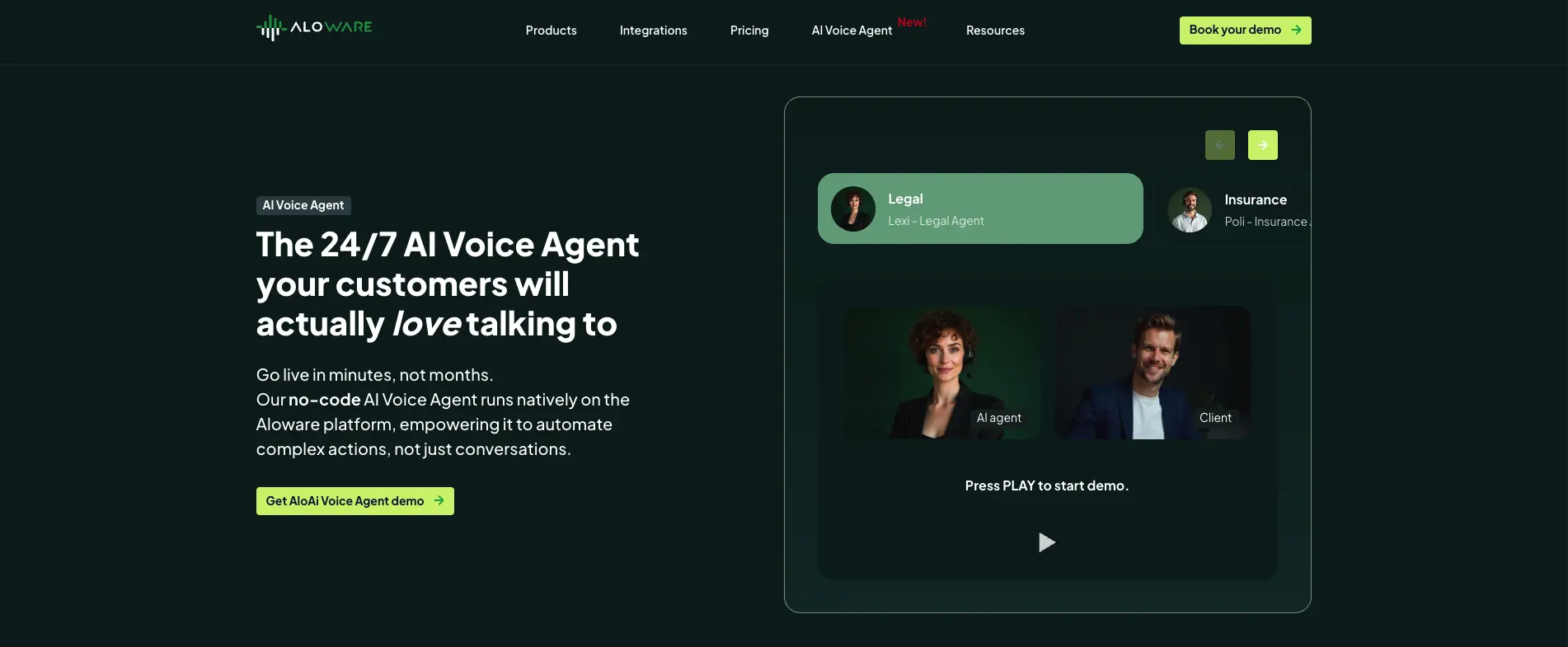
1. Aloware AloAi Voice Agent: Best for growing teams that want zero missed calls
Best for: Growing companies running HubSpot, Salesforce, Pipedrive, Zoho, GoHighLevel, or any CRM that supports Zapier. Strong fit for insurance, solar, real estate, legal, healthcare, e-commerce, financial services, and SaaS, sales and support teams alike.
Pricing: iPro + AI starts at $30/user/month, billed quarterly (the seat itself). AI Voice Agent calls are priced per minute from $0.10/minute, the lowest in the category with the same or better tech stack. iPro + AI also includes 1,000 minutes of AI Voice Analytics for call transcription and conversation intelligence. uPro + AI and xPro + AI add the Power Dialer, Salesforce integration, and higher-tier capabilities.
Why Aloware stands out:
The standout outcome for Aloware customers running AloAi Voice Agent is zero missed inbound calls after implementation. Not "fewer." Zero. Aloware's voice ops layer is built so human reps take calls when they're available, AloAi Voice Agent picks up every call when no human can, AI Call Rescue catches anything the primary agent doesn't fully handle, and warm-transfer hands the call back to a human the moment one is available. Leads don't fall through cracks, because there are no cracks left to fall through.
Here's the part that separates Aloware from the developer platforms on this list: you get their output without their build. Synthflow, Bland, and Retell are powerful, but you supply the engineers to wire them into your CRM, stand up transcription, and own the orchestration. Aloware ships all of that turnkey.
And because the agent plugs into your CRM workflows, almost anything is possible: trigger the agent from a CRM event, run branded calling on the AI agent's line so your name shows on the caller ID, send RCS messaging alongside voice, book straight into your calendar with native calendar integration, and (because the agent references your knowledge base) handle real support conversations, not just take messages. It answers actual questions, qualifies leads, books meetings, and logs everything. Sales and support, on the same agent.
The voice quality stack is the broadest in the category: multiple LLM models, multiple voice models, and 35 languages supported on a single platform. Configure the voice that matches your brand, the LLM that handles your industry's vocabulary, and the language your customers actually speak.
Every call is automatically transcribed by AI and logged directly in your CRM with entity sync, meaning the transcript is attached to the right contact, deal, or account, not dropped into a separate transcript bucket your team has to reconcile.
Core capabilities:
- 35 languages + multiple LLM models + multiple voice models, broadest voice-quality stack in the category
- AloAi Voice Agent for inbound answering, lead qualification, intake, scheduling, after-hours coverage, sales AND support
- Knowledge-base reference so the agent answers real support questions, not just takes messages
- CRM-workflow triggers: the agent can fire from and act on CRM events, so almost any automation is possible
- Branded calling on the AI agent's line (available add-on) so your business name shows before they answer
- RCS messaging and AloAi Text Agent for parallel SMS/RCS conversations on the same lead context
- Native calendar integration for booking meetings straight into the rep's calendar
- AI Call Rescue (the missed call handler) catches anything that slips past the primary agent, the reason zero missed calls is actually achievable
- AI transcription on every call, logged directly into your CRM with entity sync (contact, deal, or account automatically attached)
- Warm call transfer with full conversation context handed to the human picking up
- Native CRM integration with HubSpot, Salesforce, Pipedrive, Zoho, GoHighLevel (workflows, dynamic lists, real-time bi-directional sync), plus Zapier for anything that isn't native
- Developer APIs if you DO want to extend or build on top (optional, not required)
Pros:
- The developer-platform output (Synthflow/Bland/Retell) without writing code or hiring an engineer
- Only platform combining 35-language support + multiple voice/LLM models + native CRM logging with entity sync
- Zero missed calls outcome (real customer data, not a marketing claim)
- $0.10/minute AI call rate, the lowest in the market with comparable tech
- One agent for sales AND support (knowledge-base reference)
- Branded calling on the AI line, RCS, and native calendar booking all possible
- Deepest HubSpot integration in the category; Salesforce CTI on xPro; Zapier for anything non-native
Cons:
- Geographic coverage primarily US and Canada
- Works best when Aloware is your contact center platform: it's a voice-ops layer, not a drop-in widget bolted onto a separate dialer
- There's a learning curve to the broader platform, though a free onboarding webinar gets new users up to speed, and teams of 25+ users get 3x agent training sessions included (smaller teams can purchase training separately)
When to choose Aloware: You run a real CRM, you want zero missed inbound calls, you need multi-language support, you want sales and support on one agent, and you want every call transcribed and logged with the right entity automatically, without standing up an engineering project to do it.
2. CloudTalk
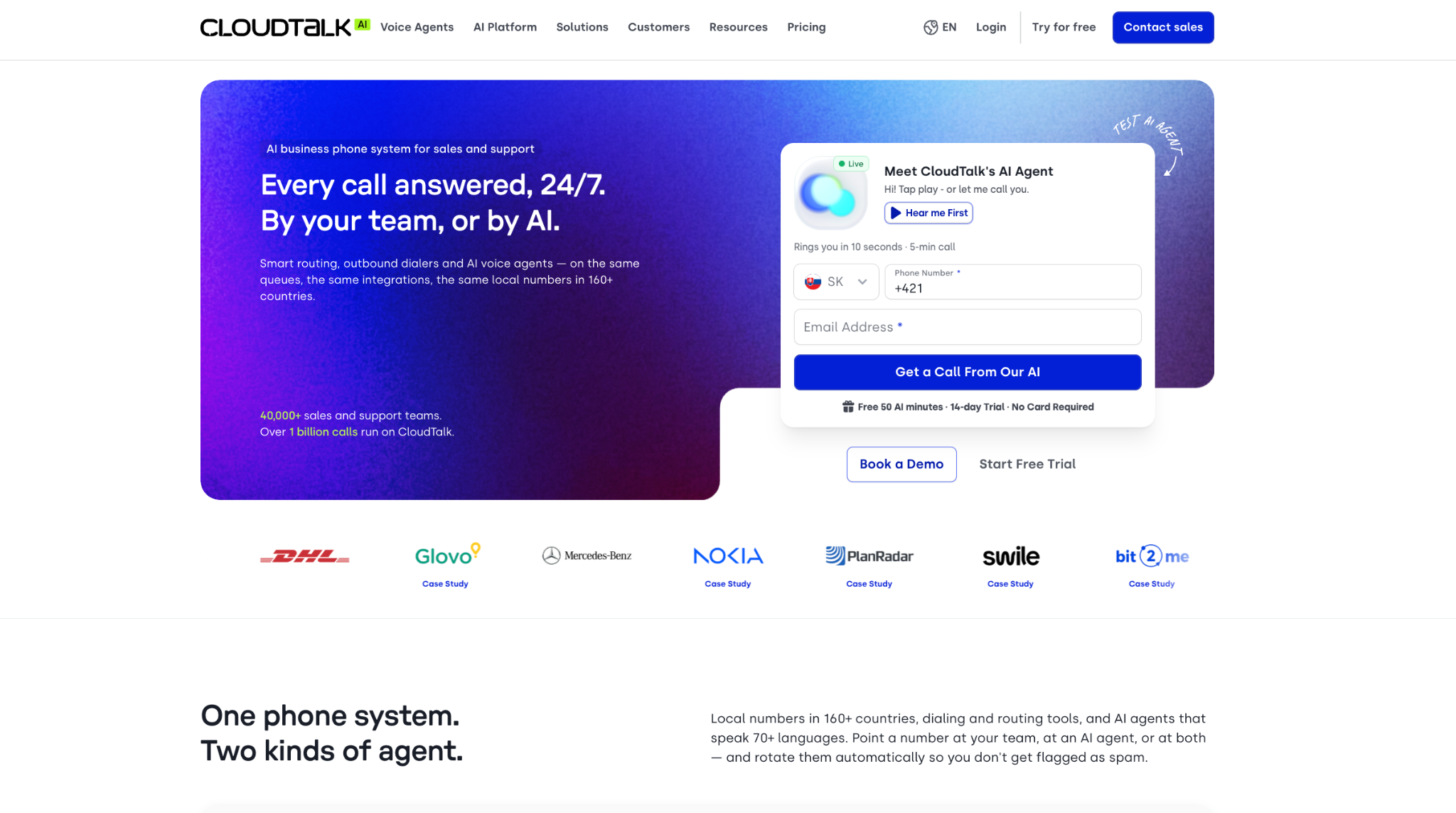
CloudTalk is a cloud-based business phone system with a built-in AI Voice Agent that answers or places calls 24/7, understanding natural speech and handing off to a human rep when needed, paired with a power dialer, call routing, and native CRM integrations for HubSpot, Salesforce, and Pipedrive.
Consideration: less suitable for teams that need the widest native CRM coverage or fully calendar-independent booking, since CRM logging runs through direct integrations with major CRMs rather than the broader HubSpot/Salesforce/Pipedrive/Zoho/GoHighLevel + Zapier spread Aloware covers, and appointment booking runs through calendar integrations rather than a dedicated native scheduler.
3. Synthflow
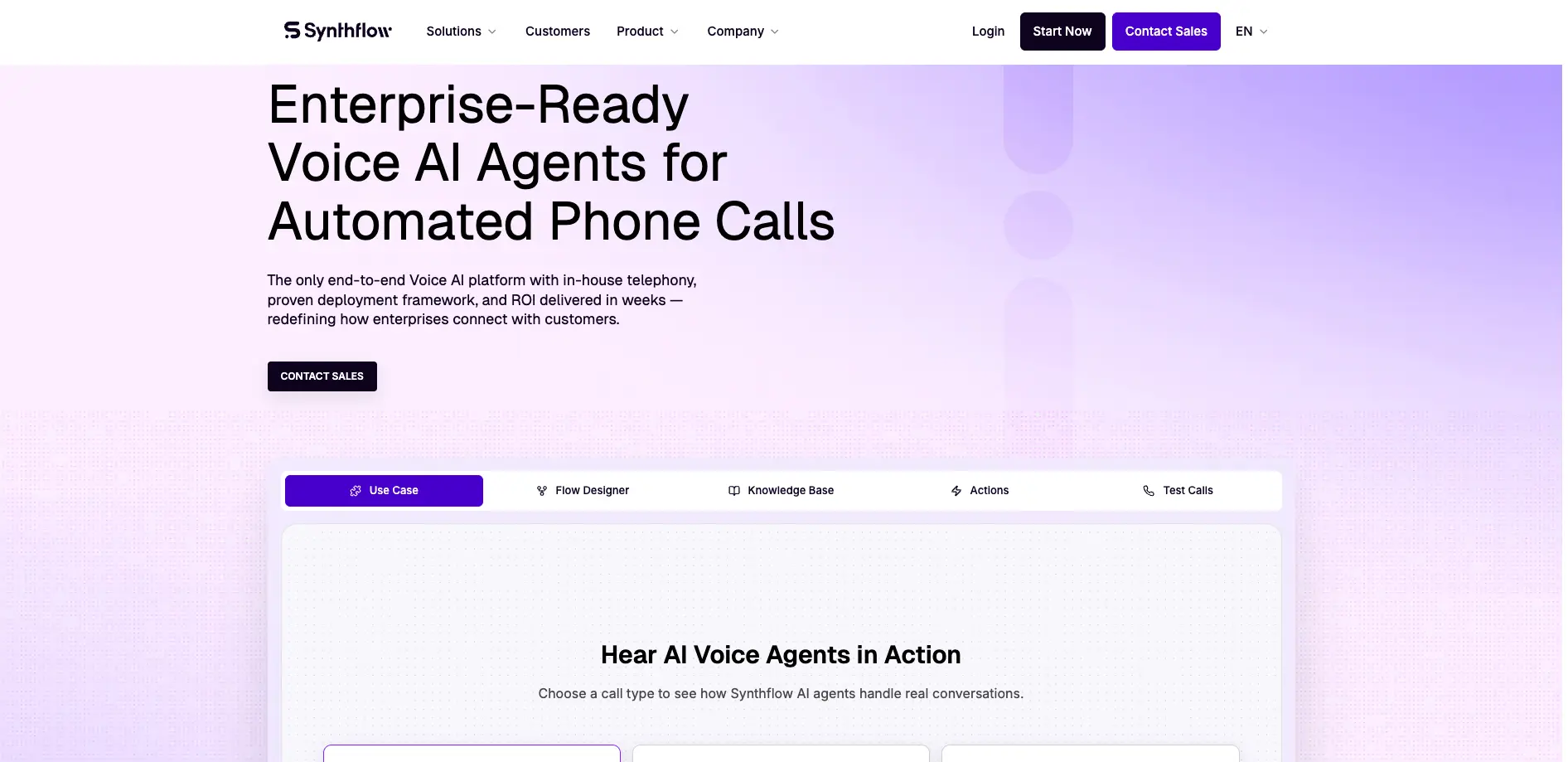
We tested Synthflow by building a basic conversational agent on its developer platform and connecting it to a sample webhook flow. Synthflow is voice agent infrastructure for engineering teams: usage-based pricing, API and webhook driven, with conversation flows built by the customer's engineering team.
Consideration: less suitable for sales teams without engineering resources, and for buyers who need a turnkey, CRM-integrated AI receptionist rather than infrastructure to build on. Aloware delivers the same end output without the build.
4. PolyAI
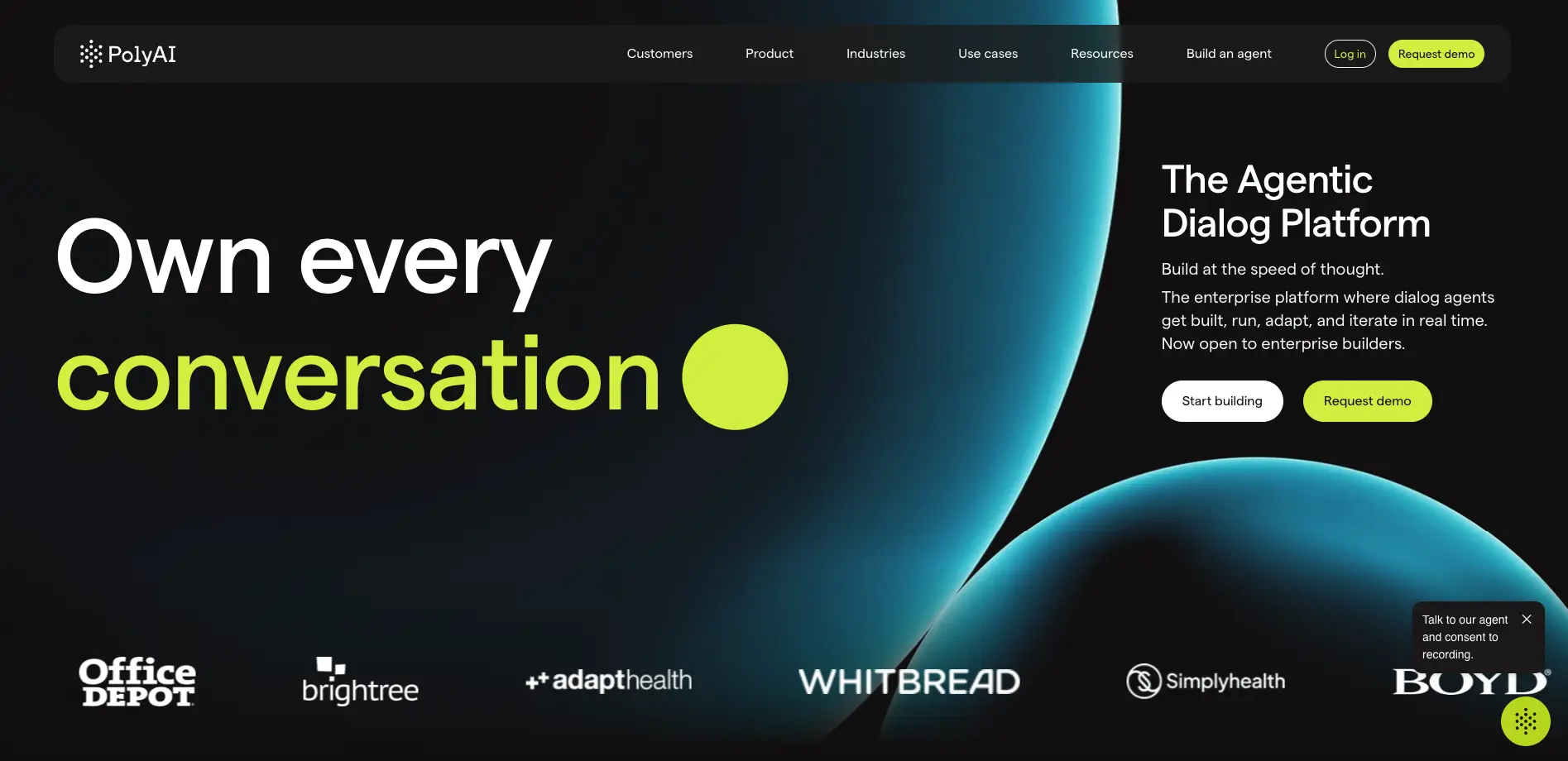
We evaluated PolyAI's enterprise voice quality through demo recordings and reviewed deployment documentation. PolyAI is an enterprise voice platform with custom pricing and implementation cycles typically measured in months, designed for large enterprise call centers with bespoke brand-voice and routing requirements.
Consideration: less suitable for mid-market sales teams with standard implementation timelines and per-user pricing expectations: the procurement model is built for enterprise buying motions.
5. Bland AI
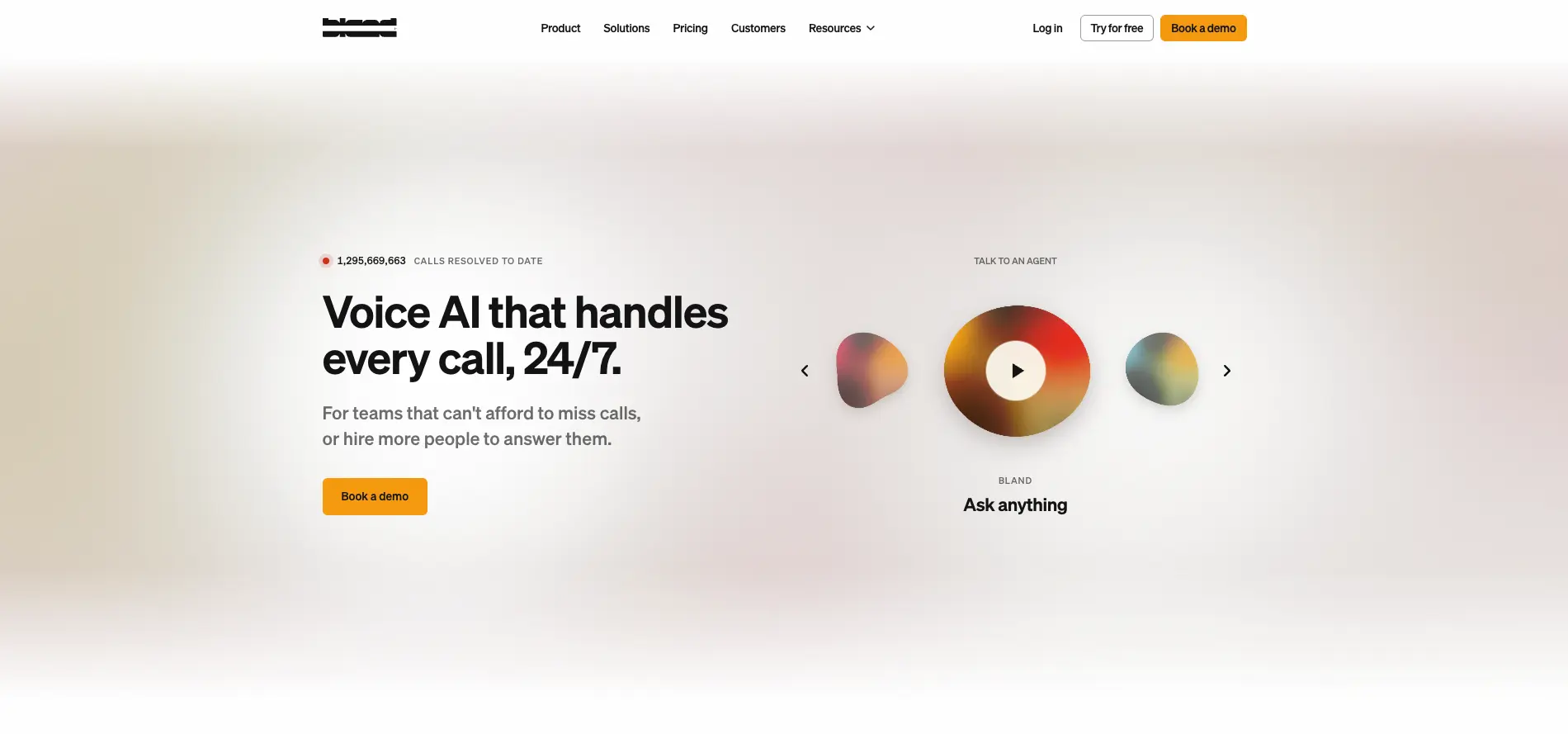
We tested Bland AI's programmatic API by deploying a sample automated outbound flow. Bland AI is voice agent infrastructure for developers running high-volume automated calling, priced per minute on usage.
Consideration: less suitable for sales teams without engineering resources to build the orchestration layer, and for buyers who need a CRM-integrated receptionist rather than raw voice infrastructure. Aloware gives you the same output turnkey.
6. Retell AI
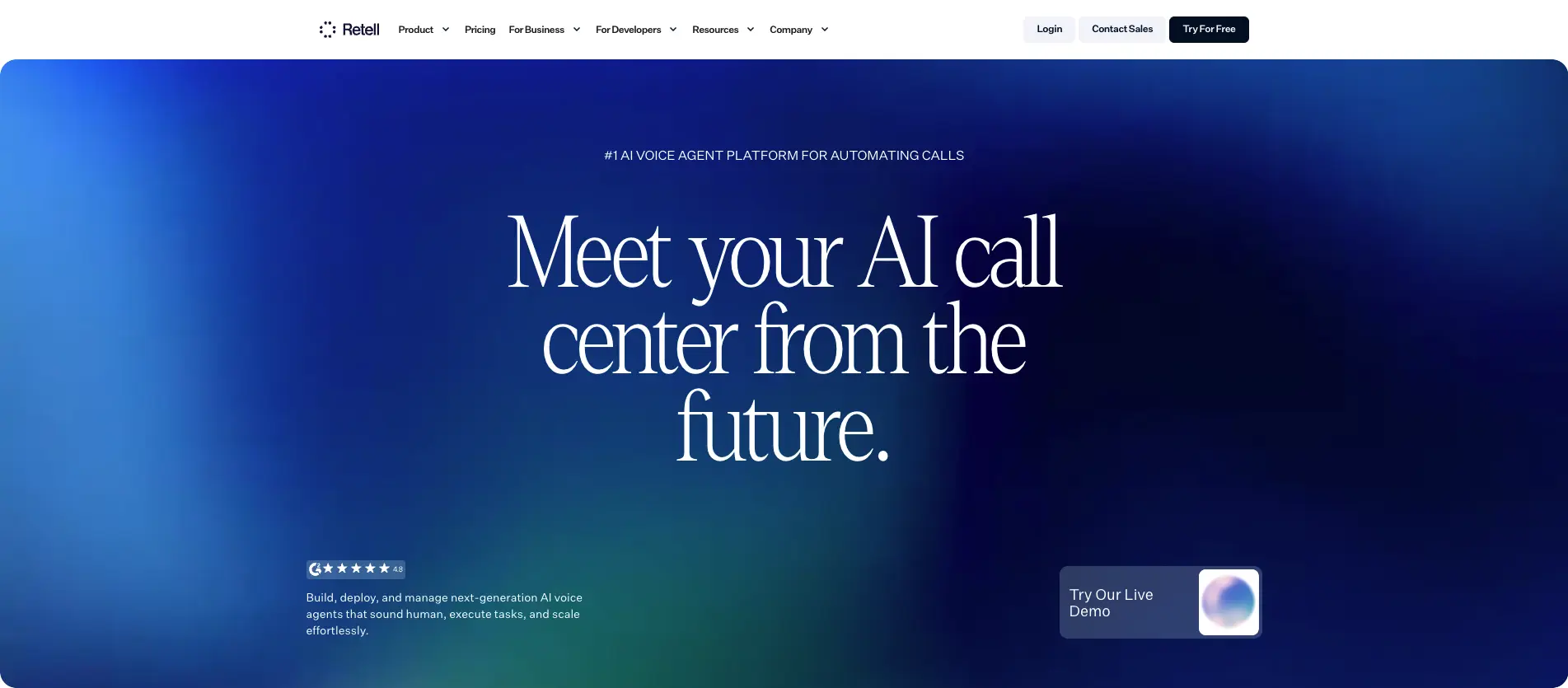
We tested Retell AI by embedding its voice API into a sample application and running test calls through the agent. Retell AI is voice agent infrastructure for developers building voice-first applications, with API-first deployment and usage-based pricing.
Consideration: less suitable for sales teams looking for a turnkey, CRM-integrated receptionist, and for buyers without engineering resources for application-layer development. With Aloware you get the same result without writing code.
How much does an AI receptionist cost?
The entry tier sits between roughly $25 and $99 per month flat, with most small businesses paying $49–$60 per month after overage minutes are factored in. That pricing maps to a solo-operator or very-small-business use case. The developer platforms look cheap per minute but carry a hidden cost: the engineering hours to build and maintain the CRM, transcription, and orchestration layers yourself.
For a growing team, the unit economics shift. The relevant comparison is per-minute AI Voice Agent rate plus the cost of CRM integration and transcription, and whether you have to build them. Aloware's iPro + AI starts at $30/user/month for the seat, and AI Voice Agent calls are priced per minute starting at $0.10/minute, the lowest per-minute rate in the category with the same or better tech stack, with CRM logging and transcription already included. The plan also includes 1,000 minutes of AI Voice Analytics.
If you're running a standalone AI receptionist ($60/month flat) plus a separate dialer and a separate SMS tool, you're paying for three siloed products and getting three siloed data trails your CRM can't reconcile. The consolidation play beats the standalone receptionist on both cost and ops. For a fuller cost breakdown on AI-driven calls, read The 10-Cent AI Call.
Key takeaway: Entry AI receptionists are flat-rate; developer platforms add hidden engineering cost. The right unit of comparison is per-minute rate plus CRM integration, and Aloware's $0.10/minute includes the integration, turnkey.
What "zero missed calls" actually requires
The zero-missed-calls outcome isn't about answering speed. Every AI receptionist on this list answers in under five seconds. The real failure mode is more subtle: a human rep is unavailable, the AI handles the call, the conversation ends, the transcript goes somewhere unreadable, and the lead's context never makes it into the CRM. The call wasn't "missed", but the lead was.
What it actually takes to achieve zero missed calls:
- AI that answers every call when a human rep isn't available: overflow, after-hours, all-reps-busy scenarios. The AI is the safety net behind your human team, not a replacement for them.
- A second-layer catch for any call the primary AI doesn't fully handle (Aloware calls this AI Call Rescue, the missed call handler: it catches the edge cases your primary voice agent doesn't fully resolve)
- Warm transfer with full context the moment a human rep becomes available, so the lead doesn't have to re-explain anything
- Every call transcribed and logged directly to the CRM with the right entity attached, so the SDR or AE picking up the next interaction has full context, not a generic "AI handled this" note. For the deeper take on why AI-powered conversation insights beat raw call recordings, read Skip the Call Recordings: AI-Powered Conversation Insights That Tell You Exactly What Happened
Aloware is the only platform on this list with all four: turnkey, no developer. That's why "zero missed calls" is the outcome customers report, not "fewer missed calls."
For the operational playbook on getting your AI voice agent to actually behave the way you want it to (which is half the battle), read How to Prompt Your AI Voice Agent.
Key takeaway: Zero missed calls requires four layers: AI answering when humans aren't available, a second-layer catch, warm transfer with context, and CRM logging with entity sync. Aloware is the only tool here with all four, without a build.
How to pick the right AI receptionist for your team
Use this decision framework:
- Team that mainly needs a business phone system on HubSpot, Salesforce, or Pipedrive, with an AI agent to pick up when reps can’t: CloudTalk is a reasonable fit, with a power dialer, call routing, and an AI Voice Agent that hands off to a human rep.
- Everything else (any growing team, any CRM, any sales motion, any vertical, sales or support): Aloware. The AloAi Voice Agent + AI Call Rescue + CRM-native transcription stack works the same whether you're a small agency or a large sales org, and you don't build anything.
- Engineering team that wants to build something custom on voice infrastructure: Synthflow, Bland AI, and Retell AI are the build-it-yourself options, but note that Aloware exposes developer APIs too, so you can extend or embed without re-building the CRM layer, transcription pipeline, and orchestration the infrastructure-only tools make you own.
Vertical-specific notes:
- Insurance agencies: Aloware. See how AI voice agents handle high-stakes intake in the legal intake transformation guide for the operational analogue
- Solar and home services: Aloware (call volume + transcription + CRM logging matter at scale)
- Real estate brokerages: Aloware (vertical-tuned voice agent)
- Legal intake: Aloware for fully-automated intake at any scale
- Healthcare practices: Aloware (CRM logging + multi-language + knowledge-base answers)
- E-commerce support: Aloware (knowledge-base support + CRM logging + transcription for ticket attachment)
- Financial services and SaaS: Aloware
Bottom Line
The buyer searching "ai receptionist" in 2026 falls into one of two groups. The first is the team that mainly needs a business phone system and wants an AI agent to answer when reps can’t. A cloud phone system with a built-in agent, like CloudTalk, covers that.
The second group is the growing company that searched the same query but is solving a fundamentally different problem: how to handle every inbound call with consistent voice quality, in the right language, with the transcript automatically logged to the right CRM entity, with sales and support on one agent, and with zero leads falling through the cracks, without hiring engineers to build it.
That second buyer isn't shopping for an AI receptionist. They're shopping for the AI voice operations layer their growing team will use for the next two years. Aloware is the only tool on this list built for that: the developer-tier output, turnkey.
Pick the tool that matches where your team is going, not the one that just answers tonight's call.
See AloAi Voice Agent in action
Book a 20-minute AloAi Voice Agent demo: we'll show AloAi Voice Agent answering a real lead in under 60 seconds, transcribing the call into your CRM with full entity sync, and warm-transferring to a human when needed. We'll customize the walkthrough to your vertical.

Frequently Asked Questions
What is an AI receptionist?
An AI receptionist is software that uses artificial intelligence to answer inbound phone calls, understand spoken language, respond conversationally, and take actions like routing the call, scheduling an appointment, or capturing lead information. Modern AI receptionists run on large language models with real-time voice synthesis, answer in under 5 seconds, and handle 90–95% of calls without escalating to a human.
How is an AI receptionist different from an AI voice agent?
An AI receptionist handles inbound calls when humans aren't available, usually with surface-level CRM integration and basic transcription. An AI voice agent (like Aloware's AloAi Voice Agent) handles inbound voice operations end-to-end with deep CRM integration, multi-language support, multiple voice and LLM models, and direct transcription to the CRM with entity sync. The receptionist is a category built for solo operators. The voice agent is the category built for growing teams that need CRM-native voice operations: sales and support alike, no developer required.
How much does an AI receptionist cost in 2026?
SMB-tier AI receptionists cost $24.95 to $99 per month flat. Sales-grade AI voice agents like Aloware start at $30/user/month on iPro + AI for the seat, with AI Voice Agent calls priced per minute starting at $0.10/minute, the lowest in the category with the same or better tech stack. iPro + AI also includes 1,000 minutes of AI Voice Analytics for call transcription and conversation intelligence.
Can an AI receptionist transfer calls to a human?
Yes. All modern AI receptionists support some form of transfer to a human. The quality varies: better tools pass full conversation context (caller name, intent, transcript) to the human picking up. Aloware's AloAi Voice Agent passes full context plus a live CRM record link so the human is already informed when they pick up.
What CRMs do AI receptionists integrate with?
This varies widely. Most SMB-tier receptionists integrate via Zapier or basic webhooks. Aloware offers native integration with HubSpot, Salesforce, Pipedrive, Zoho, and GoHighLevel (including workflows, dynamic lists, and real-time bi-directional sync), plus Zapier coverage for any non-native CRM or workflow. If your CRM isn't on the native list, Zapier still gets you there.
How many languages do AI receptionists support?
Most SMB-tier tools support one or two languages (English, sometimes Spanish). Aloware supports 35 languages on a single platform, with multiple voice models and multiple LLM backbones to choose from per use case, the broadest voice-quality stack in the category.
Does the AI transcribe every call?
Better AI receptionists transcribe every call automatically. The differentiator is what happens with the transcript. Aloware logs every transcript directly to the CRM with entity sync: the transcript attaches to the right contact, deal, or account, not dropped into a separate transcript bucket your team has to reconcile.
How long does AI receptionist setup take?
SMB-tier tools set up in 1–3 days for basic configurations. Sales-grade AI voice agents with CRM integration typically take about a week for a clean deployment. Aloware's implementation is around 7 days when CRM integration is included. Enterprise-grade tools like PolyAI take months for custom deployment.
Is an AI receptionist compliant with TCPA and other regulations?
The tools themselves can be compliant. Aloware is built with A2P 10DLC, TCPA, and STIR/SHAKEN compliance out of the box. But TCPA in particular depends on whether the caller consented to contact, which is your team's responsibility to configure correctly in your CRM. No AI voice tool can make non-compliant workflows compliant on its own.
What happens when the AI doesn't understand a caller?
Better AI receptionists escalate cleanly. Aloware uses a layered approach: the primary AloAi Voice Agent handles most calls, AI Call Rescue catches anything that slips past the primary agent, and warm transfer hands the call to a real human with full context when human judgment is needed. The result is zero missed calls in production deployments.
Does Aloware have an API for developers?
Yes. Aloware exposes developer APIs so technical teams can extend, embed, or build on top of the platform, useful when you have custom workflows, in-house tools, or applications that need to surface call data programmatically.
What industries get the most value from an AI receptionist?
Industries with high inbound call volume and time-sensitive conversations see the strongest results: insurance, solar, real estate, legal intake, healthcare, home services, e-commerce, financial services, and SaaS. The common thread is that the leads are time-sensitive and the conversation needs to be captured into the CRM with the right context, both of which Aloware handles natively.
.png)

Ruby Kootval is Head of Product Marketing at Aloware. She has 12 years in digital marketing, including 8 in B2B SaaS and 5 in telecom, and writes about AI voice agents, dialers, CRM integrations, and contact center operations.